Difference Between App Development and Web Development
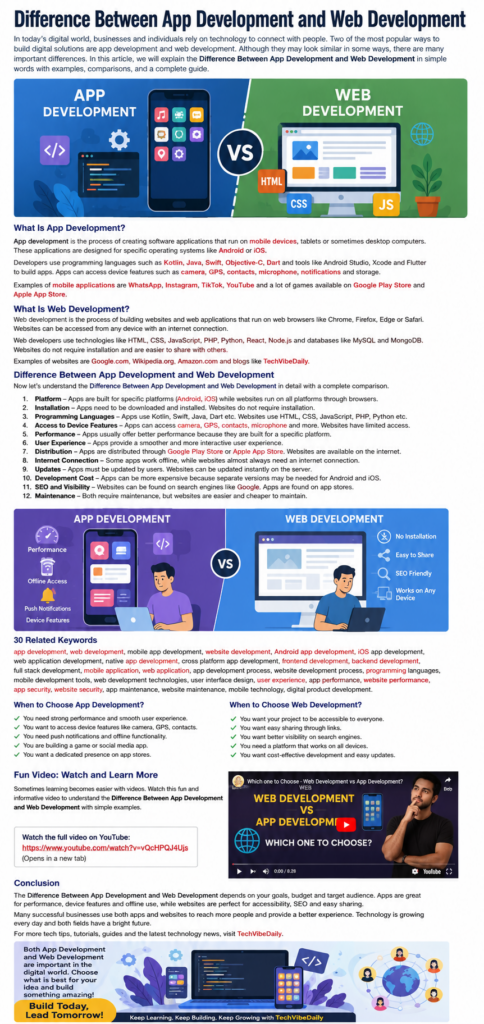
In today’s digital world, Difference Between App Development and Web Development is an important topic for students, developers, businesses, and anyone planning to create a digital product. Both fields involve software development, but they use different platforms, technologies, development processes, and distribution methods.
What Is App Development?
App development is the process of creating applications for smartphones, tablets, and other devices. Mobile apps are commonly developed for Android and iOS. Developers can use technologies such as Kotlin, Java, Swift, Flutter, and React Native.
Applications can interact with device features such as cameras, GPS, notifications, sensors, and local storage, depending on operating-system permissions and capabilities.
Difference Between App Development and Web Development
What Is Web Development?
Web development focuses on websites and web applications that users access through browsers. Front-end development commonly uses HTML, CSS, and JavaScript, while back-end systems can use technologies such as PHP, Python, Java, Node.js, and databases.Difference Between App Development and Web Development
A major advantage of the web is that users can normally access a website through a URL without installing a traditional mobile application.
Difference Between App Development and Web Development
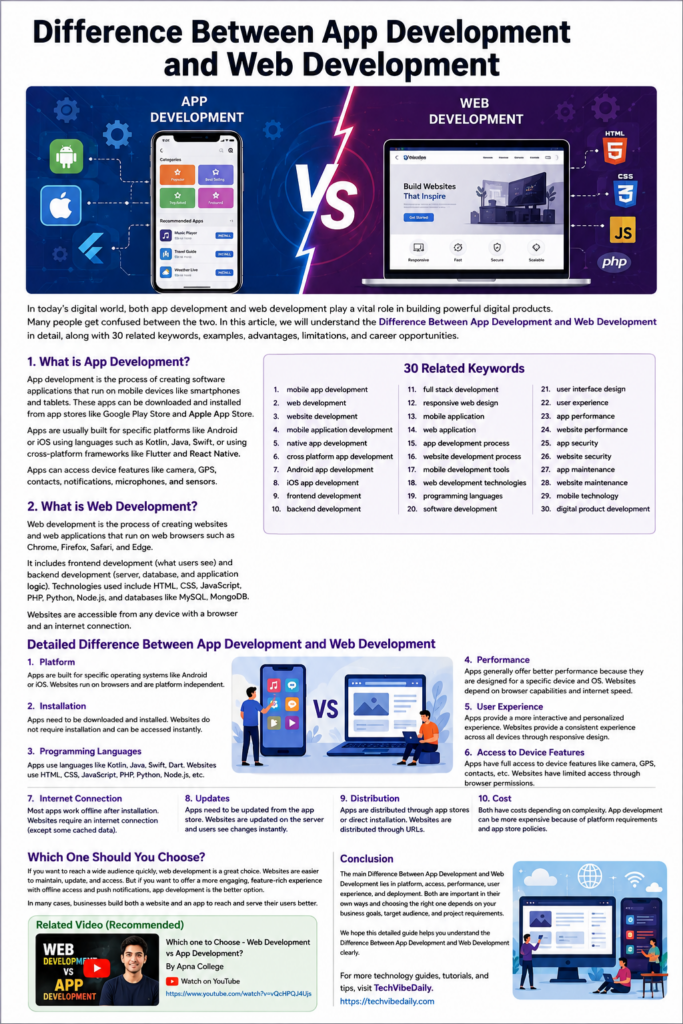
The Difference Between App Development and Web Development can be understood by looking at several important areas.
1. Platform
Mobile applications are designed for mobile operating systems such as Android and iOS. Web applications operate inside browsers and can generally be accessed from different operating systems.Difference Between App Development and Web Development
2. Installation
A traditional mobile app usually needs to be installed on a device. A website can normally be opened directly through its URL.
3. Programming Languages
App developers may work with Kotlin, Java, Swift, Dart, or cross-platform frameworks. Web developers commonly use HTML, CSS, JavaScript, and various server-side technologies.
4. Performance
Native applications can be highly optimized for their target platforms. Web performance depends on factors such as browser capabilities, network conditions, code quality, and server performance.
5. User Experience
Apps can be designed specifically around mobile screens and device interactions. Websites can use responsive design to adapt to phones, tablets, and computers.
6. Device Features
Applications can provide deeper integration with features such as cameras, GPS, notifications, and sensors. Web browsers also provide access to selected device capabilities, but within browser security and permission boundaries.
7. Updates
Websites can generally be updated on the server, allowing visitors to receive the latest version immediately. Mobile applications usually require developers to release updates through their distribution channels.Difference Between App Development and Web Development
8. Distribution
Websites are distributed through URLs and search engines. Mobile applications are commonly distributed through app stores or other supported installation methods.
9. Cost
The cost of either project depends heavily on its complexity. A simple website can be inexpensive, while a complex web application can require substantial development. Similarly, a mobile application requiring Android and iOS support can require considerable development and testing.Difference Between App Development and Web Development
10. Search Visibility
Websites can be optimized for search engines and accessed through search results. Mobile apps use different discovery channels, including app stores and links from websites.
30 Related Keywords
1.Difference Between App Development and Web Development
App Development Technologies
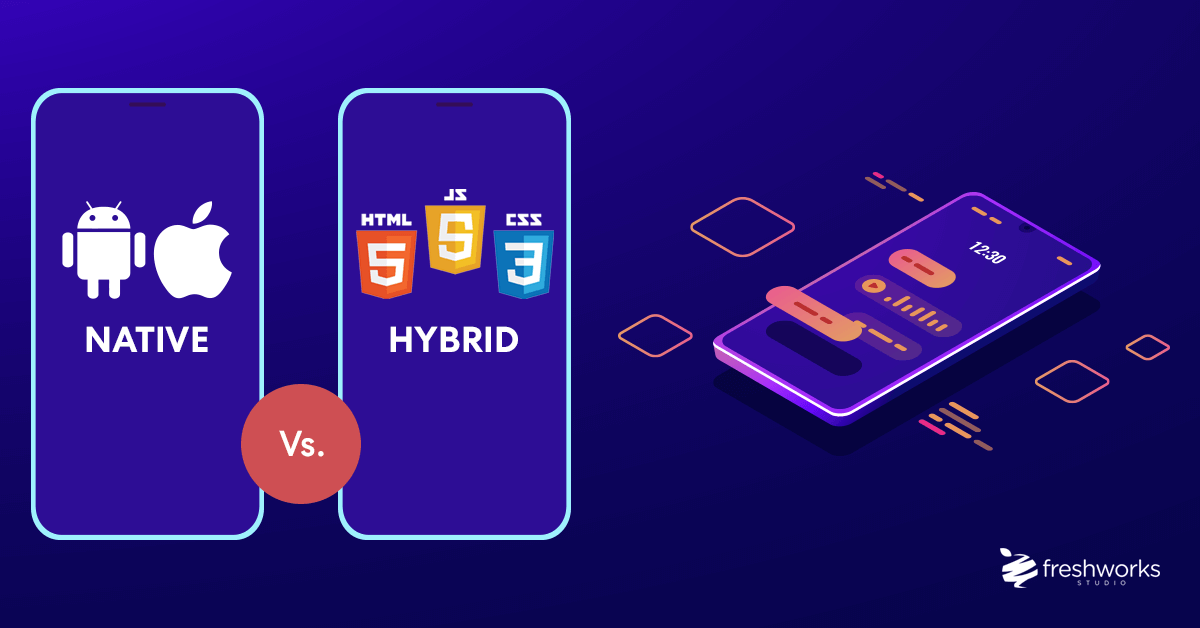
Modern app development can involve native or cross-platform approaches. Native development focuses on a particular operating system, while cross-platform frameworks can allow developers to share parts of their code across platforms.Difference Between App Development and Web Development
The choice depends on performance requirements, available developer skills, budget, target devices, and required features.
Web Development Technologies
Web development has several major areas. Front-end developers build the interface that users see. Back-end developers create server-side functionality, databases, APIs, authentication systems, and business logic.
Full-stack developers can work across both front-end and back-end parts of a web project.
App Security vs Web Security
Security matters in both fields. Developers need to protect accounts, data, authentication systems, APIs, and communication channels.
Good security practices include keeping dependencies updated, using secure authentication, validating input, protecting sensitive information, and testing applications regularly.
App Maintenance vs Website Maintenance
Both apps and Difference Between App Development and Web Development
websites need ongoing maintenance.
Websites may require server updates, content changes, security fixes, database maintenance, aDifference Between App Development and Web Development
nd performance optimization.
Apps may require operating-system compatibility updates, bug fixes, security improvements,Difference Between App Development and Web Development
feature updates, and device testing.
Which Is Better for a Business?
There is no single answer. The best choice depends on the product and its users.
A website can be a strong choice when users need quick access, search visibility, shareable URLs, and an Difference Between App Development and Web Development
experience that works across many devices.
A mobile app can make more sense when frequent user interaction, notifications, offline functionality, or deeper device integration is important. Recent comparisons similarly emphasize that the decision should be based on user needs Difference Between App Development and Web Development
and product requirements rather than assuming one platform is always better.
Can a Business Use Both?
Yes. Many businesses can benefit from having both a website and an app.
The website can provide information, search visibility, customer acquisition, and easy access. The app Difference Between App Development and Web Development
can provide a dedicated experience for returning users.Difference Between App Development and Web Development
Using both platforms requires additional development and maintenance, so businesses should Difference Between App Development and Web Development
decide whether the additional investment provides enough value.
Career Opportunities
Both app development and web development can provide career paths in technology.Difference Between App Development and Web Development
Web developers can specialize in front-end, back-end, or full-stack development. App developers can specialize in Android, iOS, or cross-platform development.Difference Between App Development and Web Development
The fundamentals of programming, problem-solving, databases, software architecture, testing, and version control are useful across both fields.
Keywords related :
Difference Between App Development and Web Development
Web Development or App Development for Beginners?
Difference Between App Development and Web Development
For someone starting to learn programming, web development can be a straightforward way to begin because HTML, CSS, and JavaScript provide a visible path from basic code to interactive webpages.
App development is also a good learning path for someone specifically interested in mobile applications.
The most important thing is to choose one direction, learn the fundamentals, and build practical projects.
Future of App and Web Development
The two fields continue to evolve. Web applications are becoming increasingly capable, while Difference Between App Development and Web Development
mobile applications continue to provide specialized experiences and access to device capabilities.Difference Between App Development and Web Development
Progressive Web Apps are another approach that can combine browser-based technology with selected app-like features.
As technology Difference Between App Development and Web Development
develops, businesses may increasingly combine web applications, mobile applications, and shared back-end services rather than treating them as completely separate systems.Difference Between App Development and Web Development
Related Video
For a visual explanation of the topic, watch:
Which one to Choose – Web Development vs App Development? — Apna CollegeDifference Between App Development and Web Development
TechVibeDaily
For more technology guides, tutorials, and informative articles, visit TechVibeDaily:Difference Between App Development and Web Development
Frequently Asked Questions About the Difference Between App Development and Web Development
1. What is the main Difference Between App Development and Web Development?
The main Difference Between App Development and Web Development is the platform where the software operates. App development focuses on creating applications that users normally install on smartphones, tablets, or other devices. Web development focuses on creating websites and web applications that users access through internet browsers.
Mobile applications are commonly designed for Android or iOS. Developers may use technologies such as Kotlin, Java, Swift, Flutter, or React Native. Websites commonly use HTML, CSS, JavaScript, and various backend technologies.
Another important difference is distribution. A mobile application is generally distributed through an app store or another approved installation method. A website can usually be accessed simply by entering its web address into a browser.
Both approaches can create powerful digital products. The right option depends on the target audience, features, budget, performance requirements, and business goals.
2. Is app development harder than web development?
Neither is automatically harder because difficulty depends on the project.
A simple mobile application can be easier to create than a complicated web application. For example, a basic calculator app may require relatively few features, while an advanced website could include user accounts, databases, payment systems, dashboards, APIs, search, messaging, and other complex functions.
Likewise, a professional mobile application can become very complicated when it needs GPS, notifications, offline functionality, secure authentication, payments, real-time communication, and support for multiple operating systems.
For beginners, web development can sometimes be easier to start because HTML and CSS provide a relatively accessible introduction to creating websites. However, learning professional web development still requires significant programming knowledge.
The Difference Between App Development and Web Development is therefore not simply a question of which one is harder. The complexity depends on what you are building.
3. Which is better, app development or web development?
There is no universal answer.
Web development can be better when you want people to access your product quickly through a browser. Websites can also be shared through links and can potentially receive traffic from search engines.
App development can be better when you need a dedicated mobile experience, push notifications, offline functionality, or deeper access to device features.
Some businesses use both. They create a website for discovery and information while offering a mobile application to regular users.
The best way to decide is to identify what your audience needs first. After that, compare the platforms, features, development cost, maintenance requirements, and long-term goals.
4. Can a website work like a mobile app?
Yes. Modern web technologies allow developers to create advanced web applications that can provide experiences similar to traditional apps.
Progressive Web Apps, commonly called PWAs, can provide features such as installation, offline capabilities, notifications, and app-like interfaces depending on browser and platform support.
However, a web application is still different from a traditional native mobile application.
The exact capabilities available to a website depend on the browser, operating system, permissions, and available web standards.
This is another reason understanding the Difference Between App Development and Web Development is important before selecting a technology. Difference Between App Development and Web Development
5. Is a mobile app faster than a website?
A native mobile application can provide excellent performance because it is designed specifically for a particular operating system and device environment. Difference Between App Development and Web Development
However, this does not mean every app is faster than every website.
A well-designed and optimized website can load extremely quickly. A poorly optimized application can also be slow. Difference Between App Development and Web Development
Performance depends on many factors, including code quality, network conditions, server performance, database design, image sizes, caching, device hardware, and application architecture.
Therefore, performance should be tested rather than assumed.
6. Which is cheaper: app development or web development?
The cost depends on the complexity of the project.
A simple website may cost less than a sophisticated mobile application because it may require fewer specialized features.
However, a large web application can become expensive when it requires user accounts, payment systems, databases, real-time communication, administration systems, security features, and complex backend infrastructure.
Mobile development can also become more expensive when an organization wants separate native Android and iOS applications.
Cross-platform technologies may reduce duplicated development work in some situations.
Before deciding, businesses should create a detailed list of required features and ask developers for an estimate based on those requirements.
7. Which programming languages are used in app development?
Many programming languages can be used for app development.
Android developers commonly use Kotlin and Java. Apple application development commonly uses Swift, while Objective-C is also part of Apple’s development history.
Cross-platform technologies can use languages and frameworks such as Dart with Flutter or JavaScript/TypeScript-based technologies such as React Native.
The choice depends on the operating system, project requirements, development team, performance requirements, and long-term maintenance plans.
Learning one programming language does not necessarily limit a developer permanently. Experienced developers often learn multiple languages and frameworks during their careers.
8. Which programming languages are used in web development?
Web development uses a wide range of technologies.
HTML is used to structure webpages, while CSS controls presentation, layout, and visual styling. JavaScript provides interactive behavior in the browser.
Backend development can use technologies such as PHP, Python, Java, JavaScript through Node.js, Ruby, C#, and others.
Web developers also work with databases such as MySQL, PostgreSQL, MongoDB, and other database systems.
Modern web development frequently involves frameworks, libraries, APIs, cloud services, version-control systems, and deployment platforms.
9. Is HTML a programming language?
HTML is a markup language rather than a traditional programming language.
HTML describes the structure and meaning of content on a webpage. CSS is generally used for presentation, while JavaScript is used for programming logic and interactive behavior.
For someone starting web development, learning HTML is an important first step.
After HTML, beginners commonly learn CSS and JavaScript before moving toward frontend frameworks or backend technologies.
Understanding these technologies helps explain the web side of the Difference Between App Development and Web Development.
10. Which is easier to learn: app development or web development?
Many beginners find basic web development easier to start because a simple webpage can be created using HTML and opened immediately in a browser.
App development can require development environments, platform-specific concepts, application lifecycle knowledge, device testing, and additional tools.
However, learning professional web development also requires time and practice.
The easiest technology to learn is usually the one that matches your interests. Someone who enjoys websites may find web development more engaging, while someone interested in mobile applications may prefer app development.
11. Can a web developer become an app developer?
Yes.
Web developers already understand many concepts that are useful in software development, including programming logic, interfaces, APIs, databases, authentication, debugging, and version control.
A web developer who wants to move into app development will need to learn mobile-specific concepts such as application lifecycle, mobile navigation, platform guidelines, device permissions, mobile layouts, and app-store distribution.
Cross-platform frameworks can also provide a transition path for developers who already have web programming experience.
12. Can an app developer become a web developer?
Yes.
App developers already understand programming concepts, user interfaces, software architecture, debugging, and application logic.
To move into web development, they can learn HTML, CSS, JavaScript, browser technologies, web security, responsive design, server-side programming, and databases.
The programming concepts learned in one field can often help when learning another.
13. Which one is better for a small business?
For many small businesses, a website can be a practical first step.
A business website can provide information about products and services, contact details, locations, business hours, articles, customer information, and other useful content.
A website can also be shared through social media and search engines.
However, an application can be valuable when customers interact with the business frequently or when the business needs features such as notifications, loyalty programs, mobile ordering, or personalized experiences.
The business should evaluate its actual needs rather than building an app simply because apps are popular.
14. Which one is better for SEO?
Web development generally has a major advantage for traditional search engine optimization.
Webpages can be indexed by search engines and can target keywords through titles, headings, content, structured data, internal links, and other SEO practices.
Mobile applications have their own discovery and optimization methods, often associated with app-store optimization.
If organic search traffic is a major goal, a properly optimized website can be extremely useful.
This is one of the most important practical points in the Difference Between App Development and Web Development.
15. Can apps work without an internet connection?
Yes, some apps can work offline.
Developers can store certain information locally on the device so that users can continue using selected features without an internet connection.
The exact offline functionality depends on the application.
Some apps may allow users to read previously downloaded content, create notes, view saved information, or use selected features while offline.
Web applications can also provide offline functionality using technologies such as service workers, but developers must specifically design and implement those capabilities.
16. Can websites work without the internet?
Traditional websites normally require an internet connection because their content is retrieved from a web server.
However, modern web technologies can support offline experiences.
Progressive Web Apps can cache resources and provide selected functionality without a continuous internet connection.
Therefore, the statement that websites can never work offline is too broad.
The actual capability depends on how the web application has been designed.
17. Do apps provide better security than websites?
Neither platform is automatically secure.
Security depends on the quality of the development, architecture, authentication, data protection, server configuration, permissions, updates, and security practices.
Web applications must protect servers, databases, accounts, APIs, and browser interactions.
Mobile applications must protect local data, authentication information, network communication, permissions, and application logic.
Security should be considered from the beginning of a project rather than added at the end.
18. What is frontend development?
Frontend development focuses on the part of a website or application that users see and interact with.
In web development, frontend developers commonly work with HTML, CSS, JavaScript, and frameworks or libraries.
They create navigation, buttons, forms, layouts, menus, animations, responsive designs, and other user-interface elements.
In mobile development, developers similarly create screens, navigation systems, buttons, forms, and interactions, but the technology and platform requirements can be different.
19. What is backend development?
Backend development focuses on the systems that operate behind the user interface.
A backend can manage databases, authentication, APIs, business logic, payments, user accounts, content, and other processes.
Backend systems can support both websites and mobile applications.
For example, a mobile application might communicate with a server through an API to retrieve user information or submit data.
This demonstrates that the Difference Between App Development and Web Development does not mean the two fields are completely separate. They can share backend systems and development concepts.
20. Do I need an app if I already have a website?
Not necessarily.
If your website already meets the needs of your audience, an application may not provide enough additional value to justify its development and maintenance.
An app becomes more useful when it can provide something that a website does not deliver as effectively, such as notifications, frequent mobile interaction, offline features, personalized functionality, or deeper device integration.
Before creating an app, ask what additional value it will provide to users.
21. Can one backend support both a website and an app?
Yes.
A business can create a backend system with APIs that serve both a website and a mobile application.
For example, an online store could use one central database containing products, customers, orders, and inventory. Both the website and application could communicate with the backend through APIs.
This approach can reduce duplicated data management and help keep information synchronized.
The architecture must be designed carefully to ensure performance, security, authentication, and scalability.
22. What is responsive web design?
Responsive web design is an approach that allows a website layout to adapt to different screen sizes.
A responsive website can adjust its navigation, images, text, columns, buttons, and other elements for phones, tablets, laptops, and desktop monitors.
Responsive design is important because people use many different devices to access the internet.
It is one of the major advantages of modern web development.
23. What is native app development?
Native app development means creating an application specifically for a particular platform.
For example, an Android application can be developed using Android-focused technologies, while an iOS application can be developed using Apple’s development ecosystem.
Native development can provide strong performance and access to platform-specific features.
The disadvantage is that supporting multiple platforms may require additional development work.
24. What is cross-platform development?
Cross-platform development involves creating software that can operate on multiple platforms using shared development technologies.
Flutter and React Native are examples of technologies commonly used for cross-platform mobile development.
The main benefit is that developers can potentially share a significant amount of code between platforms.
However, cross-platform development still requires platform-specific testing and may sometimes require native code for particular features.
25. Which is better for an online store: app or website?
An online store can benefit from a website, an app, or both.
A website is useful for search visibility, sharing product pages, attracting new customers, and allowing users to shop without installing software.
An application can be useful for returning customers who want notifications, personalized experiences, saved preferences, and convenient mobile shopping.
For a new business, starting with a responsive website can sometimes be practical before investing in a dedicated application.
26. Which is better for a blog or news website?
For blogs and news websites, web development is usually the natural starting point.
Websites allow publishers to create individual pages and articles that users can access through search engines and direct links.
Readers can share article URLs through social media, messaging applications, and other websites.
A mobile application can be added later if the publication has a large audience and needs features such as notifications or personalized content.
For technology articles and tutorials, you can also visit “TechVibeDaily” (https://techvibedaily.com/).
27. Which is better for learning programming?
Both fields can be excellent for learning programming.
Web development provides an accessible introduction through HTML, CSS, and JavaScript.
App development can teach developers about application architecture, user interfaces, device capabilities, operating systems, and mobile software.
A beginner should choose based on their interests and goals.
If you want to create websites, start with web development. If you specifically want to create smartphone applications, explore mobile development.
28. How long does it take to develop an app or website?
There is no fixed development time.
A simple website might be created relatively quickly, while a complex web application could take months or longer.
Similarly, a basic application might be developed faster than a large application containing many advanced features.
Development time depends on the number of features, design requirements, backend complexity, integrations, testing, security, number of platforms, and size of the development team.
A clear project specification usually makes estimating the timeline easier.
29. Is web development still important in the future?
Yes.
Websites remain an important way for businesses, organizations, creators, educational institutions, and individuals to publish information and provide online services.
Browsers continue to gain new capabilities, while web development tools and frameworks continue to evolve.
Even businesses that have mobile applications often maintain websites because websites are useful for search visibility, information, customer support, marketing, and accessibility.
Therefore, web development remains an important technology field.
30. Is app development a good career?
App development can be a valuable technology career for people who enjoy programming and creating software.
Developers can specialize in Android, iOS, cross-platform applications, mobile user interfaces, mobile backend systems, or other areas.
As mobile devices remain important parts of everyday technology, there continues to be a need for people who can design, develop, test, and maintain applications.
Like any technology career, success requires continuous learning because programming tools and platforms change over time.
31. What should I learn first for web development?
A beginner can start with HTML, then learn CSS and JavaScript.
After understanding these fundamentals, they can explore responsive design, Git, APIs, frontend frameworks, backend programming, databases, and deployment.
It is better to understand the fundamentals before trying to learn many frameworks at once.
Building small projects is also an excellent way to practice.
32. What should I learn first for app development?
The first step depends on the platform you want to target.
For Android, beginners can explore Kotlin and Android development tools.
For iOS, Swift is a major language used in Apple’s development ecosystem.
Those who want to build applications for multiple platforms can explore technologies such as Flutter or React Native.
Before learning advanced frameworks, it is useful to und
Conclusion
The Difference Between App Development and Web Development comes down to platform, installation, technologies, performance, user experience, device access, distribution, maintenance, and business requirements.
Web development is useful when broad browser access, search visibility, and easy sharing are important. App development is useful when a dedicated mobile experience, notifications, offline capabilities, or deeper device integration are required.
Neither approach is automatically better. The right choice depends on the product, target audience, required features, available resources, and long-term goals.Difference Between App Development and Web Development
Understanding the Difference Between App Development and Web Development helps developers and businesses make a more informed decision before starting a new digital project.Difference Between App Development and Web Development
Final picture — place this at the very end of the article.