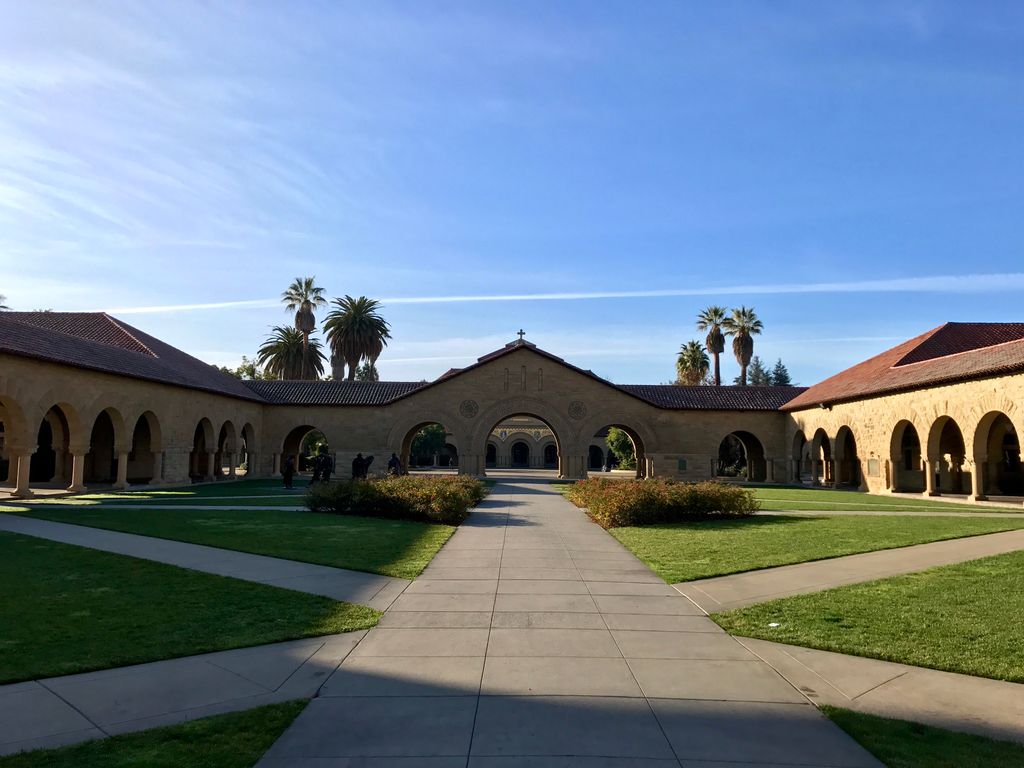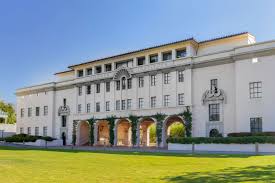
California Institute of Technology (Caltech): Technology and Computer Science — A Complete Guide 2026
Introduction
The California Institute of Technology (Caltech) is a private research university in Pasadena, California, United States. Caltech is internationally recognized for science, engineering, mathematics, computing, and technological research. California Institute of Technology (Caltech)
Caltech’s academic environment is particularly focused on fundamental scientific knowledge, mathematical reasoning, engineering, research, and interdisciplinary problem-solving. The university offers undergraduate majors—called “options” at Caltech—as well as minors and graduate programs. Its undergraduate programs span areas including computer science, information and data sciences, electrical engineering, applied and computational mathematics, robotics, physics, engineering, and many other disciplines. California Institute of Technology (Caltech)
For students interested in technology, Caltech offers several particularly relevant paths. These include Computer Science, Information and Data Sciences, Applied and Computational Mathematics, Electrical Engineering, Engineering and Applied Science, and Robotics-related study. Students can also combine computing with biology, physics, engineering, mathematics, and other scientific areas. California Institute of Technology (Caltech)
This article provides a detailed overview of Caltech’s technology education, computer science program, data science, artificial intelligence, robotics, computer systems, research opportunities, career possibilities, and the skills students can develop. California Institute of Technology (Caltech)
What Is Caltech?
The California Institute of Technology is commonly known as Caltech. California Institute of Technology (Caltech)
The university is located in Pasadena, near Los Angeles, California. It is a relatively small research university compared with many large universities, but it has a major international presence in science and technology. California Institute of Technology (Caltech)
Caltech emphasizes close interaction between students and faculty. Its academic environment is designed around scientific investigation, engineering, mathematical thinking, and research.
Caltech reports a 3:1 student-faculty ratio, more than 300 professorial faculty members, and 28 undergraduate options. California Institute of Technology (Caltech)
The university’s small scale is particularly relevant to its research-focused approach. Students can become involved in advanced scientific and engineering work while developing strong foundations in their chosen disciplines. California Institute of Technology (Caltech)
Technology Education at Caltech
Technology at Caltech covers much more than computer programming. California Institute of Technology (Caltech)
The university’s technology-related education can include:
- Computer science
- Artificial intelligence
- Machine learning
- Information and data sciences
- Robotics
- Computer systems
- Algorithms
- Programming
- Electrical engineering
- Applied mathematics
- Computational science
- Scientific computing
- Engineering
- Data analysis
Caltech also encourages interdisciplinary study. Computing can be applied to astronomy, biology, medicine, physics, engineering, climate research, and other areas. California Institute of Technology (Caltech)
The university describes its academic environment as emphasizing interdisciplinary teamwork, critical thinking, mutual support, and strong understanding of fundamental concepts.
Computer Science at Caltech
Computer Science is one of Caltech’s major undergraduate options.
The program is offered through the Computing + Mathematical Sciences department.
Caltech describes its Computer Science program as providing strong grounding in the mathematical and algorithmic foundations of computing while exposing students to modern research across different computer science areas. California Institute of Technology (Caltech)
The program is designed for students who want to understand both the theory and practical applications of computing. California Institute of Technology (Caltech)
Students can learn how to:
- Design algorithms
- Write software
- Analyze computational problems
- Understand computer systems
- Work with mathematical models
- Conduct research
- Build computational systems
- Apply computing to scientific problems
Caltech’s approach is not simply about teaching students how to build applications. It emphasizes understanding why computing systems work and how computational ideas can be applied to difficult scientific and engineering problems. California Institute of Technology (Caltech)
Bachelor of Science in Computer Science
Caltech offers a Bachelor of Science in Computer Science.
The program provides students with a rigorous foundation in mathematics, algorithms, programming, computer systems, and advanced computer science.
The current Caltech catalog lists requirements including computer science fundamentals, intermediate computer science, advanced CS coursework, mathematical fundamentals, scientific core electives, communication, and broader coursework.
Students also complete a substantial computer science project. Depending on the student’s pathway, this can include an undergraduate thesis or a mentored computer science project.
This research and project emphasis helps students move beyond classroom theory and apply their knowledge to real problems.
Computer Programming
Programming is a fundamental part of computer science.
Caltech’s Computer Science curriculum includes introductory programming courses such as CS 1, CS 2, CS 3x, and CS 4.
Students can gradually move from basic programming to more advanced areas.
Programming teaches students how to:
- Create algorithms
- Process information
- Automate tasks
- Design software
- Solve computational problems
- Work with data
- Build computer systems
Programming is useful not only for software developers but also for scientists, engineers, researchers, data scientists, and technology entrepreneurs.
Algorithms
Algorithms are an essential part of computer science.
An algorithm is a systematic method for solving a problem.
For example, algorithms can be used to:
- Search information
- Sort data
- Find efficient routes
- Process images
- Analyze networks
- Organize databases
- Train computational models
Caltech’s Computer Science curriculum includes CS 38: Introduction to Algorithms as part of its intermediate computer science requirements.
Understanding algorithms helps students learn how to create solutions that are not only correct but also efficient.
Computer Systems
Computer systems involve understanding how different components of a computer work together.
Caltech’s Computer Science curriculum includes CS 24: Introduction to Computing Systems.
Systems knowledge can involve:
- Hardware
- Software
- Operating systems
- Memory
- Processors
- Storage
- Networks
- System architecture
Understanding computer systems is valuable for students who want to work on large-scale software, operating systems, cloud infrastructure, or hardware-software integration.
Artificial Intelligence
Artificial intelligence, or AI, is one of the most important areas of modern computing.
Caltech’s Computer Science program provides pathways into areas such as machine learning and intelligent computational systems.
AI can involve:
- Machine learning
- Computer vision
- Natural language processing
- Robotics
- Pattern recognition
- Decision-making
- Data analysis
Caltech’s Computer Science program highlights research and study in areas including learning and vision and robotics.
AI can be applied to many scientific fields.
For example, researchers can use AI to analyze medical images, identify astronomical objects, study climate data, or control robots.
Machine Learning
Machine learning is a major branch of artificial intelligence.
In traditional programming, developers explicitly provide rules for a computer to follow. In machine learning, algorithms can learn patterns from data.
Machine learning can be used for:
- Prediction
- Classification
- Image recognition
- Data analysis
- Scientific discovery
- Recommendation systems
- Language processing
Students interested in machine learning generally need strong foundations in:
- Mathematics
- Statistics
- Programming
- Algorithms
- Data structures
Caltech’s strong emphasis on mathematics provides an excellent foundation for advanced computational and machine-learning study.
Learning and Vision
Caltech’s Computer Science undergraduate program includes a Learning & Vision track.
This area combines computational methods with learning systems and visual information.
Computer vision involves teaching computers to process and interpret images and video.
Applications can include:
- Medical imaging
- Robotics
- Autonomous systems
- Scientific research
- Image analysis
- Object recognition
Learning systems can use large datasets to identify patterns and make predictions.
The combination of learning and vision is particularly important in modern AI.
Robotics
Robotics is another important technology area at Caltech.
Robotics combines:
- Computer science
- Mechanical engineering
- Electrical engineering
- Artificial intelligence
- Control systems
- Sensors
- Mathematics
Caltech’s Computer Science program lists Robotics among its available focus tracks.
Robots can be designed to interact with physical environments and perform tasks automatically.
Robotics research can contribute to:
- Industrial automation
- Scientific exploration
- Healthcare
- Space technology
- Manufacturing
- Intelligent machines
Students interested in robotics can benefit from learning both software and hardware concepts.
Networks and Communication
Computer networks allow computers and other devices to communicate.
Caltech’s Computer Science program lists Networks & Communication as one of its computer science focus areas.
Networking can involve:
- Communication protocols
- Network architecture
- Data transmission
- Distributed systems
- Internet technologies
- Network performance
Modern applications depend heavily on networks.
Cloud computing, video streaming, online education, social media, financial services, and scientific computing all depend on reliable communication systems.
Programming Languages
Programming languages provide the structures developers use to communicate instructions to computers.
Caltech’s Computer Science program includes a Programming Languages track.
Programming-language study can involve:
- Language design
- Compilers
- Programming paradigms
- Type systems
- Language implementation
- Software abstraction
Understanding programming languages helps students understand how software is created and translated into forms computers can execute.
Quantum and Molecular Computing
Caltech also lists Quantum & Molecular Computing among its computer science focus areas.
Quantum computing explores computational methods based on principles of quantum mechanics.
Traditional computers use classical bits. Quantum computers use quantum systems that can represent information differently.
Quantum computing research may involve:
- Quantum algorithms
- Quantum information
- Quantum systems
- Computational complexity
- Physics
- Mathematics
Molecular computing explores computation at very small physical scales and connects computing with chemistry and biology.
These areas represent examples of how computer science can overlap with fundamental science.
Graphics
Caltech’s Computer Science program also provides a Graphics track.
Computer graphics focuses on creating and processing visual information using computers.
It can involve:
- 2D graphics
- 3D graphics
- Rendering
- Visualization
- Animation
- Geometric computing
- Simulation
Graphics technology is used in:
- Games
- Movies
- Scientific visualization
- Engineering
- Design
- Virtual environments
Graphics also connects mathematics with computing.
Information and Data Sciences
Caltech offers a Bachelor of Science in Information and Data Sciences (IDS).
This is one of the most relevant programs for students interested in data science and modern computational technology.
Caltech describes the program as combining mathematical tools, computational expertise, and communication skills to extract useful insights from large amounts of information.
The curriculum includes areas such as:
- Linear algebra
- Probability
- Statistics
- Machine learning
- Signal processing
- Information theory
- Computer science
- Scientific applications
Students can also choose application areas such as:
- Astronomy
- Bioengineering
- Physics
- Economics
This makes the program highly interdisciplinary.
Data Science
Data science is the process of using computational, mathematical, and statistical methods to understand data.
A data scientist may work with:
- Large datasets
- Statistical models
- Machine learning
- Data visualization
- Databases
- Scientific data
At Caltech, Information and Data Sciences students can use data-science methods in scientific and engineering applications.
For example, data science can help researchers identify astronomical objects, analyze medical images, and study complex scientific systems.
Applied and Computational Mathematics
Caltech’s Computing + Mathematical Sciences department also offers an undergraduate major in Applied and Computational Mathematics.
This field combines mathematics with computational methods.
It can be useful for:
- Scientific computing
- Mathematical modeling
- Engineering
- Data science
- Algorithms
- Simulation
- Optimization
Students interested in highly mathematical areas of technology may find this pathway particularly useful.
Electrical Engineering
Caltech’s Division of Engineering and Applied Science offers an undergraduate Electrical Engineering option.
Electrical engineering focuses on technologies involving electricity, electronics, signals, communication, and electrical systems.
It can involve:
- Circuits
- Electronics
- Signals
- Communication systems
- Control systems
- Computer hardware
- Energy systems
Electrical engineering is closely connected to computer technology.
Modern computers, smartphones, robots, communication devices, and many industrial systems depend on electrical engineering.
Engineering and Applied Science
Caltech also offers an Engineering and Applied Science option.
The program allows students to create a pathway across multiple scientific and engineering fields. Caltech describes it as suitable for students who want specialized expertise while working across engineering, computing, and theoretical challenges.
This flexible approach can be useful for students who have interdisciplinary interests.
For example, a student might combine computing with:
- Mechanical engineering
- Electrical engineering
- Materials science
- Applied mathematics
- Physics
Interdisciplinary engineering is increasingly important because modern technology rarely fits into one academic field.
Caltech’s Core Curriculum
Caltech has a strong common academic foundation.
All undergraduate students complete a core curriculum involving science, mathematics, and other academic areas.
Caltech’s engineering programs are designed to integrate students’ chosen disciplines with foundational courses in:
- Mathematics
- Physics
- Chemistry
- Biology
This creates a broad scientific foundation before students specialize.
The approach is especially valuable for technology students because advanced computing and engineering often depend on mathematics and natural science.
Research Opportunities
Research is one of the most important features of Caltech education.
The university provides several pathways for undergraduate students to participate in research.
Caltech identifies four principal avenues:
- Senior thesis
- Summer Undergraduate Research Fellowships (SURF)
- Research courses for academic credit
- Research for pay under a faculty member’s grant or contract
Research can allow students to work directly with faculty members on advanced problems.
Students may investigate areas such as:
- AI
- Robotics
- Computer science
- Data science
- Physics
- Astronomy
- Biology
- Engineering
This experience can be valuable for students considering graduate school or research careers.
SURF Program
The Summer Undergraduate Research Fellowships (SURF) program is an important part of Caltech’s research environment.
Students can work on research projects under faculty mentorship.
For a technology student, a research project might involve:
- Machine learning
- Computer vision
- Robotics
- Scientific computing
- Data analysis
- Algorithms
Research experience can help students develop skills beyond normal coursework.
They learn how to ask research questions, analyze evidence, experiment, communicate results, and work with experts.
Computer Science Minor
Students who major in another subject can also study computer science through a Computer Science minor.
Caltech explains that the CS minor is designed to supplement another undergraduate degree and broaden a student’s computing knowledge.
For example, a student majoring in physics might add computer science.
A biology student might study programming and algorithms.
An engineering student could add computing knowledge to strengthen their technical background.
This flexibility reflects the growing importance of computing across almost every academic field.
Information and Data Sciences Minor
Caltech also offers an Information and Data Sciences minor.
This can allow students in another major to develop additional knowledge in data analysis and computational methods.
Data skills are increasingly valuable in:
- Science
- Engineering
- Business
- Healthcare
- Research
- Government
Students can use data-science methods to answer questions that would be difficult to solve using traditional approaches alone.
Graduate Programs in Computing
Caltech also offers graduate programs through Computing + Mathematical Sciences.
The department lists graduate degree options including:
- Applied + Computational Mathematics
- Computer Science
- Computing + Mathematical Sciences
- Control + Dynamical Systems
It also lists graduate minors including:
- Computer Science
- Computational Science + Engineering
- Information and Data Science
- Control + Dynamical Systems
Graduate education allows students to study advanced topics and conduct research.
Computer Science Research
Caltech’s computer science research covers both theoretical and practical areas.
The university describes its computer science approach as unified rather than strictly dividing hardware and software, systems and applications, or theory and experimentation.
This means students can develop an understanding of computing as a complete discipline.
Research can involve:
- Algorithms
- Machine learning
- Robotics
- Networks
- Programming languages
- Quantum computing
- Computer systems
- Information processing
The combination of theory and experimentation can help researchers develop technologies that are both mathematically sound and practically useful.
Technology and Scientific Research
One of Caltech’s distinctive features is the close relationship between computing and scientific research.
Computers are now essential tools in nearly every scientific field.
For example:
Astronomy
Computers can analyze massive astronomical datasets.
Biology
Algorithms can help analyze genetic information.
Physics
Computational models can simulate physical systems.
Medicine
Machine learning can assist with medical-image analysis.
Climate Science
Computational models can help researchers study environmental systems.
Engineering
Computer simulations can help engineers design and test systems.
This interdisciplinary approach is central to Caltech’s educational philosophy.
Technology Skills Students Can Develop
A Caltech technology student can develop many valuable skills.
Programming
Students learn to write and analyze computer programs.
Mathematics
Mathematical reasoning supports algorithms, AI, data science, and engineering.
Algorithms
Students learn systematic methods for solving computational problems.
Research
Students can gain experience conducting scientific and technical research.
Data Analysis
Data science programs provide methods for understanding large datasets.
Communication
Technology professionals need to explain technical ideas clearly.
Problem Solving
Students learn how to break difficult problems into smaller components.
Collaboration
Modern scientific and engineering research often requires teamwork.
Career Opportunities
Caltech technology graduates can pursue many different career paths.
Possible careers include:
- Software engineer
- Computer scientist
- AI engineer
- Machine-learning engineer
- Data scientist
- Research scientist
- Robotics engineer
- Systems engineer
- Computer engineer
- Data analyst
- Technology entrepreneur
- University researcher
The exact career depends on the student’s education, specialization, experience, and interests.
Computer science graduates can enter both industry and research.
Caltech states that its computer science program prepares students for research, industrial, and entrepreneurial careers in computing.
Technology and Entrepreneurship
Technology can also lead to entrepreneurship.
Students with strong technical knowledge can create:
- Software applications
- AI products
- Data platforms
- Robotics systems
- Scientific tools
- Technology companies
However, successful entrepreneurship requires more than technical ability.
Entrepreneurs also need to understand:
- Users
- Product development
- Communication
- Business models
- Teamwork
- Responsible innovation
Caltech’s research-focused environment can help students develop the technical knowledge needed to turn scientific ideas into useful technologies.
Why Mathematics Matters at Caltech
KEYWORD
California Institute of Technology (Caltech)
Mathematics is extremely important at Caltech.
Students studying computer science and data science need mathematical foundations for:
- Algorithms
- Probability
- Statistics
- Machine learning
- Optimization
- Computer graphics
- Cryptography
- Scientific computing
The Computer Science option specifically includes mathematical fundamentals as part of its requirements.
Students who want to pursue technology at a research-intensive university should therefore take mathematics seriously.
Practical Learning and Projects
Technology education becomes more effective when students combine theory with practice.
Caltech’s Computer Science program includes a project sequence that can involve an undergraduate thesis or mentored project.
Projects can help students learn how to:
- Define a problem
- Research existing solutions
- Design a solution
- Write code
- Test ideas
- Analyze results
- Present findings
This process closely resembles real-world research and engineering.
Caltech Compared With Traditional Computer Science Education
Many computer science programs focus primarily on software development.
Caltech takes a broader approach.
Its Computer Science program emphasizes:
- Mathematical foundations
- Algorithms
- Theory
- Systems
- Research
- Scientific applications
- Interdisciplinary work
The official catalog describes computer science as the study of information and computation and emphasizes connections between hardware, software, natural systems, and society.
This makes Caltech particularly interesting for students who want to understand the deeper principles behind computing.
Future of Technology at Caltech
Technology is changing quickly.
Important areas for the future include:
- Artificial intelligence
- Machine learning
- Robotics
- Quantum computing
- Data science
- Semiconductor technology
- Scientific computing
- Autonomous systems
- Computational biology
- Cybersecurity
Caltech’s interdisciplinary structure allows computing to interact with many of these fields.
Its strong foundations in mathematics, science, engineering, and research can help students adapt as new technologies emerge.
Conclusion
The California Institute of Technology (Caltech) provides a highly scientific and research-focused environment for students interested in technology.
Its technology-related undergraduate options include Computer Science, Information and Data Sciences, Applied and Computational Mathematics, Electrical Engineering, and Engineering and Applied Science, while students can also explore robotics and interdisciplinary computing through different academic pathways.
Computer Science is particularly important at Caltech. The program develops mathematical and algorithmic foundations while allowing students to explore areas such as Graphics, Learning & Vision, Networks & Communication, Programming Languages, Quantum & Molecular Computing, and Robotics. California Institute of Technology (Caltech)
Caltech also offers Information and Data Sciences, combining mathematics, computing, statistics, machine learning, signal processing, and information theory with applications in areas such as astronomy, biology, physics, and economics.
Another major strength is research. Undergraduate students can participate through senior theses, SURF fellowships, research courses, and faculty research opportunities.
For students interested in technology, Caltech is therefore not simply a place to learn programming. It is an environment where computing is connected with mathematics, physics, biology, engineering, astronomy, medicine, and other scientific disciplines. California Institute of Technology (Caltech)
A student who studies technology at Caltech can develop skills in programming, algorithms, mathematical reasoning, data analysis, scientific research, systems, artificial intelligence, and problem-solving. These skills can lead to careers in software, AI, data science, robotics, engineering, research, and technology entrepreneurship.
Ultimately, Caltech’s approach to technology is built around understanding fundamental principles, conducting research, solving difficult problems, and applying computing to scientific and engineering challenges. This combination makes the California Institute of Technology an important institution for students who want to explore the deeper relationship between science, mathematics, computing, and technological innovation. California Institute of Technology (Caltech)
KEYWORDS
California Institute of Technology (Caltech)California Institute of Technology (Caltech)California Institute of Technology (Caltech)California Institute of Technology (Caltech)California Institute of Technology (Caltech)California Institute of Technology (Caltech)California Institute of Technology (Caltech)California Institute of Technology (Caltech)California Institute of Technology (Caltech)California Institute of Technology (Caltech)California Institute of Technology (Caltech)California Institute of Technology (Caltech)California Institute of Technology (Caltech)California Institute of Technology (Caltech)