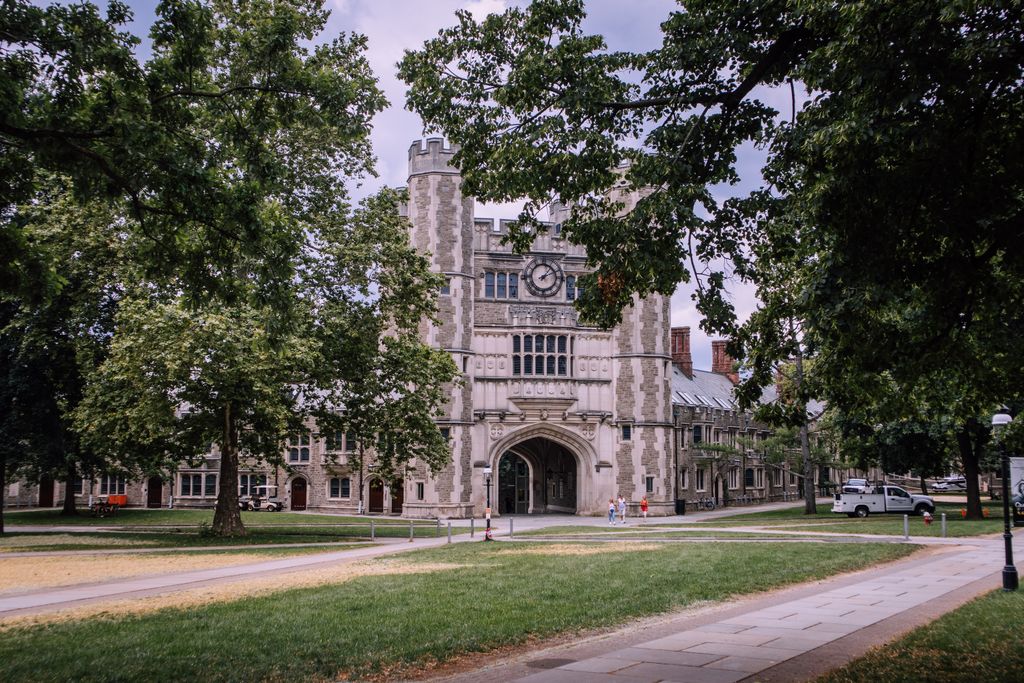
Princeton University: A Complete Guide to Education, Technology, Courses, Research, and Careers
Introduction
Princeton University is one of the most respected universities in the United States and is a member of the Ivy League. Located in Princeton, New Jersey, the university is internationally recognized for its teaching, research, mathematics, science, engineering, computer science, economics, public policy, humanities, and social sciences.
Founded in 1746, Princeton has a long history of academic achievement. Although it is famous for traditional academic disciplines, it is also an important institution for modern technology and scientific research.
For students interested in technology, Princeton provides opportunities to study areas such as:
- Computer Science
- Artificial Intelligence
- Machine Learning
- Data Science
- Software Engineering
- Electrical and Computer Engineering
- Robotics
- Cybersecurity
- Computational Science
- Applied Mathematics
- Information Technology
- Operations Research
One of Princeton’s important characteristics is its emphasis on undergraduate education and research. Students can build a strong academic foundation while working on independent projects and research.
This article provides a comprehensive overview of Princeton University, its history, academic programs, technology education, research opportunities, student life, career possibilities, and the future of technology.
1. History of Princeton University
Princeton University was founded in 1746 as the College of New Jersey.
It later moved to Princeton, New Jersey, and eventually became Princeton University.
The university has played an important role in American higher education for centuries.
Its history includes contributions to:
- Mathematics
- Physics
- Economics
- Politics
- Literature
- Engineering
- Computer science
- Public policy
Over time, Princeton expanded from a small colonial college into a major global research university.
Today, it combines a historic academic tradition with modern scientific and technological research.
2. Where Is Princeton University?
Princeton University is located in Princeton, New Jersey, between New York City and Philadelphia.
Its location provides students with access to major cities and a wide range of organizations.
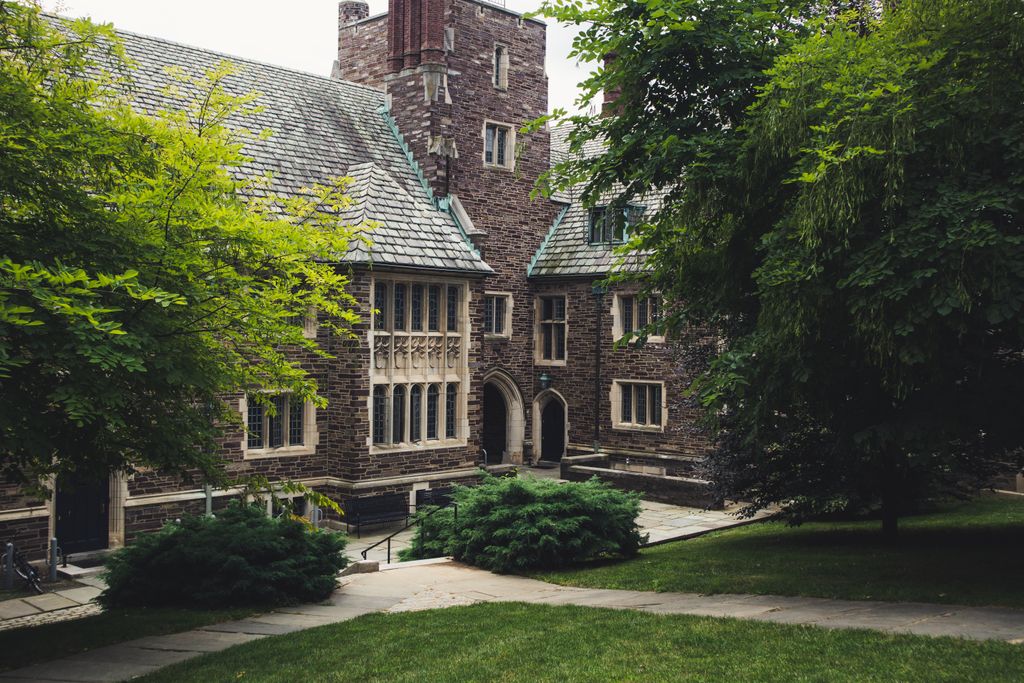
The university campus includes:
- Academic buildings
- Libraries
- Laboratories
- Residential colleges
- Research facilities
- Student centers
- Athletic facilities
The campus environment is designed to support both academic and extracurricular activities.
3. Princeton and the Ivy League
Princeton is one of the eight Ivy League universities.
The Ivy League includes:
- Princeton University
- Harvard University
- Yale University
- University of Pennsylvania
- Columbia University
- Brown University
- Dartmouth College
- Cornell University
The Ivy League is historically associated with highly selective private universities in the northeastern United States.
Princeton has developed a strong reputation for undergraduate education and research.
4. Academic Education at Princeton
Princeton offers a wide range of academic subjects.
Students can study:
- Engineering
- Computer Science
- Mathematics
- Physics
- Chemistry
- Biology
- Economics
- History
- Politics
- Psychology
- Sociology
- Literature
- Philosophy
- Public policy
This broad academic environment allows students to combine technology with other fields.
For example, computer science can be combined with economics, biology, mathematics, or public policy.
5. Computer Science at Princeton
Computer Science is one of Princeton’s major technology-related disciplines.
The Department of Computer Science conducts research and provides undergraduate and graduate education.
Computer science students learn how computational systems work and how computing can be used to solve complex problems.
Important areas include:
- Programming
- Algorithms
- Data structures
- Computer systems
- Artificial intelligence
- Machine learning
- Computer graphics
- Computer security
- Computational biology
- Networks
Computer science can prepare students for careers in technology companies, research institutions, startups, and many other organizations.
6. Programming
Programming is a fundamental computer science skill.
Programming languages allow people to communicate instructions to computers.
Students can learn programming concepts such as:
- Variables
- Functions
- Data structures
- Algorithms
- Object-oriented programming
- Testing
- Debugging
Common programming languages used in modern computer science include:
- Python
- Java
- C
- C++
- JavaScript
The most important skill is not memorizing programming syntax. It is learning how to break a problem into smaller parts and create an effective solution.
7. Algorithms
Algorithms are step-by-step procedures for solving computational problems.
For example, search engines use algorithms to organize and retrieve information.
Algorithms can be used for:
- Searching
- Sorting
- Optimization
- Routing
- Data processing
- Machine learning
- Scheduling
Students who understand algorithms can develop more efficient software.
Algorithmic thinking is also useful outside computer science because it teaches structured problem-solving.
8. Data Structures
Data structures determine how information is organized inside computer programs.
Examples include:
- Arrays
- Lists
- Stacks
- Queues
- Trees
- Graphs
- Hash tables
Understanding data structures helps programmers design efficient software.
For example, a search application may require a data structure that allows information to be retrieved quickly.
Data structures are therefore a fundamental part of computer science education.
9. Artificial Intelligence
Artificial intelligence is one of the most important areas of modern computing.
AI involves developing systems that can perform tasks involving learning, prediction, reasoning, perception, or decision-making.
AI can be used in:
- Healthcare
- Finance
- Education
- Robotics
- Transportation
- Scientific research
- Business
Students interested in AI need strong foundations in mathematics, statistics, programming, and algorithms.
Princeton’s research environment provides opportunities to explore advanced computational questions.
10. Machine Learning
Machine learning is a branch of artificial intelligence.
Instead of explicitly programming every rule, machine-learning systems can learn patterns from data.
Machine learning can be used for:
- Classification
- Prediction
- Recommendation
- Image recognition
- Language processing
- Scientific modeling
A machine-learning student may study:
- Probability
- Statistics
- Linear algebra
- Optimization
- Algorithms
- Programming
These foundations are important for developing reliable machine-learning systems.
11. Data Science
Data science combines computer science, mathematics, statistics, and domain knowledge.
Modern organizations generate huge amounts of data.
Data scientists help organizations understand that data.
They can:
- Clean datasets
- Analyze information
- Build models
- Create visualizations
- Identify patterns
- Make predictions
Data science is useful in:
- Business
- Healthcare
- Finance
- Government
- Scientific research
- Technology
Students interested in data science can combine computing with statistics and applied mathematics.
12. Cybersecurity
Cybersecurity focuses on protecting digital systems and information.
Important cybersecurity topics include:
- Network security
- Application security
- Cryptography
- Authentication
- Privacy
- Secure software
- Risk management
Cybersecurity is important because organizations increasingly depend on digital systems.
Banks, hospitals, governments, universities, and businesses all need to protect their information.
A strong cybersecurity professional needs knowledge of computers, networking, programming, and security principles.
13. Computer Systems
Computer systems involve the interaction between hardware and software.
Students may study:
- Computer architecture
- Operating systems
- Memory
- Processors
- Storage
- Distributed systems
Understanding computer systems helps students learn how software interacts with physical computers.
This knowledge can be useful for careers involving:
- Systems programming
- Cloud computing
- Infrastructure
- Operating systems
- Performance engineering
14. Computer Networks
Computer networks allow computers to communicate with one another.
Networking is essential for:
- The Internet
- Cloud computing
- Mobile communications
- Online applications
- Data centers
Students interested in networks may study:
- Network architecture
- Protocols
- Routing
- Communication
- Network security
- Distributed computing
Networking knowledge is also valuable in cybersecurity.
15. Robotics
Robotics combines multiple disciplines.
A robot may require:
- Mechanical systems
- Electronics
- Sensors
- Software
- Artificial intelligence
- Control systems
Robotics can be used in:
- Manufacturing
- Healthcare
- Research
- Exploration
- Agriculture
- Logistics
Computer science provides the software and intelligence components needed by many robotic systems.
16. Electrical and Computer Engineering
Princeton’s Department of Electrical and Computer Engineering is another important technology area.
Electrical and computer engineering combines electronics, computing, communication, and engineering.
Possible areas include:
- Computer hardware
- Electronics
- Circuits
- Signal processing
- Communications
- Control systems
- Computer architecture
Students interested in both hardware and software may find this field particularly useful.
17. Engineering at Princeton
The School of Engineering and Applied Science provides education and research across several engineering disciplines.
Engineering focuses on applying scientific knowledge to real-world problems.
Engineering fields can include:
- Chemical and biological engineering
- Civil and environmental engineering
- Electrical and computer engineering
- Mechanical and aerospace engineering
- Computer science
- Operations research and financial engineering
Engineering students learn how to design, analyze, test, and improve systems.
18. Applied Mathematics
Mathematics plays a major role in technology.
Applied mathematics can be used for:
- Artificial intelligence
- Machine learning
- Engineering
- Physics
- Data science
- Financial modeling
- Optimization
Mathematical concepts such as probability, statistics, calculus, linear algebra, and differential equations are useful in advanced technology.
Students who develop strong mathematical skills often have an advantage in highly technical fields.
19. Computational Science
Computational science uses computers to solve scientific problems. Princeton University
Scientists can create simulations and computational models for systems that are difficult or expensive to study physically.
Computational methods can be used in:
- Physics
- Chemistry
- Biology
- Climate science
- Astronomy
- Engineering
This field demonstrates how computer science can support scientific discovery.
20. Software Engineering
Software engineering focuses on building reliable software systems. Princeton University
The process may involve:
- Requirements
- Design
- Programming
- Testing
- Deployment
- Maintenance
Professional software engineers also need to understand:
- Version control
- Collaboration
- Documentation
- Security
- Testing
- Project management
Software engineering skills are valuable across almost every modern industry. Princeton University
21. Research at Princeton
Research is one of Princeton’s major strengths.
Students can participate in research projects and independent work.
Research teaches students how to:
- Ask questions
- Investigate problems
- Analyze evidence
- Build experiments
- Develop theories
- Communicate results
Technology research can include AI, algorithms, cybersecurity, computer systems, robotics, and computational science.
Research experience can be especially valuable for students considering graduate school.
22. Independent Work
One distinctive feature of Princeton undergraduate education is its emphasis on independent academic work.
Students can undertake substantial independent research and writing. Princeton University
In technology fields, independent work can involve:
- Developing software
- Conducting experiments
- Analyzing data
- Studying algorithms
- Building computational models
This can help students develop independence and research skills.
23. Interdisciplinary Education
Modern technological problems often require knowledge from several fields. Princeton University
Princeton provides opportunities to combine technology with other disciplines.
Examples include:
Computer Science + Biology
Useful for computational biology.
Computer Science + Economics
Useful for financial technology and economic modeling.
Computer Science + Mathematics
Useful for algorithms and theoretical computing.
Computer Science + Physics
Useful for scientific computing and quantum technologies.
Computer Science + Public Policy
Useful for understanding the social impact of technology.
This interdisciplinary approach can help students understand technology in a broader context.
24. Technology and Business
Technology has transformed modern business. Princeton University
Companies use technology for:
- Marketing
- Accounting
- Customer service
- Supply chains
- Product development
- Data analysis
Technology students can develop business knowledge through economics, entrepreneurship, finance, and management-related study.
This can help them become technology leaders and entrepreneurs.
25. Technology Entrepreneurship
Entrepreneurship involves creating new products, services, or organizations. Princeton University
Technology entrepreneurs can build:
- Software companies
- AI startups
- Fintech platforms
- Healthcare applications
- Education technology
- E-commerce services
Technical knowledge is important, but entrepreneurs also need:
- Communication
- Leadership
- Business understanding
- Customer research
- Product design
A university environment can help students develop these skills.
26. Princeton and Scientific Innovation
Princeton has a long tradition of scientific research.
Modern technological innovation often depends on fundamental science. Princeton University
For example:
- Physics can contribute to quantum technology.
- Mathematics can contribute to cryptography.
- Biology can contribute to biotechnology.
- Computer science can contribute to AI.
- Engineering can turn scientific discoveries into practical systems.
This connection between fundamental research and technology is important for long-term innovation.
27. Student Projects
Students can strengthen their education by working on projects. Princeton University
A technology project might involve:
- Building a website
- Developing an application
- Training a machine-learning model
- Creating a database
- Designing a robot
- Analyzing a large dataset
Projects provide practical experience.
They also give students material for their professional portfolios.
28. Internships
Internships provide practical workplace experience.
Technology students can seek internships with:
- Software companies
- Research organizations
- Banks
- Consulting companies
- Technology startups
- Engineering firms
An internship can teach students how professional organizations operate. Princeton University
It can also improve:
- Communication
- Teamwork
- Technical knowledge
- Time management
- Professional confidence
29. Career Opportunities
A Princeton education can prepare students for many career paths.
Technology-related careers include:
- Software engineer
- Computer scientist
- AI engineer
- Data scientist
- Machine-learning engineer
- Cybersecurity professional
- Systems engineer
- Robotics engineer
- Research scientist
- Technology consultant
- Product manager
- Entrepreneur
Students can work in both private industry and research institutions.
Some may continue their education through master’s or doctoral programs.
30. Skills Students Should Develop
A technology student should develop several important skills.
Programming
Learn at least one programming language well.
Mathematics
Develop knowledge of algebra, calculus, probability, and statistics. Princeton University
Problem Solving
Practice breaking complex problems into manageable steps.
Communication
Learn how to explain technical ideas clearly.
Research
Understand how to find, evaluate, and use reliable information.
Teamwork
Learn to collaborate with other students and professionals.Princeton University
Creativity
Technology requires innovative thinking.
31. Importance of English
English is important for technology students because much of the world’s technical information is available in English. Princeton University
Students can use English to understand:
- Research papers
- Programming documentation
- Online courses
- Technical books
- Software documentation
Improving technical English can therefore help students learn from international resources.
32. Building a Portfolio
Students should consider building a portfolio while studying. Princeton University
A portfolio might include:
- Programming projects
- Websites
- Applications
- Research projects
- Data-analysis work
- AI projects
- Technical writing
A portfolio demonstrates practical ability.
For example, instead of telling an employer that y Princeton Universityou know Python, you can show a project you created with Python.
33. Freelancing and Remote Work
Technology skills can also create opportunities for remote work and freelancing.
Students may provide services such as:
- Web development
- Programming
- Data analysis
- Software testing
- Digital marketing
- Graphic design
- Mobile development
However, students should focus on developing real skills and a professional portfolio.
Freelancing is competitive, and success generally requires consistent improvement, communication, and quality work.
34. Future of Technology
Technology is changing rapidly.
Important areas for the future include:
- Artificial intelligence
- Machine learning
- Quantum computing
- Robotics
- Cybersecurity
- Cloud computing
- Biotechnology
- Data science
- Autonomous systems
Universities such as Princeton contribute to these areas through education and research. Princeton University
Students should therefore develop strong fundamentals rather than relying only on knowledge of one particular technology. Princeton University
35. Why Fundamentals Matter
Technology changes quickly.
A programming language popular today may become less important in the future.
However, fundamentals such as:
- Mathematics
- Algorithms
- Problem-solving
- Computer systems
- Programming concepts
- Scientific reasoning
remain valuable.
A student with strong fundamentals can learn new technologies more easily.
Conclusion
Princeton University is a historic Ivy League research university with a strong reputation in education, science, engineering, mathematics, computer science, and research.
For students interested in technology, Princeton provides opportunities to explore computer science, artificial intelligence, machine learning, data science, cybersecurity, robotics, electrical and computer engineering, software engineering, computational science, and applied mathematics.
One of Princeton’s greatest strengths is its combination of rigorous academic education and research. Students can develop fundamental knowledge while participating in independent projects and advanced research.
Technology at Princeton is also interdisciplinary. Computing can be combined with biology, economics, mathematics, physics, engineering, public policy, and other subjects. This is important because many of today’s biggest challenges cannot be solved by one discipline alone.
A student interested in computer science can learn programming, algorithms, data structures, computer systems, artificial intelligence, and other areas. Engineering students can explore hardware, electronics, robotics, communications, and complex technological systems.
Research opportunities can help students learn how to investigate difficult problems and create new knowledge. Independent projects can develop creativity, technical skills, and analytical thinking. Internships and practical projects can further prepare students for professional careers.
Graduates interested in technology can pursue careers as software engineers, data scientists, AI specialists, cybersecurity professionals, researchers, engineers, consultants, entrepreneurs, and technology leaders.
However, students should remember that a university degree is only one part of career development. Practical experience is also important. Students should build projects, learn programming, develop communication skills, participate in research, seek internships, and continue learning throughout their careers.
The future of technology will include artificial intelligence, robotics, quantum computing, cybersecurity, data science, biotechnology, cloud computing, and other emerging fields. Strong foundations in mathematics, computer science, engineering, and scientific reasoning can help students adapt to these changes.
Overall, Princeton University represents a combination of academic excellence, research, technology, innovation, and interdisciplinary learning. For students who want to understand technology deeply and use it to solve complex problems, Princeton offers a powerful educational environment and a strong foundation for future study and careers.