Matter Smart Home Explained: What Is Matter, How It Works, Benefits, Devices, and the Future2026
Smart homes have become increasingly popular, but building one has traditionally been more complicated than it sounds. Different smart-home products often use different apps, wireless technologies, and ecosystems. A smart light may work with one platform, while a smart lock or sensor may require another. This can make choosing and connecting devices confusing.
Matter is designed to solve part of this problem.
Matter is an industry-backed smart-home connectivity standard intended to improve interoperability between compatible smart-home devices. Instead of forcing consumers to choose products based entirely on whether they work with a particular ecosystem, Matter aims to make compatible devices work together more easily across supported platforms.
The Connectivity Standards Alliance (CSA), which develops Matter, describes it as an open standard designed to make smart-home devices more compatible, reliable, secure, and easier to use.
But what exactly is Matter? How does it work? Is Matter the same as Wi-Fi or Bluetooth? Do you need a Matter hub? And is Matter actually going to make smart homes easier?
This complete guide explains Matter in simple language and explores why the standard could become one of the most important technologies in the smart-home industry.
What Is Matter?
Matter is a smart-home interoperability standard.
In simple terms, Matter provides a common language that compatible smart-home devices can use to communicate.
Imagine buying a smart light from one company, a smart thermostat from another company, and a smart door lock from a third company.
Without common standards, each product may use its own communication technology or ecosystem.
Matter is designed to make it easier for compatible products from different manufacturers to work together.
Matter is not a brand of smart-home device.
It is not a Wi-Fi replacement.
It is not an app.
It is not a smart speaker.
Instead, it is a standard that helps smart-home devices communicate in a more consistent way.
Why Was Matter Created?
Before Matter, the smart-home market was fragmented.
Consumers could encounter technologies and ecosystems such as:
- Wi-Fi
- Bluetooth
- Zigbee
- Z-Wave
- Thread
- Proprietary systems
- Different voice assistants
- Different smart-home apps
A product might support one ecosystem but not another.
For example, someone could purchase a smart bulb and later discover that it does not work with their preferred smart-home platform.
This creates what is often called smart-home fragmentation.
Matter was created to improve interoperability between manufacturers and platforms.
The goal is not necessarily to eliminate every existing smart-home technology.
Instead, Matter provides a common application layer that compatible devices can use.
Who Developed Matter?
Matter is developed by the Connectivity Standards Alliance, formerly known as the Zigbee Alliance.
The alliance includes companies from across the technology and smart-home industries.
Major technology companies have participated in the development and adoption of Matter, including companies involved in smartphones, smart speakers, networking equipment, home appliances, and smart-home products.
This broad industry participation is important because a universal standard is only useful if many manufacturers support it.
Matter Is Not a Wireless Technology
This is one of the most important things to understand.
Matter is not the same thing as Wi-Fi.
Matter is also not the same thing as Bluetooth.
Instead, Matter works on top of supported networking technologies.
Matter can use technologies such as:
- Wi-Fi
- Ethernet
- Thread
Bluetooth Low Energy can also play an important role during device setup and commissioning.
Think about the technology stack like layers.
The underlying network moves information.
Matter provides a common language that smart-home devices use to understand one another.
This distinction makes Matter much easier to understand.
Matter vs Wi-Fi
Wi-Fi connects devices to a network.
Matter defines how compatible smart-home devices communicate at the application level.
For example, a Matter-compatible smart light might connect to your home network using Wi-Fi.
Matter then provides the standardized way for the smart-home system to understand that device and control functions such as turning the light on or off.
Therefore:
Wi-Fi = network connection
Matter = smart-home communication standard
They work together rather than competing with each other.
Matter vs Bluetooth
Bluetooth is primarily a wireless communication technology.
Matter is a smart-home standard.
Bluetooth Low Energy can be used during the setup process for some Matter devices, allowing a smartphone to communicate with a device during commissioning.
After setup, the device may communicate over Wi-Fi, Thread, or Ethernet depending on its design.
Therefore, Matter and Bluetooth have different roles.
Matter vs Zigbee
Zigbee and Matter are also different technologies.
Zigbee is a wireless communication technology commonly used by smart-home devices.
Matter is an application-layer standard designed to provide interoperability.
A Matter device can use Thread or Wi-Fi as its underlying network, while some existing smart-home ecosystems may bridge older technologies into Matter-compatible systems.
This means Matter does not necessarily make technologies such as Zigbee disappear.
Instead, bridges and controllers can help integrate different technologies.
Matter vs Thread
Thread is particularly important to understand because the two technologies are often mentioned together.
Thread is a low-power wireless networking technology designed for connected devices.
Matter can operate over Thread.
So:
Thread = networking technology
Matter = application standard
A Matter smart sensor might use Thread to communicate with a Thread border router.
The Matter layer defines how the smart-home system understands the sensor.
How Does Matter Work?
Matter creates a common communication framework for compatible smart-home devices.
Imagine you have:
- A Matter smart bulb
- A Matter smart lock
- A Matter thermostat
- A Matter motion sensor
Each manufacturer can build its own hardware and software.
Matter defines standardized ways for compatible devices and controllers to communicate.
This can make the smart-home experience more consistent.
The process generally looks something like this:
Device → Matter network → Matter controller → Smart-home platform → User
The exact architecture can vary depending on the device and network.
What Is a Matter Controller?
A Matter controller is a device or software component that manages Matter devices within a smart-home ecosystem.
Depending on the ecosystem, a controller may be built into a device such as a smart speaker, home hub, or other compatible product.
The controller can help:
- Add devices
- Manage devices
- Send commands
- Create automations
- Maintain the smart-home network
One important point is that a Matter controller is not necessarily the same thing as a Thread border router.
Some products can perform both roles, but the functions are different.
What Is a Thread Border Router?
A Thread border router connects a Thread network to another IP-based network, such as Wi-Fi or Ethernet.
This allows Thread devices to communicate with the broader home network.
For example:
Matter sensor → Thread → Thread border router → home network
A Thread border router does not necessarily have to be a dedicated device.
Some smart-home products can include this functionality.
This can simplify the network for users.
Do You Need a Matter Hub?
Not always.
The exact requirements depend on the Matter device and smart-home ecosystem.
Some Matter devices can connect directly through Wi-Fi.
Others use Thread and therefore require suitable Thread infrastructure.
A Matter controller is generally required to manage Matter devices, although modern smart-home platforms may build the controller into devices users already own.
This is why checking the exact requirements of a Matter product is important before purchasing it.
Matter Device Types
Matter supports a growing range of smart-home device categories.
These can include:
- Smart lights
- Smart plugs
- Switches
- Sensors
- Thermostats
- Door locks
- Window coverings
- Smart TVs
- Media devices
- Air-quality devices
- Energy-management devices
- Security-related devices
The supported device categories continue to evolve as the Matter specification develops.
This is important because the value of Matter increases as more product categories become supported.
Smart Lights and Matter
Smart lighting is one of the easiest ways to understand Matter.
Imagine you purchase a Matter-compatible smart bulb.
Instead of being locked into one manufacturer’s ecosystem, the Matter-compatible bulb can potentially be added to supported smart-home platforms.
This gives consumers more flexibility.
You can also create automations.
For example:
Motion detected → turn on hallway light
or:
Sunset → turn on outdoor lights
Matter provides the interoperability layer while the smart-home platform handles automation.
Matter Smart Plugs
Smart plugs are another simple Matter device.
A Matter-compatible smart plug can turn ordinary appliances into connected devices.
For example, you could connect:
- A lamp
- Fan
- Charger
- Small appliance
The plug can then be controlled through a compatible smart-home system.
Smart plugs can also be used in automations.
For example:
If nobody is home → turn off selected smart plugs.
Matter Smart Locks
Smart locks are one of the more important Matter device categories.
A Matter-compatible smart lock can potentially work with supported smart-home ecosystems.
This could make it easier to integrate a lock into a broader automation system.
For example:
Unlock door → turn on hallway lights
or:
Lock door → activate home security routine
Security is especially important for smart locks.
Users should always choose reputable products and use strong account protection.
Matter Thermostats
Smart thermostats can also benefit from interoperability.
A Matter-compatible thermostat can potentially work with other compatible devices.
For example:
Home detected → adjust temperature
or:
Away mode activated → change thermostat settings
This could make heating and cooling automation more flexible.
Matter Sensors
Small sensors are particularly well suited to Thread and Matter.
Examples include:
- Motion sensors
- Door sensors
- Window sensors
- Temperature sensors
- Humidity sensors
- Light sensors
These devices generally do not need high bandwidth.
They benefit more from low-power networking and reliable communication.
This is one reason Thread is particularly useful for smart-home sensors.
Matter and Smart TVs
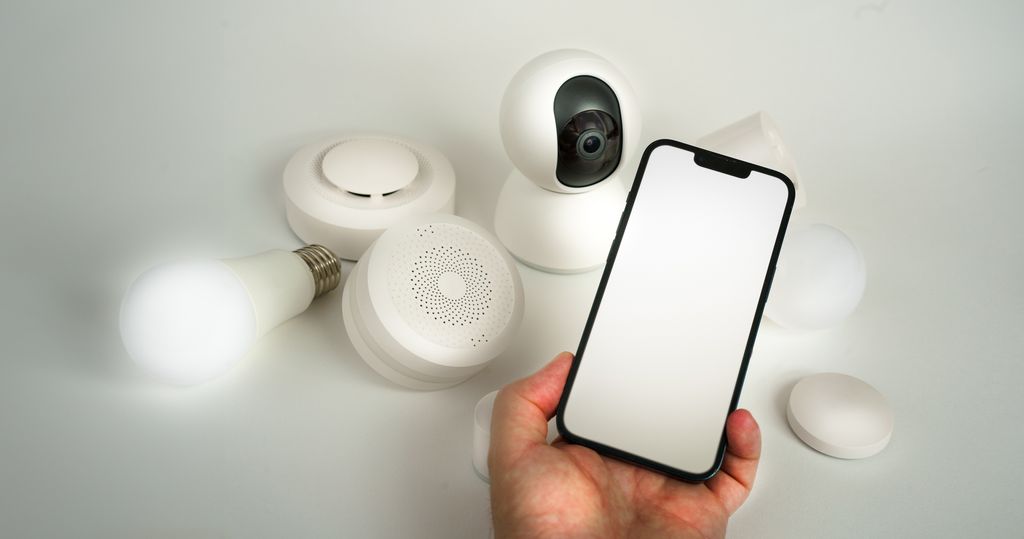
Matter is not limited to tiny sensors.
The ecosystem also includes entertainment-related devices.
Matter can help smart TVs and media devices participate in broader smart-home environments.
For example, a smart-home automation could potentially coordinate lighting and entertainment devices.
The exact capabilities depend on device support and Matter version.
Matter and Home Security
Matter can help connect different smart-home components.
For example:
- Door sensor
- Motion sensor
- Smart lock
- Smart light
- Security system
A smart-home platform can use these devices together in automations.
For example:
Door opens → hallway light turns on
or:
Motion detected while home is in away mode → trigger security automation
Matter does not itself become a complete security system.
It provides interoperability between supported devices.
Matter and Smart-Home Automation
Automation is where Matter becomes particularly interesting.
A smart home is not just about controlling individual devices.
The real value comes from devices working together.
For example:
Morning routine
At a scheduled time:
- Bedroom lights turn on
- Blinds open
- Thermostat adjusts
Leaving home
When the home switches to away mode:
- Lights turn off
- Doors lock
- Thermostat changes
- Selected devices power down
Evening routine
At night:
- Lights become dimmer
- Doors are checked
- Thermostat changes
- Outdoor lighting activates
Matter can help different compatible devices participate in these types of systems.
Matter and Multiple Smart-Home Platforms
One of the biggest promises of Matter is that consumers can have more flexibility when choosing smart-home platforms.
A Matter-compatible device may be capable of working with multiple supported ecosystems.
This concept is sometimes called multi-admin.
The goal is to allow users to share a Matter device across different compatible smart-home platforms rather than being permanently locked into one.
This can be especially useful in households where different people prefer different ecosystems.
Matter Multi-Admin
Imagine one person in a household primarily uses one smart-home platform while another uses a different platform.
With compatible Matter devices, the same device can potentially be shared across supported ecosystems.
This does not mean every device will work with every platform in exactly the same way.
Feature support can vary.
However, the concept significantly improves flexibility compared with traditional proprietary systems.
Matter’s Main Benefit: Interoperability
The most important word associated with Matter is:
Interoperability.
Interoperability means different systems can work together.
Historically, consumers sometimes had to ask:
“Does this smart bulb work with my platform?”
With Matter, the question can become:
“Does this device support Matter, and which Matter features does it support?”
That is a much simpler purchasing experience.
Matter and Consumer Choice
Matter can make consumers less dependent on individual manufacturers.
Suppose you buy a smart bulb today.
A few years later, you change your preferred smart-home platform.
With a compatible Matter product, you may have a better chance of continuing to use the same hardware.
This can reduce the risk of buying products that become inconvenient after switching ecosystems.
Matter and Manufacturers
Matter is also useful for manufacturers.
Without a common standard, companies may need to develop integrations for many platforms.
Matter can provide a standardized foundation.
This can potentially reduce development complexity.
It can also make it easier for smaller companies to create products that can participate in broader smart-home ecosystems.
Security in Matter
Security is a major part of Matter’s design.
Smart-home devices can control physical objects inside a home.
A compromised smart lock, camera, thermostat, or security device could create serious problems.
Matter therefore incorporates security mechanisms intended to provide secure device authentication and communication.
The Connectivity Standards Alliance identifies security and privacy as important design principles of the Matter standard.
However, Matter cannot make every smart-home system automatically secure.
Manufacturers still need to implement security correctly.
Users also need to protect accounts, networks, and devices.
Matter Device Authentication
Matter devices use mechanisms that help establish trust between compatible devices and controllers.
This is important because a smart-home controller should not simply accept any unknown device.
Secure onboarding helps ensure that devices joining the network are legitimate.
This is particularly important for products such as:
- Smart locks
- Security sensors
- Garage controllers
- Cameras
- Access systems
Privacy and Matter
Interoperability does not automatically mean all smart-home data becomes public or is shared everywhere.
Matter is designed with security and privacy considerations, but privacy also depends on the platform and manufacturer.
For example, a smart-home company may collect information through its application or cloud service.
Users should therefore examine the privacy practices of both:
The Matter device manufacturer
and
The smart-home platform
Matter provides a technical standard, but it does not replace privacy policies.
Matter Without the Cloud
One of the interesting aspects of Matter is its local-network orientation.
Matter devices can communicate using IP networking and can support local smart-home control.
Local operation can have advantages.
If an internet connection temporarily goes down, some local automations may continue to operate depending on the devices and controller.
This can improve reliability.
However, not every smart-home feature is necessarily local.
Some manufacturers may still rely on cloud services for remote access, advanced features, account management, or other functionality.
Why Local Control Matters
Imagine your smart lights are connected to your home’s Wi-Fi.
You press a button.
If the command must travel:
Phone → internet → cloud server → internet → home → light
there can be additional dependency and delay.
With local control, the system may be able to communicate inside the home network.
Local control can potentially provide:
- Lower latency
- Better reliability
- Reduced cloud dependency
- Faster responses
Matter’s IP-based architecture makes local networking an important part of the smart-home experience.
Matter and Internet Outages
What happens when your internet stops working?
The answer depends on your setup.
Some Matter devices can continue operating locally.
For example, a local light-control automation may still work.
But remote access through the internet may stop.
Cloud-dependent features may also become unavailable.
Therefore, Matter can improve local operation, but it does not mean your entire smart home will work exactly the same during an internet outage.
Matter and Wi-Fi
Wi-Fi remains extremely important.
Many higher-bandwidth smart-home devices can use Wi-Fi.
Examples include:
- Smart TVs
- Streaming devices
- Some appliances
- Some cameras
Matter can provide the common application layer while Wi-Fi handles the network connection.
This allows existing home Wi-Fi infrastructure to remain an important part of the smart home.
Matter and Thread
Thread is particularly useful for low-power devices.
Thread is based on IPv6 networking and is designed for low-power mesh networking.
It can be useful for:
- Sensors
- Buttons
- Locks
- Lights
- Small smart-home devices
A Thread network can contain multiple devices that help maintain network connectivity.
Matter can then operate on top of the Thread network.
Why Thread Is Important for Matter
Battery-powered sensors need efficient communication.
They cannot consume large amounts of energy continuously.
Thread is designed with low-power devices in mind.
This makes the combination attractive:
Matter + Thread = interoperable, low-power smart-home devices
For users, this could eventually mean smaller sensors with longer battery life and better interoperability.
Matter and Ethernet
Matter can also operate over Ethernet.
Ethernet provides a wired connection.
It is particularly useful for devices that remain in a fixed location and need reliable networking.
Examples might include:
- Home hubs
- Media devices
- Smart-home controllers
- Networking equipment
Using Ethernet can provide excellent stability and avoids wireless interference.
Matter Setup
One of Matter’s goals is to simplify device setup.
A typical process can involve:
- Install the smart-home device.
- Open a compatible smart-home application.
- Scan a Matter setup code.
- Connect the device to the appropriate network.
- Assign the device to a room.
- Configure automations.
The exact steps vary depending on the manufacturer and platform.
Matter’s standardized commissioning process is designed to make setup more consistent.
Matter QR Codes
Matter devices commonly use setup codes.
These can be provided through:
- QR codes
- Numeric codes
- Product packaging
- Device labels
A smartphone can scan the code during setup.
This reduces the need to manually enter complicated information.
Matter Device Sharing
Matter can also make it easier to share devices across supported ecosystems.
For example, a household could potentially use the same Matter light with multiple compatible smart-home platforms.
This is one of the features that can make Matter more flexible than older smart-home approaches.
Does Matter Make Every Smart Device Compatible?
No.
This is a common misunderstanding.
A device must actually support Matter.
A device that only supports Wi-Fi is not automatically a Matter device.
Similarly, an older Zigbee device does not automatically become a Matter device.
Some existing devices may work with Matter through a compatible bridge.
But compatibility should always be checked before buying.
Matter Bridges
A Matter bridge can connect devices using another technology to a Matter ecosystem.
This can help existing smart-home products participate in Matter-based environments.
For example, a bridge could potentially connect an existing collection of compatible devices to a Matter controller.
This is useful because millions of smart-home devices already exist.
Consumers should not have to replace every device simply because Matter is becoming more popular.
Matter Controllers vs Bridges
These terms are different.
Matter Controller
Manages Matter devices.
Matter Bridge
Connects devices using another technology into a Matter environment.
Thread Border Router
Connects a Thread network to another IP network.
A single physical product may perform multiple functions.
That is why modern smart-home devices can sometimes be confusing.
Matter and Existing Smart Homes
You do not necessarily need to rebuild your smart home from scratch.
If you already have:
- Smart lights
- Sensors
- Switches
- Hubs
- Smart speakers
you may be able to gradually introduce Matter products.
This is a better approach for many consumers.
Replace devices when they need upgrading rather than replacing everything at once.
Is Matter Worth It?
For someone building a new smart home, Matter is worth considering.
Its biggest advantage is flexibility.
Instead of choosing products based entirely on one ecosystem, you can look for Matter support.
However, you should still check the specific features.
Matter compatibility does not guarantee that every advanced function works identically across every platform.
Matter’s Limitations
Matter is promising, but it is not perfect.
Some limitations include:
Device support
Not every smart-home product supports Matter.
Feature differences
A device may support Matter but expose only certain functions through it.
Ecosystem differences
Different platforms may implement Matter features differently.
Setup complexity
Smart-home networking can still be confusing.
Hardware requirements
Some Thread devices require appropriate infrastructure.
Software updates
Manufacturers still need to maintain their products.
Matter Versions and Evolution
Matter is not a frozen technology.
The standard continues to evolve.
New versions can add device categories, features, improvements, and capabilities.
This is important because smart-home technology is changing rapidly.
Future Matter releases could support additional types of devices and more sophisticated interactions.
Consumers should therefore look at current product compatibility rather than assuming all Matter devices have identical capabilities.
The Future of Matter
The long-term goal of Matter is ambitious.
Imagine buying a smart-home product without worrying too much about which ecosystem owns the platform.
You install the device.
Your phone recognizes it.
Your smart-home controller adds it.
The device works alongside products from different manufacturers.
That is the experience Matter is trying to create.
If adoption continues to grow, Matter could become a foundational technology for consumer smart homes.
Matter and Smart Home Energy Management
Energy management is becoming increasingly important.
Future smart homes may coordinate:
- Solar systems
- Batteries
- EV chargers
- Thermostats
- Smart plugs
- Appliances
A common standard can make it easier for these systems to communicate.
For example, a home energy system could potentially coordinate appliances based on energy availability.
This could help households manage electricity use more intelligently.
Matter and Electric Vehicles
Electric vehicles are becoming part of connected homes.
An EV charger can potentially become another smart-home device.
Future Matter ecosystems may increasingly connect home energy equipment with other household systems.
For example:
Energy demand high → delay selected charging
or:
Solar production high → increase charging
The exact capabilities depend on device support and software.
Matter and Smart Appliances
Smart appliances are another major opportunity.
Imagine connecting:
- Washing machine
- Refrigerator
- Oven
- Dishwasher
- Dryer
through a common smart-home ecosystem.
Matter can potentially help these products become part of broader automation systems.
However, manufacturers must implement the appropriate Matter device types and features.
Matter and the Smart Home of the Future
The future smart home may be less about controlling individual devices and more about coordinating the entire environment.
Instead of saying:
“Turn on this light.”
You may simply trigger a routine.
For example:
Arrive home → unlock door → hallway lights turn on → thermostat adjusts → selected devices activate.
Matter can provide the interoperability foundation needed for different devices to participate in these experiences.
Why Matter Could Be Important for Consumers
The most important benefit of Matter is not necessarily faster Wi-Fi or longer battery life.
It is choice.
Consumers can potentially choose products from different manufacturers without being locked into a single ecosystem.
This can create:
- More competition
- More product choices
- Easier upgrades
- Greater flexibility
- Potentially longer device usefulness
The standard could also encourage manufacturers to focus on hardware quality and unique features rather than relying entirely on ecosystem lock-in.
Final Verdict
Matter is one of the most important developments in the smart-home industry because it addresses one of the industry’s biggest problems: fragmentation.
It provides a common application-level standard that allows compatible smart-home devices to communicate across supported platforms.
Matter works with networking technologies such as Wi-Fi, Ethernet, and Thread rather than replacing them.
Its potential benefits include:
- Better interoperability
- Easier device setup
- Greater platform flexibility
- Improved local control
- More consumer choice
- Easier integration between manufacturers
- A stronger foundation for future smart-home automation
But Matter is not a magic solution.
Not every device supports it, and different platforms may expose different features. Some devices may require additional infrastructure such as a Matter controller or Thread border router.
For consumers, the best approach is simple: when buying a new smart-home product, check for Matter support and verify the exact features that work with your preferred ecosystem.
Matter’s biggest promise is a future where building a smart home feels less like solving a technology puzzle.
Instead of asking, “Will this device work with everything I already own?”, consumers may eventually be able to buy compatible products from different companies and connect them with much less effort.
That could make the smart home more open, flexible, and user-friendly—and potentially turn connected-home technology from a collection of separate gadgets into one truly integrated system. :::