Mixed Reality: A Complete Guide to MR Technology, Applications, Benefits, Challenges, and the Future
Introduction
Mixed Reality, commonly known as MR, is an emerging technology that combines elements of the physical world with digitally created content. It allows computer-generated objects, information, and environments to appear alongside the real world while enabling users to interact with both physical and virtual elements.
Mixed Reality is closely connected to Augmented Reality (AR) and Virtual Reality (VR), but it offers a distinct experience. Virtual Reality generally places users inside a completely digital environment, while Augmented Reality overlays digital information onto the physical world. Mixed Reality goes further by allowing digital objects to interact with the user’s physical surroundings.
For example, an MR application could place a virtual 3D model of a machine on a real factory floor. A user could walk around the model, inspect different components, manipulate the digital object, and receive information about the real environment at the same time.
Mixed Reality combines several technologies, including computer vision, spatial computing, sensors, artificial intelligence, 3D graphics, depth perception, cameras, motion tracking, and advanced display systems.
The technology has applications across education, healthcare, engineering, manufacturing, architecture, entertainment, retail, training, defense, remote collaboration, and many other fields.
As hardware becomes smaller, more powerful, and more affordable, Mixed Reality has the potential to change how people interact with computers.
This article provides a comprehensive overview of Mixed Reality, including its definition, history, how it works, hardware, software, spatial computing, applications, benefits, limitations, security, privacy, education, healthcare, manufacturing, gaming, business, artificial intelligence, and future developments.
What Is Mixed Reality?
Mixed Reality is a technology that blends physical and digital environments so that virtual objects can appear within the real world and interact with physical surroundings.
The key characteristics of MR include:
- Real-world awareness
- Digital 3D objects
- Spatial mapping
- Interaction
- Real-time tracking
- Environmental understanding
Unlike traditional computer interfaces, MR can place digital information directly into the user’s surrounding environment.
Mixed Reality vs Virtual Reality
Virtual Reality creates an immersive digital environment.
Users generally wear a VR headset that blocks or significantly reduces their view of the physical world.
Mixed Reality, on the other hand, maintains awareness of the physical environment while introducing digital elements.
For example, a VR user might enter a completely virtual classroom.
An MR user might see a virtual teacher or 3D model positioned inside an actual classroom.
Mixed Reality vs Augmented Reality
Augmented Reality generally adds digital information to a real-world view.
Mixed Reality emphasizes more advanced spatial understanding and interaction between digital content and the physical environment.
The distinction between AR and MR can vary depending on how companies and researchers define the technologies.
Extended Reality
Extended Reality, or XR, is a broader term covering technologies such as:
- Virtual Reality
- Augmented Reality
- Mixed Reality
XR describes systems that modify or extend human perception using digital technology.
History of Mixed Reality
The idea of combining digital content with the physical world has existed for decades.
Early research focused on computer-generated graphics, head-mounted displays, tracking systems, and human-computer interaction.
As processors, sensors, cameras, displays, and graphics technologies improved, practical MR systems became increasingly possible.
Early Head-Mounted Displays
Early head-mounted displays were large and expensive.
They were primarily used in research, military applications, industrial visualization, and specialized training.
Development of Computer Vision
Computer vision became a critical component of modern MR.
Computer vision systems allow devices to analyze camera images and understand aspects of the surrounding environment.
Advances in Mobile Computing
Smartphones helped popularize augmented and spatial computing technologies.
Modern mobile devices contain cameras, motion sensors, processors, and graphics hardware that can support sophisticated digital overlays.
Modern Mixed Reality
Modern MR devices combine multiple sensors and cameras with advanced processors and displays.
These systems can understand surfaces, movement, spatial relationships, and user interactions.
How Mixed Reality Works
Mixed Reality requires several technological components to operate.
A typical MR system may include:
- Cameras
- Depth sensors
- Motion sensors
- Displays
- Processing hardware
- Spatial mapping software
- Tracking systems
- 3D graphics
- Interaction systems
Cameras
Cameras capture information about the physical environment.
They can help identify:
- Walls
- Floors
- Furniture
- Objects
- People
- Movement
Depth Sensors
Depth sensors estimate the distance between the device and objects in the environment.
This helps MR systems understand the three-dimensional structure of a room.
Motion Sensors
Motion sensors track the movement and orientation of the headset.
Examples include:
- Accelerometers
- Gyroscopes
- Magnetometers
Spatial Mapping
Spatial mapping creates a digital representation of the surrounding environment.
The system can identify surfaces such as:
- Floors
- Walls
- Tables
- Ceilings
Virtual objects can then be positioned relative to these surfaces.
Environmental Understanding
Environmental understanding allows an MR system to recognize the physical context around the user.
For example, the system may determine that a particular horizontal surface is a table.
A digital object can then be placed on the table.
3D Rendering
3D graphics engines generate digital objects and environments.
The system must render these objects in real time as the user moves.
Real-Time Tracking
Tracking allows the system to maintain the correct position of digital objects.
If the user moves around a virtual object, the object should appear to remain in its physical location.
Spatial Anchors
Spatial anchors help digital content remain attached to specific positions in physical space.
For example, a virtual information panel could remain attached to a wall.
Displays
MR devices require displays that present digital content while maintaining awareness of the physical environment.
Display technologies can include:
- Transparent optical displays
- Cameras with passthrough displays
- Advanced projection systems
Optical See-Through
Optical see-through devices allow users to see the physical world directly while digital content is presented within their field of view.
Video Passthrough
Video passthrough systems use cameras to capture the environment and display it on screens inside the headset.
Digital content can then be integrated with the camera view.
Spatial Computing
Spatial computing refers to computer interaction that understands physical space and allows digital content to be positioned within it.
Mixed Reality is an important part of spatial computing.
Human-Computer Interaction
Traditional computing uses screens, keyboards, and mice.
MR introduces new interaction methods.
These can include:
- Hand gestures
- Eye tracking
- Voice commands
- Controllers
- Head movement
- Physical movement
Hand Tracking
Hand tracking allows MR systems to identify hand movements without requiring traditional controllers.
Users may interact with virtual objects by moving or touching their hands in space.
Eye Tracking
Eye tracking determines where the user is looking.
It can be used for:
- Interface navigation
- Object selection
- Adaptive rendering
- Accessibility
Voice Interaction
Voice commands allow users to control MR applications without physical controllers.
Gesture Recognition
Gesture recognition allows specific hand movements to trigger actions.
Haptic Feedback
Haptic technology provides physical sensations associated with digital interactions.
Future MR systems may use increasingly advanced haptic feedback to make virtual objects feel more realistic.
Mixed Reality Hardware
MR hardware generally includes headsets, sensors, controllers, computers, and accessories.
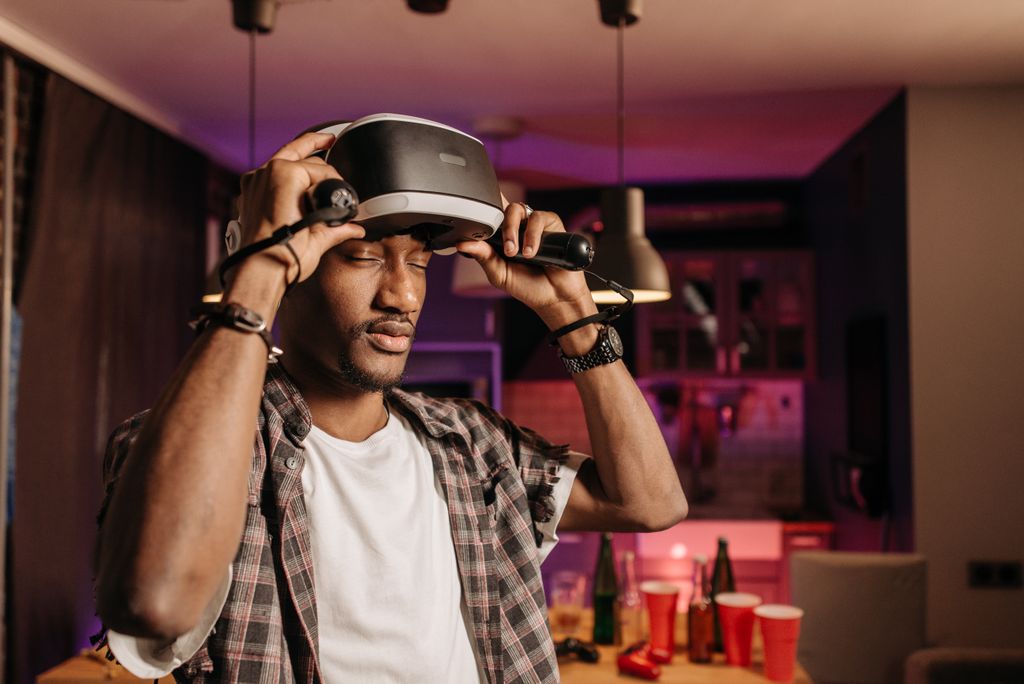
MR Headsets
An MR headset combines displays, cameras, sensors, processors, and audio systems.
A headset may provide:
- Environmental scanning
- 3D visualization
- Spatial audio
- Hand tracking
- Eye tracking
Standalone Headsets
Standalone MR headsets contain their own processors and batteries.
They do not always require a separate computer.
PC-Connected MR
Some systems connect to powerful computers.
This can provide access to more computational resources.
Mobile MR
Smartphones and tablets can support some forms of mixed-reality experiences.
However, dedicated headsets generally provide more immersive spatial interaction.
Controllers
Some MR systems use handheld controllers.
Controllers can provide:
- Buttons
- Triggers
- Motion tracking
- Haptic feedback
Spatial Audio
Spatial audio creates the impression that sounds originate from particular locations.
For example, a virtual object behind the user could produce sound that appears to come from behind them.
Mixed Reality Software
MR applications rely on specialized software frameworks and development platforms.
These systems provide tools for:
- Tracking
- Rendering
- Spatial mapping
- Input
- Object interaction
Game Engines
Game engines can be used to create MR applications.
They provide tools for:
- 3D graphics
- Physics
- Animation
- Interaction
Computer Vision
Computer vision allows MR systems to understand images and physical environments.
It can support:
- Object recognition
- Surface detection
- Tracking
- Scene understanding
Artificial Intelligence and Mixed Reality
Artificial intelligence can significantly improve MR.
AI can help systems understand:
- Objects
- People
- Environments
- Speech
- Gestures
AI-Powered Object Recognition
AI can identify objects within a user’s environment.
For example, an MR system could recognize a chair and position digital information around it.
AI and Natural Language
Natural-language processing allows users to interact with MR applications using conversational commands.
AI and Spatial Understanding
AI can help interpret complex environments.
This can improve navigation and interaction.
Mixed Reality in Education
Education is one of the most promising applications of MR.
Students can interact with three-dimensional educational content.
Virtual Science Models
Students can examine 3D models of:
- Cells
- Organs
- Molecules
- Planets
- Machines
Historical Education
MR can recreate historical environments and objects.
Students could explore digital reconstructions while remaining inside a physical classroom.
Geography
MR can display three-dimensional maps and geographic models.
Engineering Education
Students can interact with digital machines and engineering models.
Benefits of MR in Education
MR can provide:
- Interactive learning
- Visual understanding
- Practical simulations
- Increased engagement
- Safe experimentation
Mixed Reality in Healthcare
Healthcare is another important area for MR.
Applications may include:
- Medical education
- Surgical planning
- Anatomy visualization
- Rehabilitation
- Remote assistance
Medical Training
Students can study 3D anatomical models.
They can examine structures from different angles.
Surgical Planning
MR may help healthcare professionals visualize patient-specific anatomical information.
It can provide an additional visualization layer during planning or procedures.
Such systems require appropriate validation and should not replace professional medical judgment.
Medical Visualization
Complex medical information can be represented spatially.
This can help professionals understand three-dimensional relationships.
Rehabilitation
MR applications may support physical rehabilitation through interactive exercises and feedback.
Mixed Reality in Manufacturing
Manufacturing is a major enterprise application of MR.
Workers can use MR systems to access information while working with physical equipment.
Assembly Assistance
Digital instructions can be displayed near physical components.
This can help workers understand assembly procedures.
Maintenance
MR can provide maintenance information directly within a technician’s field of view.
For example, a system might identify a machine component and display relevant instructions.
Remote Assistance
A technician at one location can communicate with an expert elsewhere.
The expert may be able to see the technician’s environment and provide guidance.
Training
MR can simulate industrial procedures while using real equipment or environments.
Mixed Reality in Engineering
Engineers can visualize 3D designs at physical scale.
They can inspect:
- Mechanical components
- Buildings
- Vehicles
- Industrial systems
Design Review
Teams can examine a digital model before manufacturing.
This can help identify design issues earlier.
Product Development
MR can allow designers and engineers to evaluate products in realistic environments.
Architecture and Construction
Architects can use MR to visualize buildings before they are constructed.
Building Visualization
A digital building model can be positioned within a physical site.
Users can inspect:
- Room layouts
- Structural elements
- Equipment
- Interior designs
Construction Planning
Construction teams can compare digital models with physical construction.
This may help identify discrepancies.
Interior Design
MR can allow users to visualize furniture, lighting, and other design elements within actual spaces.
Mixed Reality in Retail
Retailers can use MR to provide interactive product experiences.
Customers could visualize products before purchasing them.
Furniture Visualization
A digital sofa or table can be displayed in a customer’s room.
Clothing and Accessories
MR may support virtual product visualization.
Product Demonstrations
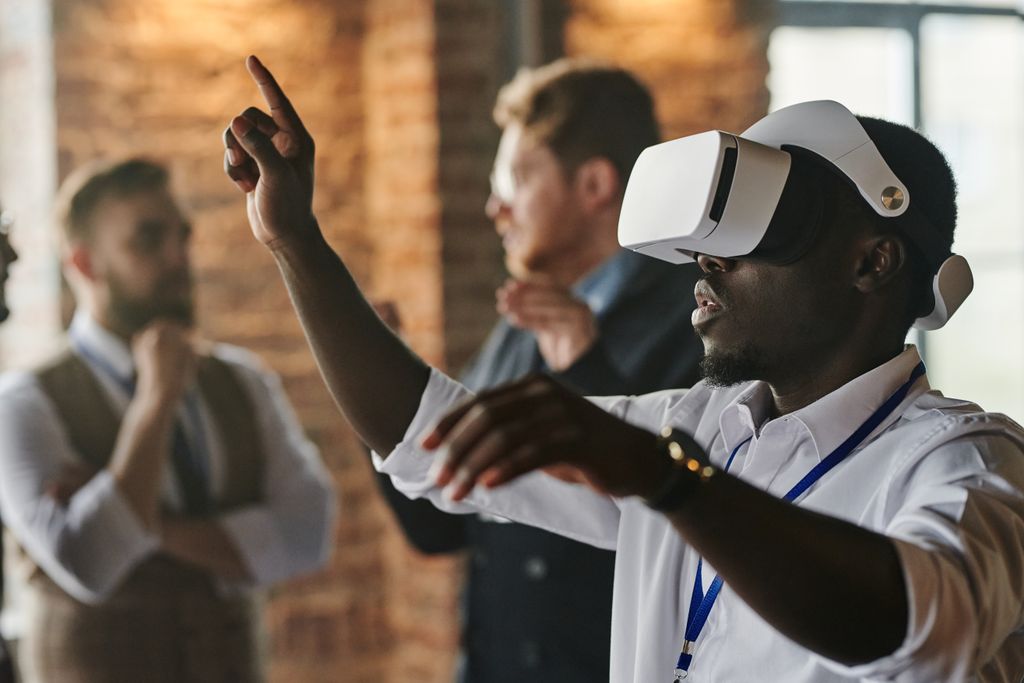
Companies can use MR to demonstrate complex products without transporting physical equipment.
Mixed Reality in Automotive
Automotive companies can use MR for:
- Vehicle design
- Engineering
- Training
- Marketing
- Maintenance
Automotive Design
Designers can inspect vehicle models in three dimensions.
Vehicle Training
Technicians can learn about vehicle systems using interactive digital models.
Mixed Reality in Aerospace
Aerospace engineering involves complex systems.
MR can assist with:
- Training
- Maintenance
- Design
- Visualization
Mixed Reality in Tourism
MR can enhance tourism experiences.
Visitors could see historical reconstructions or additional information over physical locations.
Museums
Museums can use MR to create interactive exhibits.
Visitors might see digital reconstructions of historical artifacts.
Cultural Heritage
MR can help preserve and communicate information about historical sites.
Mixed Reality in Entertainment
Entertainment is another major application.
MR can combine real environments with digital characters, effects, and interactive stories.
Mixed Reality Gaming
MR gaming allows digital games to interact with physical environments.
Instead of playing only on a flat screen, users can experience game elements around them.
Interactive Storytelling
MR can create stories that respond to the user’s environment and actions.
Sports
MR can support sports training and fan experiences.
Athletes may visualize tactical information or performance data.
Mixed Reality in Business
Businesses can use MR for:
- Training
- Meetings
- Product design
- Sales
- Remote assistance
Remote Collaboration
MR can allow teams in different locations to interact with shared digital models.
Participants may examine the same virtual object while remaining physically separated.
Virtual Meetings
MR could make remote meetings more immersive by representing participants as avatars or spatial digital representations.
Product Sales
Sales professionals can demonstrate products using 3D digital models.
Mixed Reality in Training
Training is particularly suitable for MR because it can simulate complex environments.
Applications include:
- Industrial training
- Medical training
- Emergency response
- Equipment training
Safe Simulation
MR can allow trainees to practice procedures without exposing them to certain real-world risks.
Skill Development
Interactive practice can help learners understand complex procedures.
Mixed Reality in Emergency Response
MR can support emergency training by simulating environments.
First responders can practice navigation and decision-making scenarios.
Mixed Reality in Military Applications
Military organizations have researched immersive technologies for training, simulation, planning, and visualization.
Such systems can provide realistic training environments without requiring every physical element to be present.
Mixed Reality in Logistics
MR can assist warehouse workers with:
- Navigation
- Inventory identification
- Picking instructions
Warehouse Operations
Digital information can be displayed near physical products.
This can help workers locate items.
Mixed Reality in Transportation
MR may support navigation and driver assistance.
Head-up displays can provide information within the driver’s field of view.
Safety is critical when designing such systems.
Mixed Reality and Accessibility
MR can provide alternative ways to interact with digital information.
Potential accessibility features include:
- Voice control
- Large virtual interfaces
- Visual alerts
- Spatial audio
- Customizable interfaces
However, MR hardware itself can create accessibility barriers, so applications should be designed inclusively.
Mixed Reality Challenges
Despite its potential, MR faces several challenges.
Hardware Cost
Advanced MR hardware can be expensive.
This can limit adoption.
Battery Life
Headsets require power.
Longer battery life remains an important engineering goal.
Device Weight
Heavy headsets can become uncomfortable during extended use.
Manufacturers continue to work on lighter designs.
Field of View
The field of view determines how much digital content users can see.
Limited field of view can reduce immersion.
Motion Sickness
Some immersive applications can cause discomfort for certain users.
Careful design and appropriate frame rates can help reduce the risk.
Tracking Accuracy
MR systems must accurately track users and environments.
Poor tracking can cause virtual objects to move incorrectly.
Lighting Conditions
Computer vision systems can behave differently under varying lighting conditions.
Occlusion
Occlusion refers to correctly determining whether a physical object should appear in front of or behind a digital object.
Accurate occlusion improves realism.
Privacy Concerns
MR devices may use cameras and sensors to continuously analyze environments.
This creates privacy concerns.
Environmental Data
An MR device could potentially capture information about:
- Rooms
- Objects
- People
- Locations
Users should understand how such information is processed and stored.
Biometric Data
Some MR systems may collect information related to:
- Eye movements
- Hand movements
- Facial characteristics
- Voice
Such data can be sensitive and should be handled carefully.
Cybersecurity
MR devices are connected computing systems.
They can face cybersecurity threats such as:
- Account attacks
- Malware
- Data theft
- Unauthorized access
Secure Authentication
Strong authentication can help protect MR accounts and applications.
Software Updates
Keeping MR devices updated can reduce exposure to known vulnerabilities.
Data Protection
Organizations using MR should protect collected data through appropriate security controls.
Social Challenges
MR may also create social questions.
If digital information becomes constantly visible, users may experience information overload.
Digital Distraction
Excessive use of immersive technologies could distract users from their physical environment.
This is particularly important in situations requiring attention to safety.
Social Interaction
MR could change how people interact.
Digital overlays may become part of everyday communication.
Digital Identity
Users may represent themselves through avatars or digital identities.
This creates new questions about identity, privacy, and authenticity.
Mixed Reality and the Workplace
MR could change workplace collaboration.
Workers may access information without leaving their current tasks.
Remote Experts
An expert could assist a technician remotely by providing visual guidance.
Digital Workspaces
MR can create virtual screens and information panels around a user.
This may expand the workspace beyond a physical monitor.
Collaborative Design
Multiple people can review 3D models together.
Mixed Reality and the Metaverse
Mixed Reality is often discussed in relation to the metaverse.
The metaverse is a broad concept involving persistent digital environments, social interaction, digital objects, and immersive technologies.
MR can connect physical environments with digital spaces.
Digital Twins and MR
A digital twin is a digital representation of a physical object or system.
MR can display a digital twin directly alongside its physical counterpart.
For example, an engineer could view a digital model of industrial equipment while standing next to the real machine.
Mixed Reality and Digital Twins
The combination can provide:
- Real-time information
- Maintenance data
- Visualization
- Simulation
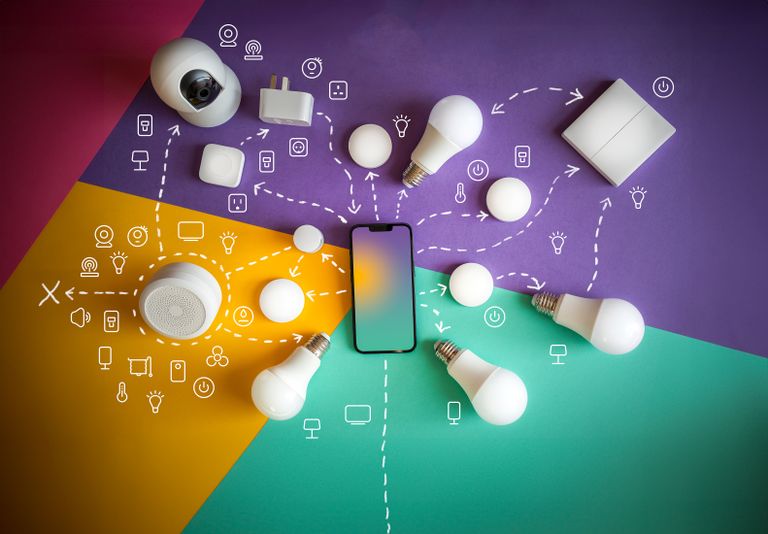
Mixed Reality and the Internet of Things
IoT sensors can provide real-world data to MR systems.
For example, an MR application could display the current temperature or operating status of a machine.
Real-Time Data
MR can make complex data easier to understand by presenting it spatially.
Mixed Reality and 5G
5G networks can support low-latency connectivity for certain MR applications.
This may be useful for:
- Remote collaboration
- Cloud rendering
- Real-time data
However, MR applications can also operate using local processing and Wi-Fi depending on requirements.
Cloud Rendering
Some MR systems may use cloud computing to process demanding graphics workloads.
This can reduce the hardware requirements of devices, but network reliability becomes important.
Edge Computing and MR
Edge computing can place processing closer to users.
This can reduce latency compared with distant cloud servers.
Mixed Reality Development
Developing MR applications requires several skills.
Developers may need knowledge of:
- 3D graphics
- Programming
- Computer vision
- Spatial interaction
- User experience design
3D Modeling
MR applications often require 3D models.
These models represent:
- Objects
- Environments
- Characters
- Equipment
User Experience Design
MR interfaces should consider physical space.
Traditional 2D interface design principles do not always translate directly into three dimensions.
Spatial User Interfaces
MR interfaces can place menus, buttons, and information panels around the user.
They should remain easy to find and operate.
Mixed Reality Development Challenges
Developers must account for:
- Different environments
- Tracking limitations
- Hardware differences
- User movement
- Performance
- Comfort
Performance Optimization
MR applications need high performance.
Low frame rates can reduce comfort and immersion.
Real-Time Graphics
Applications must render complex scenes quickly.
Developers often optimize:
- 3D models
- Lighting
- Textures
- Physics
- Rendering pipelines
Mixed Reality Standards
Standards can improve interoperability and simplify development.
Open frameworks and common APIs can reduce dependence on individual platforms.
Future of Mixed Reality
The future of MR is likely to involve improvements in hardware, software, AI, displays, interaction, and connectivity.
Smaller Devices
Future headsets may become lighter and more comfortable.
Better Displays
Display technologies may provide:
- Higher resolution
- Wider fields of view
- Improved brightness
- Better contrast
Better Spatial Understanding
AI and computer vision may allow MR systems to understand environments more accurately.
Advanced Hand Tracking
Future systems may recognize increasingly complex gestures.
Improved Eye Tracking
Eye tracking may become more accurate and useful for interfaces and rendering optimization.
Natural Language Interaction
Users may interact with MR systems through conversational commands rather than menus.
AI-Powered MR Assistants
AI assistants could understand the user’s environment and provide contextual information.
For example, an MR assistant might identify a machine component and explain how it works.
Persistent Digital Objects
Future MR systems may allow digital objects to remain associated with physical locations over long periods.
This could support persistent information layers around buildings, workplaces, and public spaces.
MR in Smart Homes
Mixed Reality could become an interface for smart home systems.
Users could see and control:
- Lights
- Thermostats
- Cameras
- Appliances
through spatial interfaces.
MR in Education of the Future
Future classrooms may use MR to transform ordinary spaces into interactive learning environments.
Students could explore:
- Ancient cities
- Human anatomy
- Space environments
- Engineering systems
without leaving the classroom.
MR in Healthcare of the Future
Future medical systems may use increasingly sophisticated 3D visualization.
MR could support planning, training, collaboration, and information access.
MR in Manufacturing of the Future
Factories may use MR to create digital layers over physical production environments.
Workers could receive contextual instructions and real-time equipment information.
MR and Remote Work
Remote employees may collaborate around shared 3D objects.
This could make certain engineering and design tasks more interactive.
MR and Creative Industries
Artists, designers, filmmakers, and creators can use MR to build experiences that combine physical and digital environments.
MR and Architecture
Architects may walk through digital buildings before construction begins.
This can provide a stronger sense of scale and spatial relationships.
MR and Education Accessibility
MR could provide multiple representations of educational information.
Students could manipulate objects, listen to descriptions, or explore visual models.
Economic Impact
The growth of Mixed Reality could create opportunities in:
- Hardware manufacturing
- Software development
- Education
- Healthcare
- Entertainment
- Engineering
- Training
- Retail
New Career Opportunities
Potential roles include:
- XR developer
- 3D artist
- Spatial UX designer
- Computer vision engineer
- XR researcher
- Technical artist
- Simulation developer
Ethical Considerations
MR technology should be developed responsibly.
Important ethical topics include:
- Privacy
- Data ownership
- Surveillance
- Accessibility
- Digital addiction
- Misinformation
- Safety
Responsible MR Design
Developers should give users control over:
- Data
- Permissions
- Sensors
- Notifications
- Privacy settings
Conclusion
Mixed Reality represents an important evolution in the relationship between people, computers, and physical environments.
Instead of interacting with digital information only through traditional screens, MR allows users to experience digital content within three-dimensional physical space.
The technology combines cameras, sensors, spatial mapping, computer vision, 3D graphics, displays, artificial intelligence, and advanced interaction systems.
Its applications are broad.
In education, MR can turn abstract concepts into interactive 3D experiences. In healthcare, it can support visualization and training. In manufacturing, it can provide digital instructions and maintenance information. In architecture, it can allow people to explore digital buildings before construction. In retail, customers can visualize products in real environments. In entertainment, MR can combine digital stories and characters with physical spaces.
Businesses can use MR for training, remote assistance, design reviews, collaboration, and product demonstrations.
The technology also has important challenges.
Hardware can be expensive, battery life can be limited, and headsets can be uncomfortable during long sessions. Tracking and environmental understanding must be highly accurate to create convincing experiences. Privacy is another major concern because MR devices may use cameras and sensors to understand the user’s environment.
Cybersecurity is equally important. MR devices are computing platforms and can contain sensitive information. Strong authentication, software updates, secure networks, and responsible data handling are therefore essential.
Artificial intelligence will likely play a major role in the future of Mixed Reality.
AI can help systems understand physical environments, recognize objects, interpret speech, track users, and provide contextual assistance.
The combination of AI and MR could produce highly intelligent spatial assistants that understand both what users say and what exists around them.
Mixed Reality is also closely connected to other technologies such as the Internet of Things, digital twins, cloud computing, edge computing, 5G, robotics, and smart environments.
As these technologies develop, MR may become an important interface between the digital and physical worlds.
The long-term vision is not simply to create more immersive entertainment. It is to make digital information available in the places where people naturally need it.
A technician could see maintenance instructions next to a machine. A student could examine a three-dimensional scientific model inside a classroom. An architect could walk through a proposed building before construction. A doctor could visualize complex anatomical information. A remote expert could guide a worker through a physical repair.
These possibilities demonstrate why Mixed Reality has attracted attention across many industries.
The future success of MR will depend not only on better hardware and software but also on usability, affordability, privacy, security, accessibility, interoperability, and responsible design.
Ultimately, Mixed Reality has the potential to become a major computing platform that connects physical environments with digital information.
As devices become smaller, displays improve, artificial intelligence becomes more capable, and spatial computing becomes more sophisticated, Mixed Reality may gradually move from specialized applications into everyday activities.
The technology is still developing, but its central idea is powerful: digital information does not always need to exist inside a separate screen. It can become part of the physical environment around us.
That shift could fundamentally change how people learn, work, design, communicate, create, and interact with technology.Mixed Reality