Should Children Use Their Mind to Learn Instead of Using AI Too Much?
Introduction
Artificial intelligence is becoming an increasingly common part of education, giving students quick access to explanations, ideas, research assistance, and learning support. While these tools can make studying easier, children still need to develop the ability to think independently. Learning is not only about finding the correct answer; it is also about understanding how to reach that answer, evaluate information, solve problems, and explain ideas clearly.
Independent thinking helps children build important skills that remain valuable even when technology changes. Working through difficult questions, researching information, making mistakes, and developing their own arguments can strengthen their ability to learn and make informed decisions. AI can support these activities, but excessive dependence on chatbots may reduce opportunities for students to practice these essential skills.
This article explains why independent thinking remains important in the age of AI and how children can use artificial intelligence as a helpful learning tool without allowing it to replace their own reasoning and effort.
Productive Struggle: Wrestling with Difficult Concepts Builds Brain Strength, Memory, and Cognitive Resilience

Working through challenging concepts gives children valuable opportunities to practice reasoning and problem-solving. Instead of immediately receiving an answer, they can explore different ideas, make mistakes, and correct them. This productive struggle can strengthen learning habits, improve understanding, and build confidence when facing difficult academic tasks.
Deep Understanding: Finding Answers Independently Helps Children Retain Knowledge and Recognize Biases or Errors

Independent learning encourages children to understand why an answer is correct rather than simply remembering information. When they research, compare evidence, and explain ideas in their own words, they can develop stronger knowledge. This process also helps them identify inaccurate information, recognize potential bias, and become more thoughtful learners.
Avoiding Brain Atrophy: Relying on Chatbots for Every Homework Answer Stops Children from Learning How to Form Arguments or Parse Truth from Fiction

Using chatbots for every homework task can reduce opportunities for children to practice important thinking skills. Students need regular chances to form arguments, evaluate evidence, solve problems, and distinguish facts from unreliable claims. AI can provide useful assistance, but it should not replace the mental effort involved in learning.
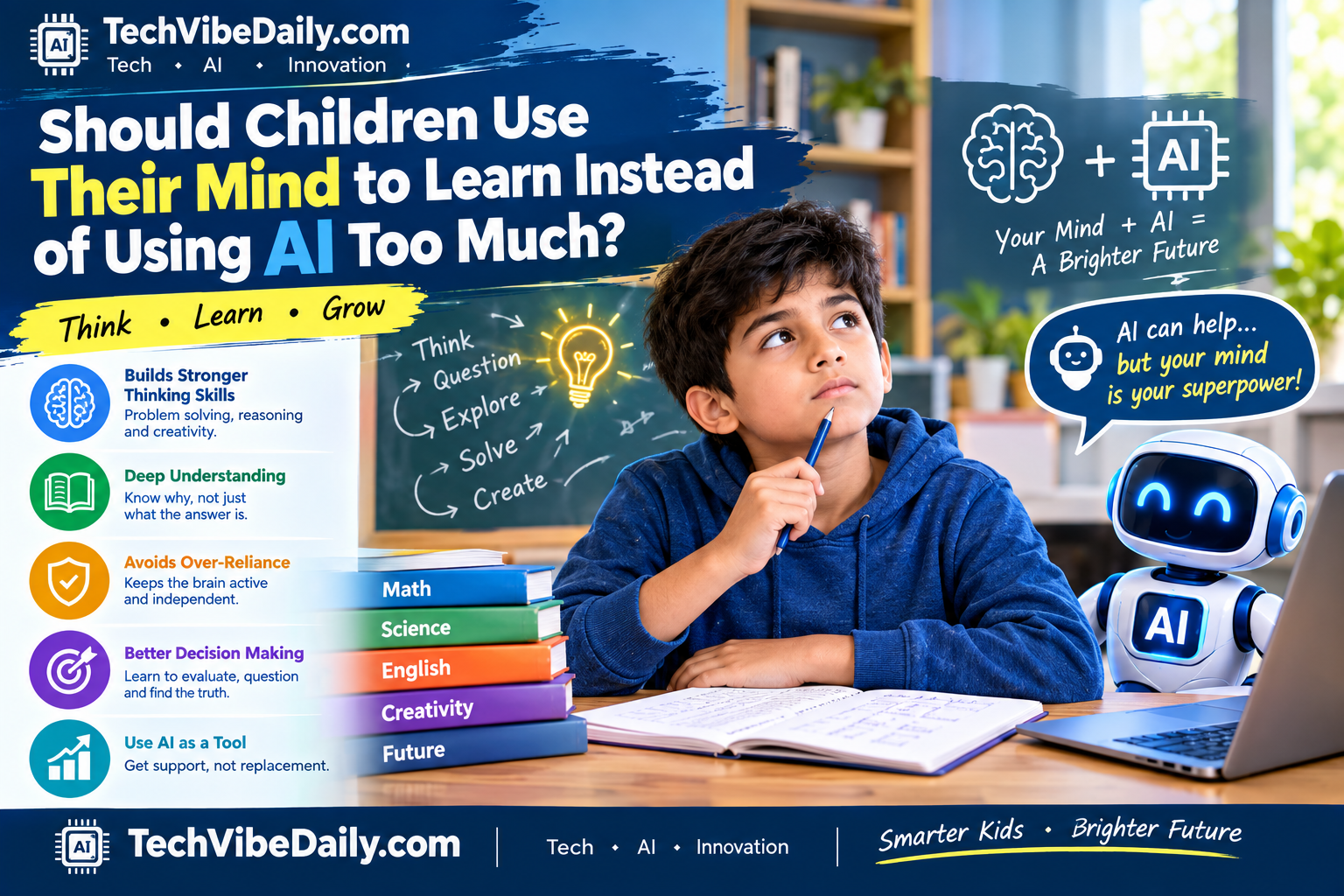
Use as a Tool: Treat Artificial Intelligence Like a Calculator—Learn the Basic Math First, Then Use the Technology to Extend Capability

AI can be valuable when children understand the fundamentals before using technology to assist them. Just as students learn basic mathematics before relying on a calculator, they should develop core knowledge and reasoning skills first. This approach allows AI to extend their abilities while keeping their own understanding at the center.
Try First, Ask Later: Encourage Children to Attempt Homework or Research on Their Own Before Turning to AI for Explanations or Brainstorming

Encouraging children to make their own attempt before using AI can strengthen independent learning. They can first think through a problem, research information, or develop an initial idea. Afterward, AI can provide explanations, examples, or brainstorming support. This keeps students actively involved instead of making technology responsible for the entire learning process.
Build Digital Literacy: Teach Children to Fact-Check Chatbot Outputs Against Trusted Sources Rather Than Accepting Them as Absolute Truth

Digital literacy is increasingly important as children interact with AI-generated information. Chatbots can sometimes provide inaccurate or incomplete answers, so students should learn to verify important claims using teachers, textbooks, reliable educational resources, and trusted websites. Fact-checking helps children develop stronger judgment and become more responsible users of technology.
Conclusion
Independent thinking remains an essential part of education even as artificial intelligence becomes more powerful and accessible. AI can explain difficult concepts, provide examples, support research, and help students explore new ideas, but children still need opportunities to think, question, investigate, and solve problems independently.
Productive struggle can help students develop stronger reasoning and problem-solving abilities, while independent research can improve understanding and help them recognize inaccurate or biased information. These skills become especially important when students encounter AI-generated answers that may contain errors or incomplete information.
The goal should not be to keep children away from AI. Instead, they should learn how to use it responsibly. Students can first attempt their homework or research independently and then use AI for explanations, feedback, brainstorming, or additional learning support. They should also develop digital literacy by checking important information against teachers, textbooks, reliable educational resources, and trusted websites.
Ultimately, AI should function as a learning assistant rather than a replacement for independent thought. When children combine their own reasoning with responsible use of technology, they can benefit from AI while continuing to develop the knowledge, creativity, judgment, and problem-solving skills they need for the future.