Good Software Companies Competition Between China and USA in 2026
Introduction
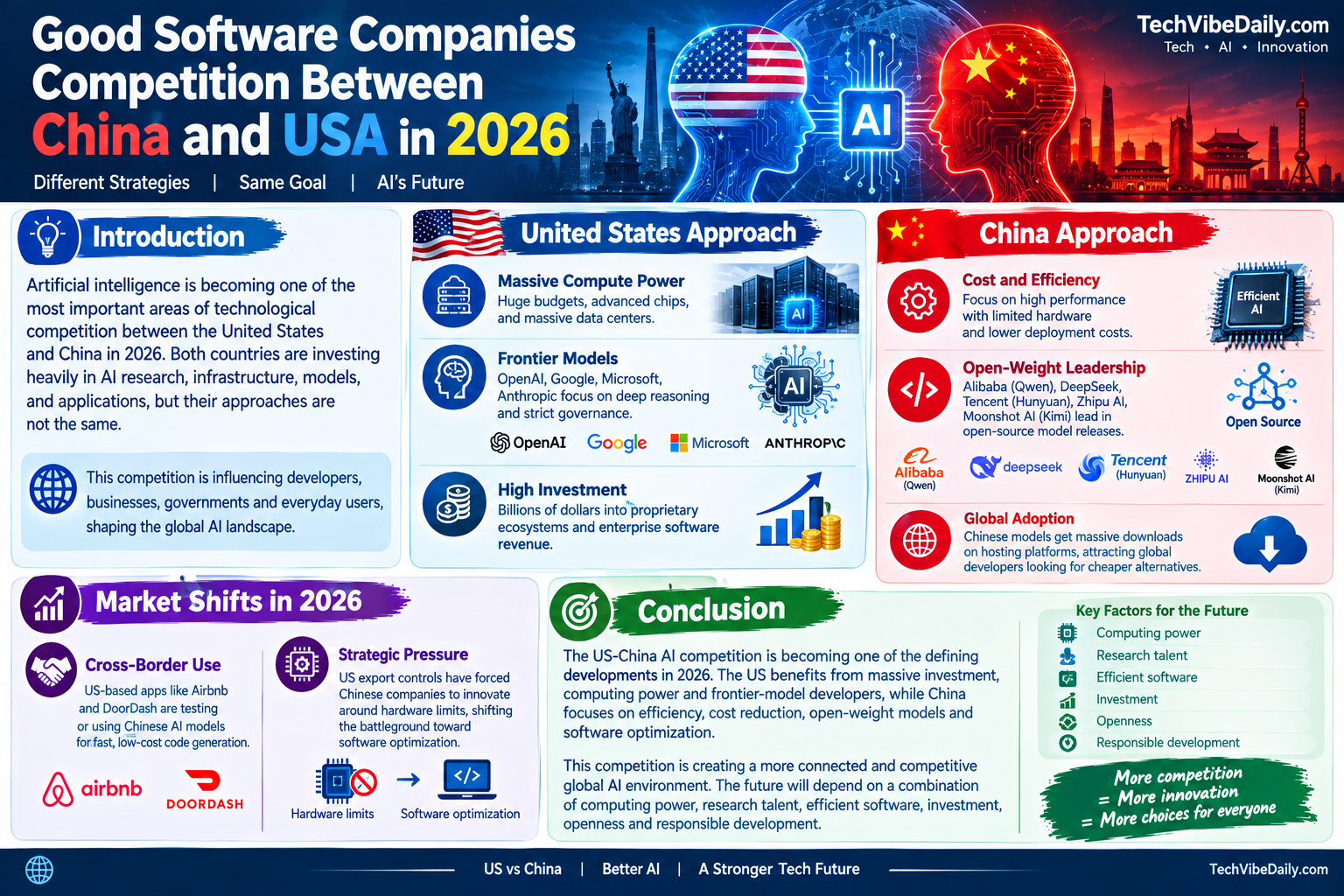
Artificial intelligence is becoming one of the most important areas of technological competition between the United States and China in 2026. Both countries are investing heavily in AI research, infrastructure, models, and applications, but their approaches are not exactly the same. The United States has generally emphasized massive computing power, advanced chips, frontier AI models, and large private investments. China, meanwhile, has placed greater attention on efficiency, cost reduction, open-weight models, and finding ways to achieve strong performance despite hardware limitations.
This competition is influencing more than just technology companies. Developers, businesses, governments, and everyday users are gaining access to a growing range of AI models and services from both markets. Differences in investment, hardware availability, software optimization, and model accessibility are helping shape the global AI landscape.
This article compares the US and Chinese approaches to AI and examines how these strategies are influencing the market in 2026.
United States Approach
Massive Compute Power: American tech giants rely on huge budgets, advanced chips, and massive data centers.

The United States has built its AI advantage around enormous computing infrastructure and significant financial resources. Major technology companies invest heavily in advanced chips, data centers, and specialized systems. This approach gives American AI developers the computing capacity needed to train, improve, and operate increasingly capable artificial intelligence models at scale.
Frontier Models: Companies like OpenAI, Google, Microsoft, and Anthropic focus on deep reasoning and strict governance.
American AI companies are competing to develop increasingly capable frontier models with stronger reasoning, broader abilities, and improved reliability. Companies such as OpenAI, Google, Microsoft, and Anthropic are also focusing on safety, responsible development, and governance. Their investments are helping shape the direction of advanced AI research and applications.
High Investment: Billions of dollars continue to pour into proprietary ecosystems and enterprise software revenue.

The US AI industry continues to attract enormous investment across computing infrastructure, model development, research, and enterprise applications. Major companies are building proprietary AI ecosystems designed to generate business value through software and services. This financial strength allows them to expand infrastructure, hire researchers, and accelerate development across the AI sector.
China Approach
Cost and Efficiency: Chinese labs focus on wringing high performance out of limited computer hardware and lowering deployment costs.

Chinese AI researchers have placed strong emphasis on efficiency, especially when access to advanced computing hardware is more limited. Instead of relying only on larger systems, laboratories are exploring ways to improve model performance while reducing computational requirements. This focus can lower deployment costs and make powerful AI systems more accessible.
Open-Weight Leadership: Companies like Alibaba (with Qwen), DeepSeek, Tencent (with Hunyuan), Zhipu AI, and Moonshot AI (Kimi) lead in open-source model releases.

Chinese AI companies have become major participants in the open-weight model ecosystem. Organizations such as Alibaba, DeepSeek, Tencent, Zhipu AI, and Moonshot AI have released models that attract attention from developers. Open-weight approaches can encourage experimentation, customization, and broader adoption by giving developers more flexibility when building applications around AI models.
Global Adoption: Chinese models account for a massive share of downloads on hosting platforms, attracting global developers looking for cheaper alternatives.
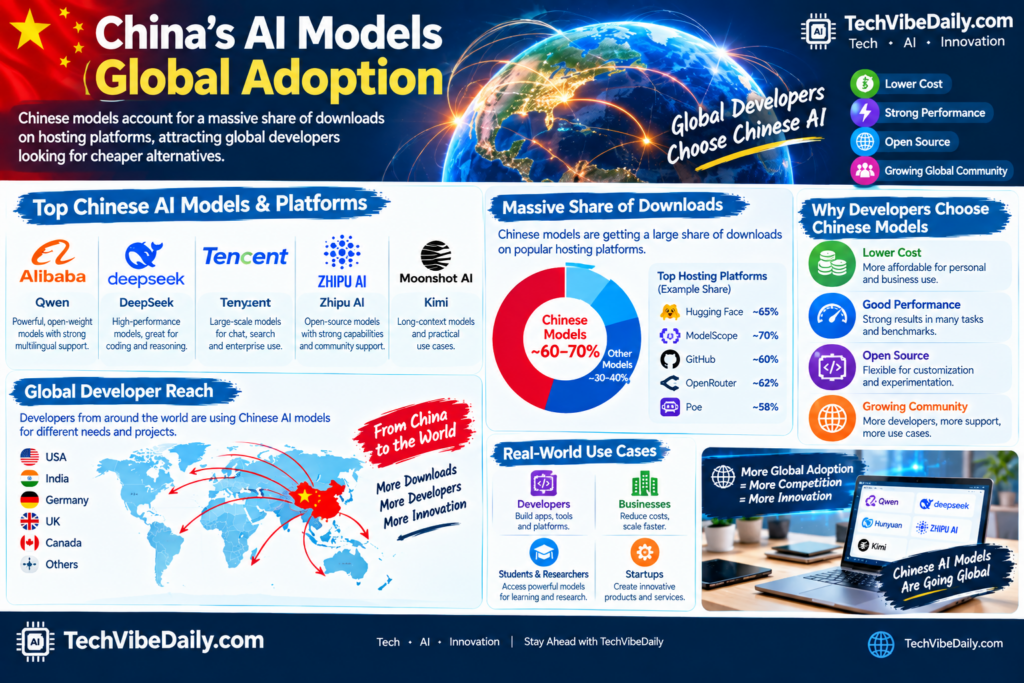
Chinese AI models are attracting increasing interest from developers who want capable systems without relying exclusively on expensive proprietary platforms. Competitive performance, accessibility, and lower potential costs can encourage experimentation. As more developers test and integrate these models, their growing international presence could increase competition across the rapidly developing global artificial intelligence market.
Market Shifts in 2026
Cross-Border Use: US-based consumer apps like Airbnb and DoorDash have begun testing or using Chinese AI models because they offer fast, low-cost code generation.
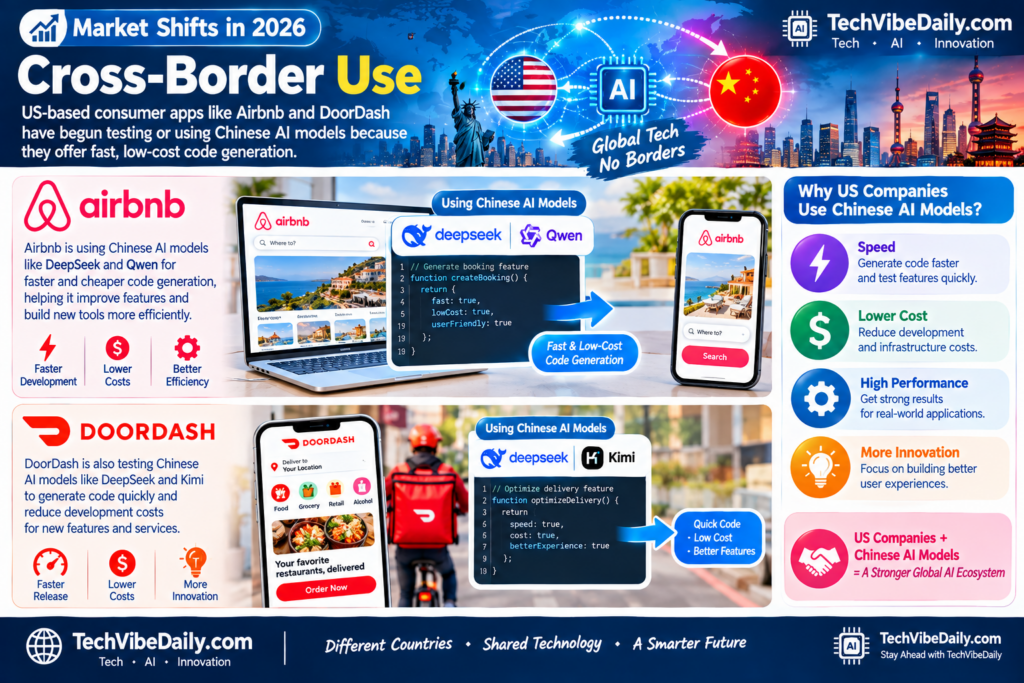
The growing interest in Chinese AI models among international technology companies shows how quickly the market is evolving. Businesses may evaluate different models based on performance, speed, cost, and specific development needs. This cross-border adoption can increase competition and encourage both American and Chinese AI companies to improve efficiency and capabilities.
Strategic Pressure: US export controls have forced Chinese software companies to innovate around hardware limits, shifting the competitive battleground toward software optimization.
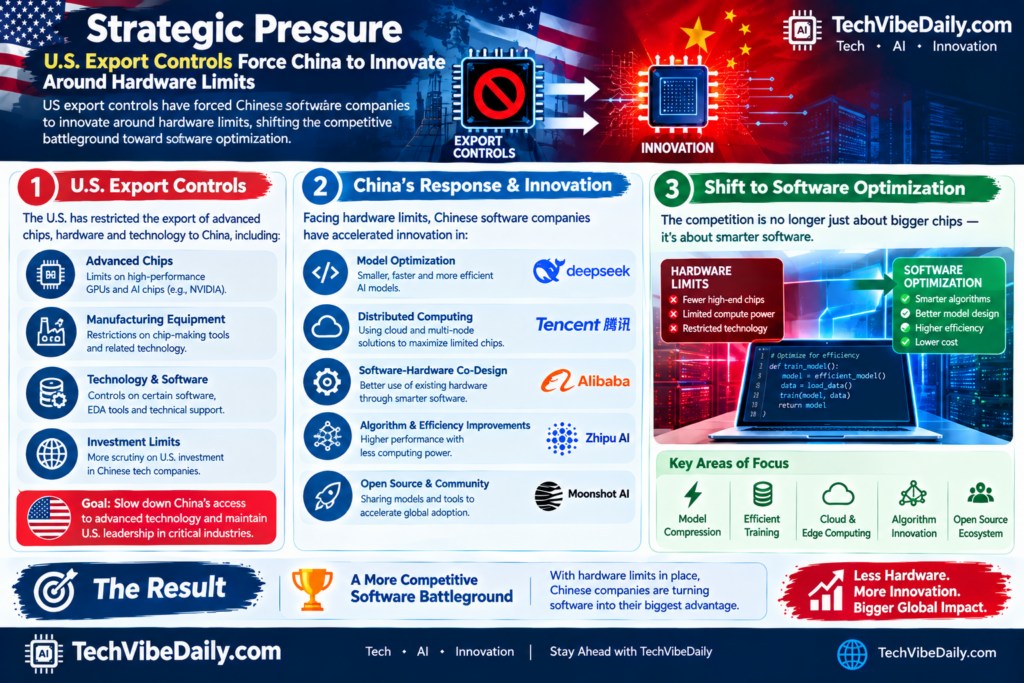
Restrictions on access to certain advanced computing hardware have encouraged Chinese AI companies to focus more heavily on software efficiency and optimization. This has contributed to a broader shift in AI competition, where performance is increasingly influenced by how effectively companies use available computing resources rather than simply possessing the most powerful hardware.
Conclusion
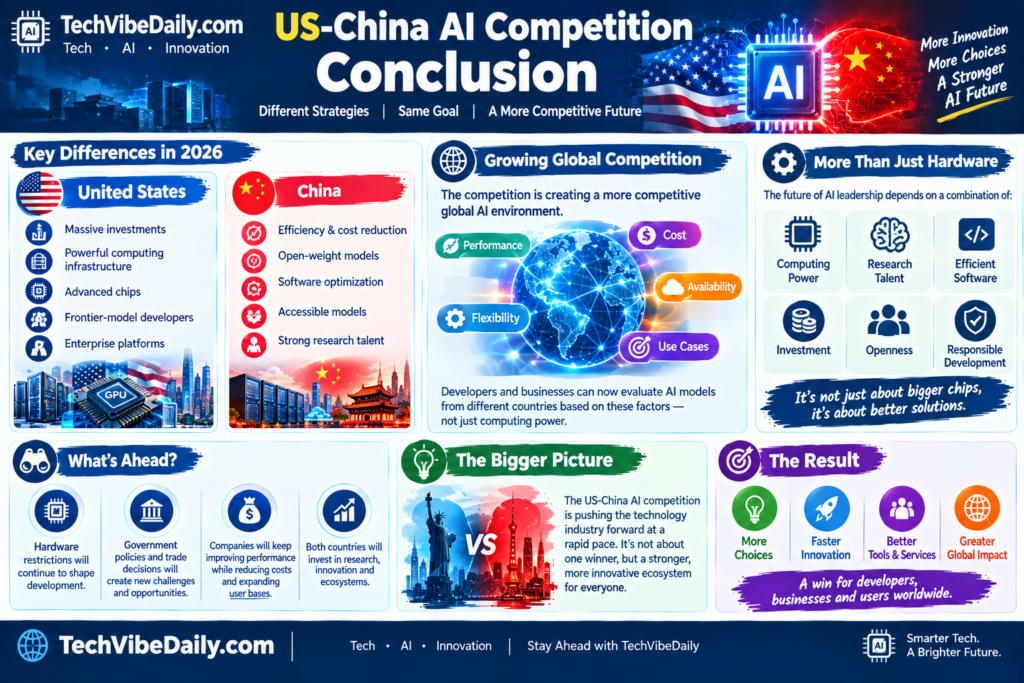
The competition between the United States and China is becoming one of the defining developments in artificial intelligence in 2026. Both countries are pursuing advanced AI, but their strategies show important differences. The United States continues to benefit from enormous investments, powerful computing infrastructure, advanced chips, and major frontier-model developers. China, meanwhile, is placing strong emphasis on efficiency, cost reduction, open-weight models, and software optimization.
These different approaches are creating a more competitive global AI environment. American companies continue to develop highly capable proprietary systems and enterprise platforms, while Chinese companies are demonstrating how optimization and accessible models can challenge traditional assumptions about the amount of computing power required for strong AI performance.
The market is also becoming more interconnected. Developers and businesses can increasingly evaluate AI models from different countries based on factors such as performance, cost, availability, flexibility, and specific use cases. This means that competition is no longer determined by computing infrastructure alone. Efficient software, model design, accessibility, and practical value are becoming equally important.
At the same time, hardware restrictions, investment levels, government policies, and international trade decisions will continue to influence the direction of AI development. Companies in both countries are likely to keep searching for ways to improve performance while reducing costs and expanding their user base.
Overall, the US-China AI competition is pushing the technology industry forward at a rapid pace. Rather than having a single factor determine leadership, the future of AI will likely depend on a combination of computing power, research talent, efficient software, investment, openness, and responsible development. For businesses, developers, and users around the world, this competition means more choices and continued innovation in the years ahead.