AI Agents in 2026: How They Are Changing the Way Americans Work FULL
Introduction
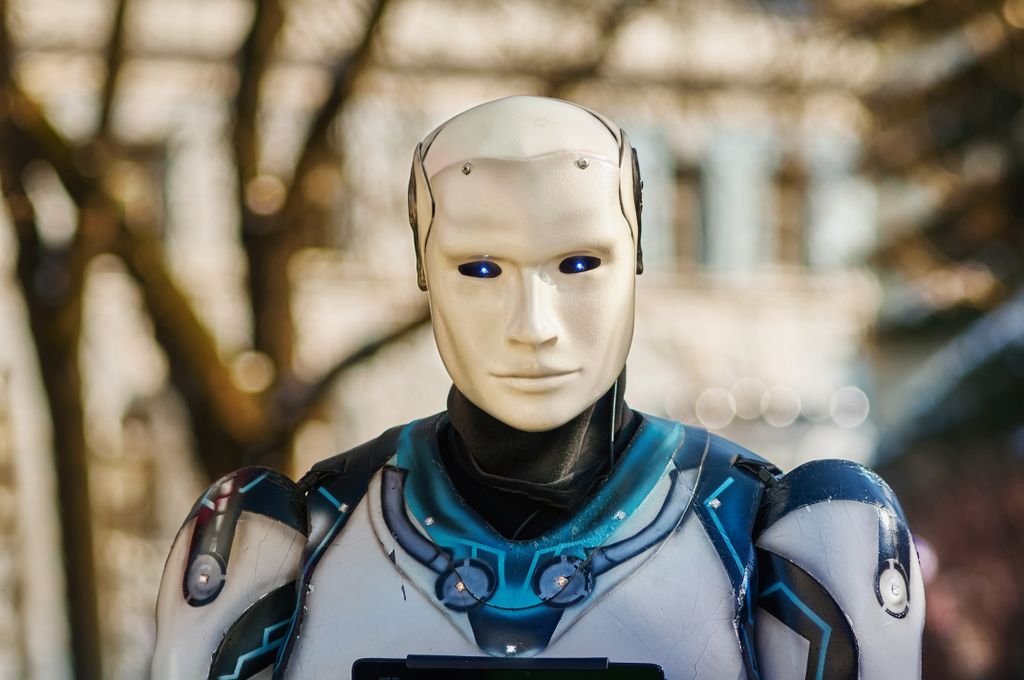
Artificial intelligence has moved beyond the era of simple chatbots and automated suggestions. In 2026, AI agents are becoming a new category of workplace technology: software systems capable of understanding goals, planning multiple steps, using digital tools, retrieving information, and completing tasks with limited human supervision. AI Agents
This shift is important because traditional software generally waits for a person to tell it what to do. An AI agent can increasingly take a goal such as preparing a report, organizing information, responding to routine requests, analyzing business data, or coordinating parts of a workflow and then work through the necessary steps.AI Agents
For American workers, this does not simply mean having a smarter assistant. It means the structure of work itself is changing. AI Agents
Microsoft’s 2026 Work Trend Index describes a workplace in which AI and agents are taking on more work execution while humans increasingly direct work, make decisions, and own outcomes. Its research also emphasizes that organizations need to redesign processes rather than simply add AI tools to old workflows.
McKinsey similarly describes the emerging workplace as a partnership between people, AI agents, and robots. Its research estimates that today’s technologies could theoretically automate more than half of current U.S. work hours, while stressing that this is not a forecast of equivalent job losses.
The result is a major transition: Americans are increasingly learning how to work with intelligent systems rather than simply working on computers.
What Are AI Agents?
An AI agent is a software system designed to accomplish a goal rather than merely generate an answer.
A conventional chatbot might answer a question such as, “Summarize these documents.” An AI agent can potentially take the next steps: find the documents, read them, identify important information, create a summary, organize the results, and prepare an output for a human to review.
Modern agents can combine several capabilities:
- Understanding natural-language instructions
- Reasoning about a task
- Breaking complex objectives into smaller steps
- Searching approved information sources
- Using software applications
- Generating and analyzing documents
- Monitoring processes
- Taking actions within authorized systems
- Reporting results to human workers
The difference is therefore not simply intelligence. It is agency.
A worker may tell an agent what outcome is needed, while the agent handles portions of the execution. The human remains responsible for judgment, priorities, exceptions, and final decisions.
This model is particularly important in businesses because most office work consists of connected tasks rather than isolated questions.
The Move From AI Tools to AI Coworkers
The first generation of workplace AI was largely reactive.
A worker opened an AI application and asked it to write an email, summarize a document, create an outline, or explain a technical problem. The worker then copied the result into another application.
AI agents are moving toward a more integrated model.
Instead of asking an AI to perform every individual step, employees can increasingly delegate a broader objective. The agent may then interact with workplace systems and return a completed result or request human approval when necessary.
Microsoft’s 2026 research identifies this transition as a move toward different modes of working with AI, including collaboration in which agents take on more execution while people retain control over outcomes.
This could change the average American workday considerably.
A marketing employee, for example, might spend less time manually collecting campaign data and more time deciding which strategy makes sense. A software developer might spend less time writing repetitive code and more time designing architecture and reviewing AI-generated implementations. A manager might spend less time preparing routine reports and more time coaching employees and making business decisions.
The computer becomes less of a passive tool and more of an active participant in the workflow.
AI Agents and Office Work
Knowledge workers are among the first groups experiencing this transformation.
Administrative employees, analysts, marketers, accountants, consultants, researchers, software developers, customer-service professionals, and other office workers routinely deal with information. AI agents are particularly useful in environments where information must be collected, processed, compared, summarized, or transformed into action.
Consider an administrative employee who receives dozens of requests every day.
Instead of manually reading every request, finding relevant records, updating systems, preparing responses, and tracking follow-ups, an agent could handle much of the routine process. The employee could concentrate on unusual cases and decisions requiring human judgment.
This does not necessarily eliminate the employee’s role. Instead, the employee’s job can shift toward supervision, exception handling, communication, and quality control.
Recent research examining enterprise AI use found that adoption spans multiple job functions and levels of seniority, with particularly strong usage among early-career workers. The research also found that enterprise AI is being used for writing, technical work, communication, and information synthesis.
That suggests AI is becoming a general workplace capability rather than a technology limited to computer programmers.
AI Agents in Customer Service
Customer service is another major area of change.
Customer-support teams traditionally spend substantial amounts of time answering repetitive questions, locating customer information, updating records, and following standard procedures.
An AI agent can potentially perform many of these activities automatically.
For example, an agent could receive a customer’s request, identify the relevant account information, search a company’s approved knowledge base, determine the appropriate procedure, draft or send an authorized response, and escalate unusual situations to a human employee.
The important distinction is between routine resolution and human judgment.
Customers with simple questions may receive faster assistance, while complicated or emotionally sensitive cases can be transferred to human representatives.
This could allow customer-service workers to spend more time on difficult problems rather than repeating the same answers.
However, companies must ensure that agents do not create new frustrations. An incorrect automated response can be more damaging when customers believe they are dealing with an intelligent system that should understand their situation.
AI Agents and Software Development
Software development is undergoing one of the most visible transformations.
AI systems can already generate code, explain programming concepts, identify possible bugs, write tests, and help developers understand unfamiliar codebases. Agents extend this idea by potentially coordinating multiple development steps.
A developer could describe a feature, and an agent might help analyze the existing project, propose an implementation, create code, run tests, identify errors, and suggest corrections.
The developer’s role therefore becomes increasingly focused on architecture, requirements, security, testing, debugging, and judgment.
This does not mean programming becomes unimportant.
Instead, the skill profile changes.
Developers increasingly need to understand what the software should accomplish, how systems interact, how to evaluate generated code, and how to recognize subtle problems.
The strongest developers may be those who can combine programming expertise with the ability to direct AI systems effectively.
AI Agents and Marketing
Marketing departments are also becoming more automated.
Marketing involves research, writing, customer analysis, campaign planning, content production, data analysis, and performance measurement—all areas where AI can assist.
An AI agent could potentially gather campaign information, analyze performance, identify trends, prepare reports, and suggest adjustments.
Human marketers can then focus on brand strategy, creative direction, customer understanding, and decisions that require cultural awareness.
The biggest change may be speed.
A campaign that once required several days of collecting information and preparing reports could potentially move much faster when agents handle routine information work.
But speed is not automatically quality. Human review remains important because marketing decisions can affect a company’s reputation and relationship with customers.
AI Agents in Finance and Accounting
Financial work involves large quantities of structured information, making it another promising area for AI agents.
Agents can assist with tasks such as organizing financial information, preparing preliminary reports, identifying unusual transactions, summarizing documents, and supporting routine administrative processes.
Accountants and financial professionals can spend more time interpreting results, communicating with clients, checking assumptions, and making decisions.
However, finance demonstrates why AI agents require strong controls.
An incorrect calculation or unauthorized action can have serious consequences. Organizations therefore need clear permissions, audit trails, verification procedures, and human approval for sensitive activities.
AI can accelerate financial workflows, but it should not eliminate accountability.
AI Agents and Healthcare
Healthcare presents enormous opportunities as well as serious responsibilities.
AI agents can potentially assist medical organizations with administrative tasks such as scheduling, documentation, information organization, billing workflows, and communication.
For healthcare professionals, reducing administrative workloads could create more time for patients.
The important principle is that AI should support professionals rather than replace appropriate human medical judgment.
Healthcare information is sensitive, and systems must protect privacy, maintain accuracy, and operate under appropriate professional and legal controls.
The future of AI in healthcare is therefore likely to involve carefully supervised collaboration rather than unrestricted automation.
AI Agents and Retail
Retail workers are also experiencing AI-driven changes.
Large retailers are experimenting with AI for inventory management, logistics, scheduling, customer assistance, and store operations.
Walmart, for example, has been integrating AI into its operations, while workers have also reported situations where they must correct AI-generated recommendations or deal with instructions that do not fully reflect real-world store conditions.
This illustrates an important lesson about AI agents: the real world is messy.
An algorithm may recommend an efficient route or task sequence, but a worker on the ground may know that an unexpected situation makes the recommendation impractical.
Human feedback is therefore not a temporary inconvenience. It can be an essential component of building better AI systems.
The Rise of the Human-AI Team
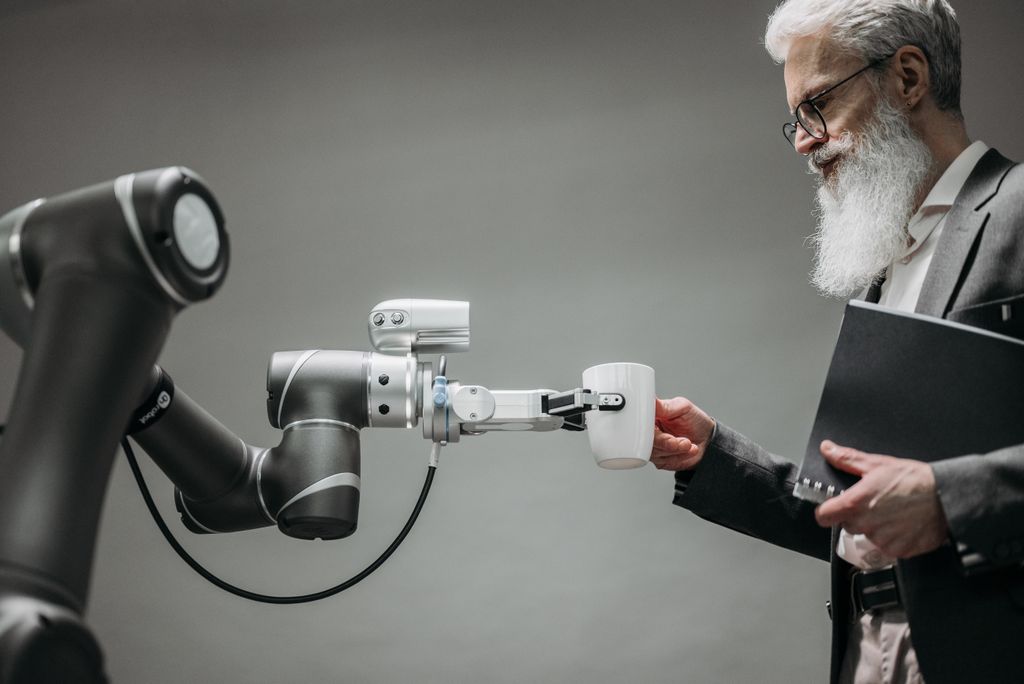
The biggest workplace change may not be AI replacing humans. It may be the emergence of teams containing both humans and AI agents.
Imagine a project team with five employees and several specialized agents.
One agent researches information.
Another analyzes data.
A third prepares documents.
A fourth monitors project progress.
The human team members coordinate these systems, make decisions, communicate with customers, resolve complex problems, and take responsibility for the final result.
This creates a new management challenge.
Managers will increasingly need to understand not only how people work together but also how humans and AI systems divide responsibilities.
Recent workplace research suggests that managers may increasingly oversee AI agents and will need new approaches to performance, accountability, and employee development.
Productivity: The Biggest Opportunity
One of the strongest arguments for AI agents is productivity.
If an agent can handle repetitive work, employees can redirect their time toward higher-value activities.
Microsoft’s 2026 Work Trend Index reports that 58% of surveyed AI users said AI enables them to produce work they could not have produced a year earlier, rising to 80% among its identified “Frontier Professionals.”
Another 2026 study of workplace AI adoption found that frequent AI use was associated with increases in productivity-related application activity, although the researchers also noted changes in communication patterns.
The important point is that productivity should not be measured simply by how many tasks AI completes.
A company can automate hundreds of tasks without becoming more successful if the underlying workflow is poorly designed.
The real goal is better outcomes.
The Transformation of Jobs
The arrival of AI agents raises a natural question: Will Americans lose their jobs?
There is no simple answer.
Some tasks will certainly become automated. Some jobs will shrink. Some roles will change significantly. At the same time, new jobs and responsibilities are emerging around AI implementation, governance, security, data, workflow design, and human-AI collaboration.
McKinsey’s research explicitly warns that theoretical automation potential should not be interpreted as equivalent job losses. Adoption takes time, and jobs consist of many different tasks.
Recent labor-market evidence also suggests that AI has not produced the widespread employment collapse once predicted. Instead, AI is currently reshaping tasks, hiring expectations, and job structures.
This distinction is important.
A job is not the same thing as a task.
If AI automates 40% of a worker’s tasks, the remaining 60% may become more valuable—or the entire role may be redesigned.
The future therefore depends heavily on how businesses choose to deploy AI.
Entry-Level Work Could Change
One area deserving particular attention is entry-level employment.
Young workers traditionally learn through routine tasks. A new employee might begin by preparing documents, researching information, organizing spreadsheets, answering basic questions, or performing repetitive technical work.
These tasks can also be among the easiest to automate.
If companies remove too much entry-level work, they may unintentionally reduce opportunities for people to gain experience.
This creates a long-term challenge: How will tomorrow’s experts develop if AI performs the beginner tasks?
Companies may need to redesign entry-level jobs so that young workers learn by supervising AI, checking outputs, solving real problems, communicating with customers, and gradually taking on more responsibility.
AI should therefore become part of professional development rather than a barrier to entering the workforce.
The New Skills Americans Need
The workplace of 2026 increasingly rewards a combination of technical and human skills.
AI literacy is becoming important because workers need to understand what AI can and cannot do.
But AI literacy is only one part of the picture.
Workers also need:
Critical Thinking
AI can produce convincing but incorrect information. Employees must evaluate evidence and identify mistakes.
Communication
Clear instructions help AI systems perform better, while strong communication remains essential for working with people.
Problem Solving
Workers who can define problems clearly and design effective workflows can gain more value from AI.
Creativity
AI can generate options, but humans remain important in deciding which ideas are meaningful, appropriate, and useful.
Adaptability
AI technology is changing quickly. Employees must be comfortable learning new tools and processes.
Judgment
As AI handles more execution, human judgment becomes increasingly important.
Collaboration
The future workplace requires collaboration between people and intelligent systems.
These skills may become more valuable precisely because AI is becoming better at routine cognitive work.
AI Agents and the Future of Management
Management itself is changing.
Traditional managers supervise human employees, assign tasks, monitor progress, and evaluate performance.
Future managers may also supervise AI agents.
That raises new questions:
Who is responsible when an AI agent makes a mistake?
How should AI-generated work be evaluated?
How much autonomy should an agent receive?
When should a human approve an action?
How should employee performance be measured when AI completes part of the work?
Organizations need clear answers.
Managers should focus on outcomes rather than simply counting activities. Otherwise, companies may create workplaces where employees and AI systems optimize for easy-to-measure numbers instead of meaningful results.
The Risk of Over-Automation
AI agents create opportunities, but excessive automation can create new problems.
If employees stop understanding how important processes work, organizations can become dependent on systems they do not fully understand.
There is also the risk of automation bias—the tendency to trust an AI recommendation simply because it came from a computer.
Employees must remain capable of questioning AI decisions.
This is especially important in areas involving money, employment, safety, privacy, security, and customers.
AI should increase human capability rather than remove human responsibility.
Privacy and Security
AI agents can potentially access large amounts of workplace information.
That creates significant security challenges.
An ordinary AI assistant may generate text. An agent with access to company systems could potentially retrieve information, update records, send communications, or initiate workflows.
Organizations therefore need strict permissions.
Agents should receive only the access necessary for their tasks. Sensitive information should be protected, activity should be logged, and important actions should require appropriate approval.
The rise of “shadow AI” also creates challenges when employees use unapproved AI tools with company information. Organizations need clear policies and secure alternatives rather than simply assuming workers will never use AI.
The Importance of Human Trust
Technology adoption depends heavily on trust.
Employees are unlikely to embrace AI if they believe it is primarily being introduced to monitor them or eliminate their jobs.
A better approach is transparency.
Companies should explain:
- Why an AI system is being introduced
- What tasks it will perform
- What information it can access
- How employee performance will be evaluated
- When human review is required
- How workers can report problems
- What training will be provided
Recent workplace reporting shows that employees can become frustrated when AI systems produce unrealistic instructions or require workers to spend significant time correcting errors.
This means successful AI implementation is as much a people-management challenge as a technology challenge.
The Transformation Paradox
One of the most interesting findings in Microsoft’s 2026 workplace research is what it calls the “Transformation Paradox”: workers are increasingly ready to use AI while organizations may not yet be prepared to redesign work around it.
This is a crucial distinction.
Buying an AI system does not transform a business.
A company may give employees access to powerful AI tools while continuing to use outdated processes, unnecessary meetings, fragmented software, and inefficient approval systems.
Real transformation requires redesign.
Instead of asking, “Where can we insert AI into our existing workflow?” companies increasingly need to ask, “If we were designing this workflow today with AI available, how would we build it?”
That question can produce much larger improvements.
AI Agents and Small Businesses
Large corporations are not the only beneficiaries.
Small American businesses may gain significant advantages from AI agents because they often operate with limited staff.
A small company could use AI to support customer communications, scheduling, marketing research, document preparation, bookkeeping workflows, sales research, and internal knowledge management.
This could allow a small team to operate with capabilities that previously required a much larger organization.
AI therefore has the potential to lower some barriers to entrepreneurship.
However, small businesses also need to be careful about privacy, security, accuracy, and dependence on automated systems.
The New Competitive Advantage
In the past, competitive advantage often came from having better software, more employees, more data, or larger infrastructure.
In the AI-agent era, another factor is becoming important: how effectively an organization designs human-AI workflows.
Two companies may have access to similar AI models but achieve very different results.
One may simply use AI to write faster.
The other may redesign its entire workflow around AI, automate routine processes, create strong human review systems, and give employees more time for strategic work.
The second company could gain a much larger advantage.
This is why McKinsey argues that businesses must “rewire” themselves around AI rather than treating AI merely as a cost-cutting tool.
What the American Workplace Could Look Like
By the end of the decade, the typical American workplace may look very different.
Employees may begin their day with AI-generated summaries of important developments.
Agents may monitor projects continuously.
Routine reports may be produced automatically.
Customer questions may be handled by AI before complex cases reach humans.
Software agents may test and maintain portions of applications. AI agents
Managers may coordinate teams of humans and digital workers.
Employees may increasingly describe desired outcomes instead of manually completing every step.
The computer may become less like a machine waiting for commands and more like an active workspace partner.
Yet humans will still determine goals, values, priorities, and accountability.
Preparing for the Agentic Workplace
Americans can prepare for this transition by developing skills that complement AI.
Workers should learn how AI systems operate, experiment with appropriate workplace tools, and understand how to verify AI-generated information.AI agents
Businesses should provide training rather than simply purchasing software.
Schools and universities should teach students how to work with AI while maintaining independent reasoning and communication skills. AI agents
Government policymakers may also need to address workforce transitions, privacy, training, and labor protections.
The objective should not be to stop technological progress. AI agents
Instead, the goal should be to ensure that technological progress creates broad opportunities.
Conclusion
AI agents are changing the American workplace in 2026 by moving artificial intelligence from a tool that answers questions toward systems that can participate in the execution of work.
They are influencing software development, customer service, finance, marketing, administration, retail, healthcare, research, and many other fields.
The biggest transformation may not be the disappearance of jobs. It may be the transformation of what people do during those jobs.
Routine tasks can increasingly be delegated.
Information can be processed faster.
Workflows can become more automated.
Employees can potentially spend more time on strategy, creativity, communication, problem solving, and judgment.
But these benefits are not automatic.
AI agents can make mistakes, create security risks, reduce entry-level learning opportunities, and produce new forms of workplace pressure if organizations deploy them without careful planning.
The most successful companies are therefore likely to be those that understand AI as a partner in organizational redesign rather than simply a mechanism for reducing headcount.
For American workers, the central question is no longer whether AI will enter the workplace. It already has.
The more important question is how humans will shape the relationship.
The future of work is increasingly becoming a partnership between people and intelligent machines. AI agents may perform more of the execution, but humans will continue to define the goals, make important decisions, provide judgment, and determine what successful work actually means.
In that sense, the defining skill of the AI era may not be competing against machines. It may be learning how to work effectively alongside them.