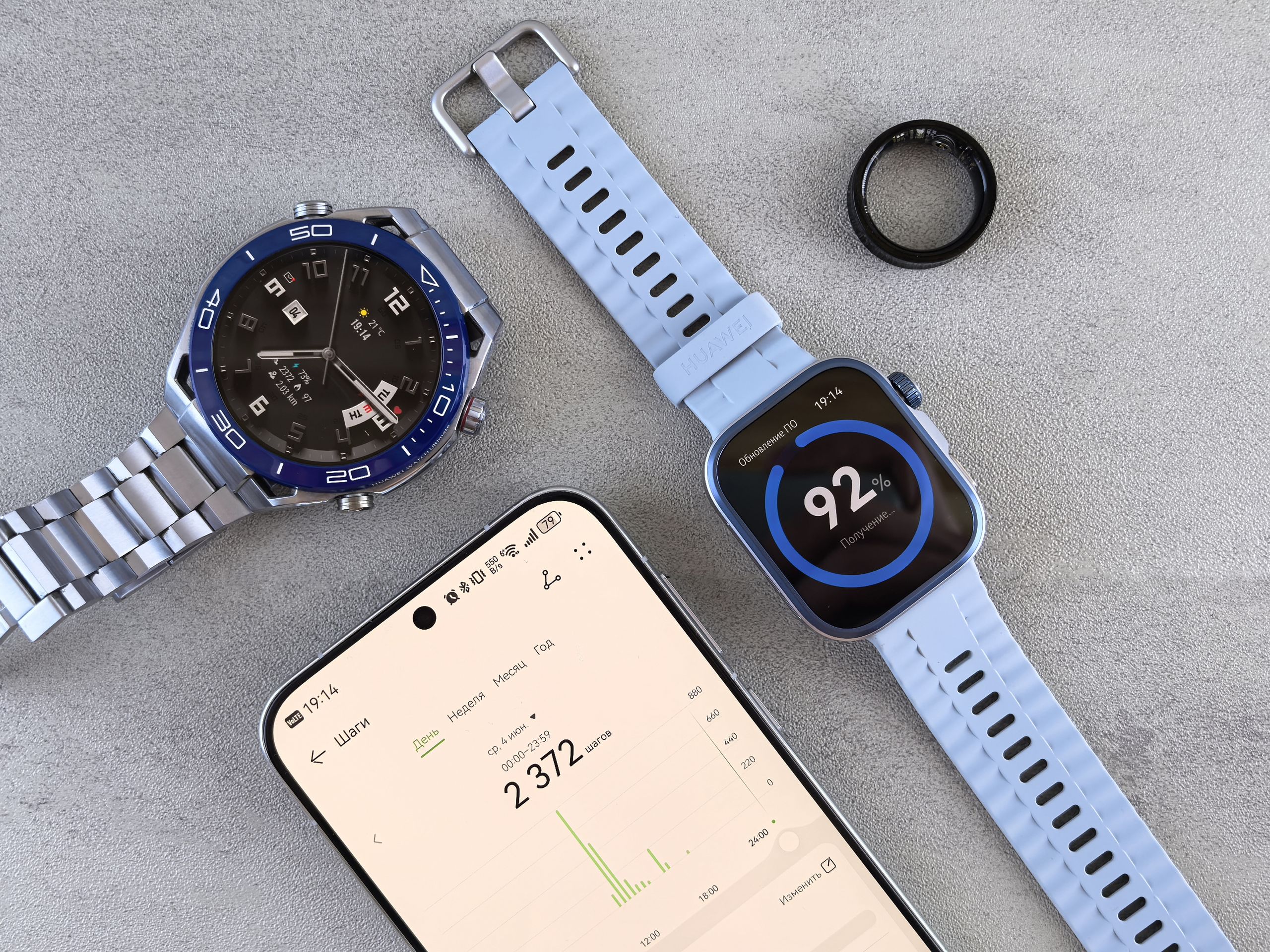
Smart Ring Technology: How Smart Rings Work, Features, Benefits, and the Future
Smart ring technology is becoming one of the most interesting areas of wearable technology. For years, smartwatches and fitness bands dominated the wearable market, but smart rings are creating a different approach to digital health, fitness tracking, notifications, payments, and everyday convenience.
A smart ring looks similar to an ordinary ring, but inside its small body are sensors, processors, wireless connectivity, and a battery. These components allow the ring to collect information and communicate with a smartphone or another connected device.
Unlike a smartwatch, a smart ring usually does not have a large display. Instead, it works quietly in the background, collecting data and sending it to a companion smartphone app where users can view their information.
As wearable technology continues to develop, smart rings could become an important part of the connected-device ecosystem.
What Is Smart Ring Technology?
Smart ring technology refers to the combination of miniature sensors, wireless communication, processors, batteries, and software built into a ring-shaped wearable device.
A smart ring can monitor different types of information depending on its design. Some models focus heavily on wellness and sleep tracking, while others add fitness features, notifications, authentication, payments, or smart-home controls.
The basic concept is simple:
Wear the ring → sensors collect information → the ring processes or stores the data → information is transferred to an app → the app presents useful insights.
Because the ring stays on the finger for long periods, it can collect information continuously without requiring the user to interact with a screen.
This is one of the main reasons smart rings are attracting attention.
How Does a Smart Ring Work?
A smart ring combines several miniature technologies inside a very small device.
The main components can include:
- Optical sensors
- Temperature sensors
- Motion sensors
- Accelerometers
- Gyroscopes
- Bluetooth connectivity
- A small processor
- Rechargeable battery
- Charging system
- Internal storage
- Mobile application support
The sensors collect measurements from the body and surrounding environment.
The ring then processes some of this information before transferring it to a smartphone through Bluetooth or another supported wireless connection.
The smartphone app can organize the information into charts, trends, scores, and summaries.
The exact capabilities vary significantly between smart ring models.
Why Are Smart Rings Becoming Popular?
Smart rings solve several problems associated with traditional wearables.
A smartwatch is useful because it provides a display and many interactive features. However, some people do not want to wear a watch all day.
A smart ring is much smaller and can be less noticeable.
It can also be useful during sleep because its compact design does not require a large screen on the wrist.
Another advantage is that smart rings can focus on passive tracking.
Instead of constantly looking at notifications, users can wear the ring and review information later through a smartphone app.
This makes smart rings particularly interesting for people who want wearable technology without another screen demanding their attention.
Smart Rings and Health Tracking
Health and wellness tracking are among the most important applications of smart ring technology.
Depending on the model, a smart ring may monitor measurements such as:
- Heart rate
- Heart-rate variability
- Skin temperature
- Blood oxygen-related measurements
- Movement
- Sleep patterns
- Activity
- Breathing-related information
These measurements can help users understand general trends in their daily activity and wellness.
However, it is important to understand that consumer smart rings are generally designed for wellness and fitness purposes rather than replacing professional medical equipment.
If someone has a health concern, information from a wearable should not be treated as a medical diagnosis.
Heart Rate Monitoring
Many smart rings use optical sensors to estimate heart rate.
These sensors typically shine light into the skin and analyze changes associated with blood flow.
The device can then estimate heart rate during rest, activity, or sleep.
Continuous or periodic heart-rate tracking can help users understand how their heart rate changes throughout different parts of the day.
For example, users may see differences between resting periods, exercise, sleep, and everyday movement.
The accuracy of measurements can vary depending on the device, fit, movement, skin contact, and other factors.
Heart-Rate Variability
Heart-rate variability, often abbreviated as HRV, measures variation in the time between heartbeats.
Wearable devices can use HRV measurements as one of several indicators when providing wellness insights.
Smart ring apps may combine HRV with other information such as sleep, activity, and resting heart rate.
However, HRV is complicated and can be influenced by many factors.
Users should avoid interpreting one measurement as a complete picture of their health.
Long-term trends are generally more useful than focusing on a single reading.
Sleep Tracking
Sleep tracking is one of the strongest use cases for smart rings.
Because a ring is small and does not require users to look at a screen, it can be comfortable for overnight wear.
Depending on the model, a smart ring can estimate:
- Sleep duration
- Sleep timing
- Rest periods
- Movement during sleep
- Sleep stages
- Heart rate during sleep
- Temperature changes
The companion app can then create a summary of the night’s sleep.
This can help users understand their sleeping patterns over time.
However, consumer sleep trackers estimate sleep stages using sensors and algorithms. They should not be assumed to provide the same information as clinical sleep testing.
Smart Rings and Body Temperature
Temperature sensing is another interesting feature.
Some smart rings contain sensors designed to detect changes in skin temperature.
Temperature information can be useful when combined with other measurements.
For example, an app might identify changes from an individual’s normal baseline and include that information in broader wellness insights.
Temperature data can also be used in certain specialized applications, depending on the product.
Again, the technology is not necessarily equivalent to a clinical thermometer.
Activity Tracking
Smart rings can also monitor movement throughout the day.
Accelerometers and gyroscopes help determine how the ring moves.
This allows the device to estimate activity levels and identify periods of movement or inactivity.
Some smart rings can recognize activities automatically or provide exercise-related information.
However, smartwatches often remain more suitable for people who want detailed workout controls because they have larger displays and can provide real-time information during exercise.
Smart Rings Without Screens
One of the most distinctive characteristics of smart rings is the lack of a traditional screen.
This may initially seem like a disadvantage.
However, it can actually be one of the technology’s biggest strengths.
Without a screen, the ring can remain small and relatively simple.
Instead of displaying information directly, it communicates with a smartphone.
This design encourages a different relationship with technology.
You wear the device rather than constantly interacting with it.
Smartphone Connectivity
Smart rings typically connect to smartphones using wireless technologies such as Bluetooth.
The smartphone acts as the primary interface.
A companion application receives data from the ring and turns it into useful information.
Depending on the manufacturer, the app may display:
- Daily activity
- Sleep summaries
- Wellness trends
- Heart-rate information
- Temperature trends
- Exercise data
- Notifications
- Personalized insights
The quality of the software experience is therefore extremely important.
A technically impressive ring can still be frustrating if its mobile application is confusing or unreliable.
Battery Technology
Battery size is a major engineering challenge for smart rings.
A ring has very limited internal space.
Manufacturers need to fit a battery alongside sensors, processors, antennas, and other components.
As a result, smart rings generally have much smaller batteries than smartwatches.
Battery life varies considerably between products.
Some can operate for several days before requiring charging, while others have different charging schedules depending on features and usage.
Battery performance can also change over time as the battery ages.
How Smart Rings Are Charged
Smart rings can use specialized charging accessories.
Depending on the product, charging may involve:
- A charging dock
- A charging cradle
- A portable charging case
- A wireless charging system
Because the ring is small, manufacturers need to design charging systems that are reliable and easy to use.
A charging case can be especially convenient because users can carry it while traveling.
Smart Ring Materials
Smart rings need to be durable because users may wear them continuously.
Manufacturers can use materials such as:
- Titanium
- Ceramic
- Stainless steel
- Polymer materials
- Protective coatings
The exact material affects durability, weight, appearance, and cost.
Some smart rings are designed to look like traditional jewelry, while others have a more obvious technological appearance.
Water Resistance
Many smart rings are designed to handle everyday exposure to water.
Depending on the model, they may be suitable for activities such as:
- Washing hands
- Showering
- Swimming
- Exercise
- Rain
However, water resistance ratings differ between products.
Users should always check the manufacturer’s specifications rather than assuming every smart ring can be used in every water environment.
Smart Rings and Fitness
Smart rings can provide useful fitness information, particularly for people who want passive activity tracking.
They may monitor movement, heart rate, recovery-related metrics, and other information.
But smart rings have a disadvantage compared with smartwatches during workouts: the lack of a large screen.
A smartwatch can show workout duration, pace, heart rate, maps, and other information while exercising.
With a smart ring, users usually need to check their smartphone later.
Therefore, smart rings are often more attractive for passive tracking than real-time workout control.
Smart Rings vs Smartwatches
The comparison between smart rings and smartwatches is one of the most important discussions in wearable technology.
Smart rings
Advantages:
- Small
- Lightweight
- Discreet
- Convenient for sleep
- Passive tracking
- No distracting screen
- Can complement another wearable
Disadvantages:
- No large display
- Limited interaction
- Smaller battery
- Usually fewer apps
- Less convenient for real-time exercise information
Smartwatches
Advantages:
- Large display
- Notifications
- Apps
- GPS on many models
- Calls and messages on some devices
- Real-time workout information
- More interactive features
Disadvantages:
- Larger
- More noticeable
- Usually requires more interaction
- Can feel less convenient for some people during sleep
Neither technology is universally better.
They serve different purposes.

Can a Smart Ring Replace a Smartwatch?
For some users, yes.
For others, no.
If your main goal is sleep, wellness, activity tracking, and passive monitoring, a smart ring may provide enough functionality.
If you want GPS navigation, messaging, calls, apps, maps, music controls, and real-time workout information, a smartwatch is generally more suitable.
Some users may even use both.
The ring can focus on continuous wellness tracking while the smartwatch handles interactive features.
Smart Rings and Contactless Payments
Another potential use of smart ring technology is contactless payment.
A compatible smart ring can use near-field communication technology to communicate with payment terminals.
This can allow users to make certain contactless payments without pulling out a smartphone or wallet.
Payment functionality depends on the specific ring, payment network, bank, country, and service provider.
Not every smart ring supports payments.
Smart Rings as Digital Keys
Smart rings could also become useful as digital keys.
A compatible ring might be used to interact with:
- Smart locks
- Hotel rooms
- Cars
- Access-control systems
- Offices
This could make the ring more than a fitness tracker.
Instead, it could become a personal authentication device.
Smart Rings and Authentication
Digital authentication is another interesting area.
A smart ring could potentially be used as an identity token for certain systems.
For example, future devices could combine wireless communication and secure authentication to allow users to prove access rights.
This could reduce the need to remember passwords for certain physical-access systems.
However, authentication features need strong security protections because losing a device that provides access can create serious risks.
Smart Rings and Smart Homes
Smart rings could eventually become another control interface for smart-home systems.
Imagine using a ring to interact with:
- Smart locks
- Lights
- Doors
- Home security
- Appliances
- Personal devices
The ring could identify the user and communicate with compatible systems.
The technology could become especially useful when combined with other wireless standards used in smart homes.
Privacy Concerns
Smart ring technology collects personal information, which makes privacy an important issue.
Health and wellness data can be sensitive.
Before buying a smart ring, users should understand:
- What information is collected
- Where the information is stored
- How data is transmitted
- Whether information is shared
- How long data is retained
- Whether users can delete their information
- What permissions the smartphone app requires
Privacy policies can differ significantly between companies.
Users should not assume that every wearable company handles personal data in exactly the same way.
Security Challenges
Smart rings are connected devices, so cybersecurity matters.
A smart ring may communicate with a smartphone and cloud services.
This creates several potential security considerations.
Manufacturers need to protect:
- Device communication
- Account credentials
- Personal data
- Firmware
- Mobile applications
- Cloud systems
Users can help by keeping the ring and smartphone applications updated and using strong account security.
Accuracy: How Reliable Are Smart Rings?
No consumer wearable is perfectly accurate.
Sensor readings can be affected by:
- Ring fit
- Finger movement
- Skin contact
- Temperature
- Physical activity
- Sensor quality
- Algorithms
- Device placement
A ring that fits properly can generally provide better sensor contact.
Users should focus on patterns and trends rather than treating every measurement as exact.
Comfort and Ring Size
Comfort is particularly important because smart rings are designed to be worn for long periods.
A ring that is too tight can be uncomfortable.
A ring that is too loose may move around and affect sensor contact.
Manufacturers often provide sizing systems or sizing kits to help customers choose an appropriate fit.
This is one reason buying a smart ring can be different from buying a smartwatch.
Durability
Because smart rings can be worn continuously, durability matters.
The ring may encounter:
- Water
- Sweat
- Dust
- Impact
- Scratches
- Temperature changes
The materials and construction determine how well the ring handles these conditions.
Users who perform activities involving heavy manual work should pay particular attention to durability specifications.
The Role of Software
Hardware is only one part of smart ring technology.
Software plays an equally important role.
The companion app must transform raw sensor measurements into understandable information.
Good software can help users see long-term patterns instead of overwhelming them with numbers.
For example, an app might combine sleep, activity, and heart-rate information to produce a simple daily summary.
The software can also receive updates that improve functionality over time.
Artificial Intelligence in Smart Rings
Although smart rings are not necessarily AI devices, modern wearable software can use machine-learning techniques to interpret sensor data.
Algorithms can identify patterns in movement, sleep, activity, and other measurements.
However, smart ring technology should not be reduced to AI.
The most important components are still sensors, electronics, wireless communication, battery technology, software, and data processing.
The technology is fundamentally a combination of miniature hardware and intelligent software.
Smart Rings and the Internet of Things
Smart rings are part of the broader Internet of Things ecosystem.
The Internet of Things connects physical devices to digital networks.
A smart ring can become a personal device within this ecosystem.
For example, it could communicate with:
- Smartphones
- Smart locks
- Smart-home hubs
- Computers
- Payment systems
- Cars
- Other wearables
As more devices become interconnected, personal wearables could become increasingly important.
Smart Rings for Students and Professionals
Smart rings can also have practical everyday applications.
Students may use them for activity and sleep tracking, while professionals may appreciate a discreet wearable that does not require constant interaction.
However, wearable data should not become a source of unnecessary stress.
Technology should help users understand their routines rather than make them constantly check numbers.
Smart Rings for Travelers
Travel is another potential use case.
A smart ring may reduce the number of objects a person needs to carry.
Depending on its features, it could potentially support:
- Contactless payments
- Digital access
- Activity tracking
- Sleep tracking
- Authentication
Battery life can also be useful during travel because some rings can operate for several days between charges.
The Future of Smart Ring Technology
The future of smart rings could involve much smaller sensors, better batteries, improved wireless communication, and more useful software.
Future generations could become capable of tracking additional signals while using less power.
Manufacturers may also improve comfort by reducing thickness and weight.
Another important direction is interoperability.
Instead of keeping smart rings isolated within individual ecosystems, future devices could work more easily with smartphones, smart-home systems, payment networks, and other wearables.
Could Smart Rings Replace Phones?
It is unlikely that smart rings will replace smartphones in the near future.
A smartphone provides a large display, powerful processor, camera, applications, keyboard, and many other features.
A ring does not have enough physical space to provide the same experience.
Instead, smart rings are more likely to become complementary devices.
They can collect information and perform small tasks while the smartphone remains the main computing interface.
Smart Rings as Personal Technology
One of the most interesting aspects of smart rings is their relationship with the user.
A smartphone requires frequent interaction.
A smartwatch also encourages interaction through notifications and a screen.
A smart ring can operate more quietly.
It can collect information while the user continues with daily activities.
This creates a different model of wearable computing:
Less screen time, more passive sensing.
That concept could become increasingly important as people look for technology that is useful without becoming distracting.
Environmental Considerations
Like other electronic products, smart rings have an environmental impact.
They require:
- Electronic components
- Batteries
- Manufacturing
- Packaging
- Transportation
The small size of a ring does not mean it has no environmental footprint.
Manufacturers can reduce impact through durable designs, longer software support, repairability where possible, and responsible recycling programs.
Consumers can also extend the useful life of devices instead of replacing them unnecessarily.
What Should You Look for When Buying a Smart Ring?
If you are considering a smart ring, look at more than its appearance.
Important factors include:
1. Sensor capabilities
Check which measurements the ring supports.
2. Battery life
Longer battery life can make continuous tracking more convenient.
3. Comfort
A smart ring needs to be comfortable enough for extended wear.
4. Water resistance
Check the exact rating rather than assuming it is waterproof.
5. Smartphone compatibility
Make sure the ring works with your phone and operating system.
6. App quality
The companion application is critical.
7. Data privacy
Read the company’s privacy information.
8. Subscription costs
Some products may offer additional features through paid services, so check the complete ownership cost.
9. Durability
Consider the materials and construction.
10. Ecosystem compatibility
Think about whether the ring works with the other devices you already own.
Are Smart Rings Worth It?
Smart rings can be worth considering if you want discreet wearable technology.
They are particularly interesting for people who prioritize:
- Sleep tracking
- Wellness trends
- Passive monitoring
- Compact design
- Long-term activity tracking
- Minimal screen interaction
They may be less suitable for people who want:
- A large screen
- GPS navigation
- Calls
- Apps
- Real-time workout controls
- Extensive smartwatch functionality
The right choice depends on how you want to use wearable technology.
Final Thoughts
Smart ring technology represents an important development in wearable computing.
Instead of putting another large screen on your wrist, smart rings take a different approach: miniature sensors and electronics built into a small piece of wearable hardware.
They can monitor activity, sleep, heart rate, temperature trends, and other measurements depending on the model. Some can also support payments, authentication, digital access, and smart-home interactions.
The technology still has limitations. Battery size is constrained by the ring’s tiny form factor, sensor accuracy is not perfect, software experiences vary, and privacy deserves serious consideration.
Smart rings are also not designed to replace every other wearable device.
Instead, their biggest strength is simplicity.
They can collect useful information while staying largely out of the user’s way.
As sensors become smaller, batteries improve, wireless technologies evolve, and software becomes more sophisticated, smart rings could become an increasingly important part of everyday technology.
The future of wearables may not be about putting more screens everywhere. It may be about making technology smaller, quieter, and more integrated into everyday life.
And that is where smart ring technology could have its biggest impact.