How AI Is Changing Software Development in 2026
How AI Is Changing Software Development
Since AI has come it has changed everything
software developers are also using AI very effectively
AI is helping developers to write and debug code automate repetitive tasks, detect errors,
Generate and speed up development
It has allowed developers to make focus on problem-solveing and creative work
On the other hand AI handles daily routine coding task .
Trough this we came to know that the significance of human still there.
AI Adoption in Software Development in 2025
If we talk about statics of world wide that how much people used Ai in development 2025
Here is the data
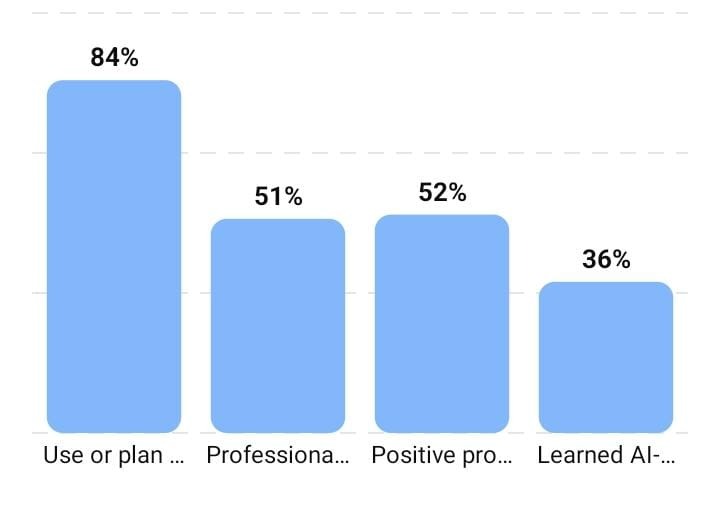
According to the 2025 Stack Overflow Developer Survey, which collected 49,000+ responses from 177 countries:
84% of developers are using or planning to use AI tools in their development process.
51% of professional developers use AI tools daily.
52% say AI tools/agents have had a positive effect on their productivity.
82% of developers who use LLMs for development reported using OpenAI GPT models.
69% of developers learned new coding techniques or programming languages during the previous year.
36% learned AI-enabled tools for their job or career.
This data indicates that how software developrs are also using AI from whole corners of the world .
What Software Developers Should Learn in 2026
If you intend to use AI in software development what kind and which should be learnt to use AI effectively, here you need to look at.
AI-assisted coding — learn to use AI coding tools effectively.
Strong programming fundamentals — algorithms, data structures, debugging, and system design.
AI and machine learning basics — understand how modern AI models work.
Prompt engineering — learn how to give AI precise technical instructions.
APIs and AI integration — learn how to add AI features to applications.
Cybersecurity — understand how to build secure AI-powered software.
Human skills — problem-solving, creativity, communication, and critical thinking.
In the era of AI , I must recommend all software developers do focus to learn these which certainly can give huge extra benefits in energy saving, time saving as well as make things easy.
Human Input vs AI in Software Development
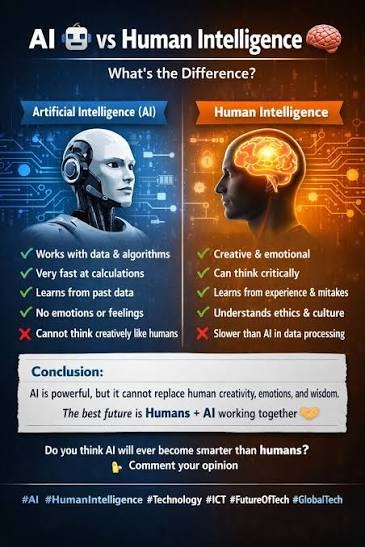
Now , we need to focus how much human gives input in software development and how much AI plays it part in software development
Key Industry Statistics
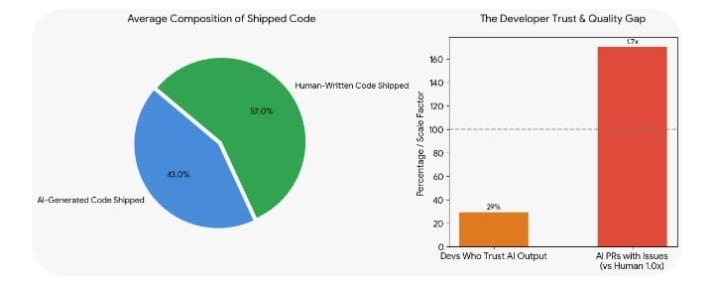
High Adoption, Low Trust: While 84% to 85% of developers actively use Al assistants daily, only 29% trust the output without manual verification. Une
The Code-Quality Dilemma: Pull requests (PRs) authored by Al systems contain 1.7x more issues and critical defects than code written purely by human developers.
Language Disparities: Al code assistants
complete boilerplate heavy-languages more easily, writing 61% of Java and 55% of Python code, but drop to 28% for C++
and 12% for Assembly.
Review Fatigue: Around 66% of engineers report spending more time fixing “almost right” Al-generated code than they would have taken writing it from scratch.
Where Humans vs. AI Input Matters Most
Lifecycle Software
Stage
Primary Contributor
Core Function /Input Type
System Architecture
Human (95%)
High-level system design, security guardrails, business logic.
Boilerplate Coding
AI (70%)
Writing standard AΡΙ endpoints, repetitive syntax, data structures.
Testing & QA
AI (60%)
Generating unit tests and basic edge cases rapidly.
Boilerplate Coding
Al (70%)
Writing standard AΡΙ endpoints, repetitive syntax, data structures.
Testing & QA
Al (60%)
Generating unit tests and basic edge cases rapidly.
Code Review
Human (100%)
Correcting logic errors, security vetting, preventing technical debt.
What These Statistics Really Tell Us
These statistics make one thing clear: AI is becoming a powerful partner for software developers, but it is not replacing the need for human expertise. The high adoption rate shows that developers around the world are comfortable using AI for coding, testing, debugging, documentation, and other repetitive tasks. However, the relatively low level of trust in AI-generated output highlights an important limitation: developers still need to verify, test, and understand the code before using it in real-world applications.
The difference between AI and human contribution also depends heavily on the stage of software development. AI performs particularly well when the task is repetitive, predictable, or based on established patterns. For example, generating boilerplate code, creating basic API endpoints, writing documentation, and producing initial unit tests can often be completed much faster with AI assistance. This allows developers to save time and concentrate on more complex challenges.
However, areas such as system architecture, security decisions, business requirements, and final code review still require strong human judgment. A piece of code can appear correct while containing hidden security vulnerabilities, performance problems, or logical mistakes. This is why developers should not treat AI-generated code as automatically reliable.
The reported increase in issues within AI-assisted pull requests and the time spent fixing “almost right” code also demonstrate that productivity should not be measured only by how quickly code is produced. Quality, maintainability, security, and long-term performance are equally important.
Therefore, the future of software development is likely to be a human-AI collaboration model. Developers who understand programming fundamentals while also learning how to use AI tools effectively will have a significant advantage. AI can provide speed and automation, while humans provide judgment, creativity, responsibility, and strategic thinking. In 2026 and beyond, the strongest developers will not simply be those who write the most code, but those who know what to build, how to build it securely, and how to use AI wisely to build it better.
Artificial intelligence is shifting software development from manual coding to intelligent, agent-driven engineering where humans focus on system design, architecture, and problem definition.
The Changing Role of Developers in Future
- From Coders to Architects: Writing syntax is becoming automated, so developers spend more time on system architecture, clear logic, and business goals.
- Shift to Non-Deterministic Systems: AI introduces non-deterministic behavior, meaning software outputs are no longer strictly predictable by simple fixed rules, requiring new testing and oversight paradigms.
- Evolution of Job Titles: Roles are expanding into AI integration, such as full-stack engineers handling vector databases, QA specialists testing model reliability, and AI safety experts.
Key Trends and Technologies
- Agentic Workflows: Autonomous coding agents plan, execute, and iterate across multiple steps inside integrated development environments (IDEs) like Cursor and GitHub Copilot.
- Legacy Modernization: AI tools are increasingly used to translate outdated codebases—such as converting COBOL to Java or C#—at a massive scale.
- Natural Language as Abstraction: Plain human language is emerging as a high-level programming abstraction layer, speeding up initial prototyping and lowering the barrier to entry.
Specific Skills to Learn to Stay Relevant
If you’d like, I can help you with:
- Specific skills to learn to stay relevant in AI-driven development
- How to integrate AI coding agents into your current workflow
- A deeper look into non-deterministic testing strategies
AI Adoption and Market Growth
Over 80% of software developers use AI tools in their daily workflows, driving massive market growth and productivity gains.
Current Adoption and Market Growth
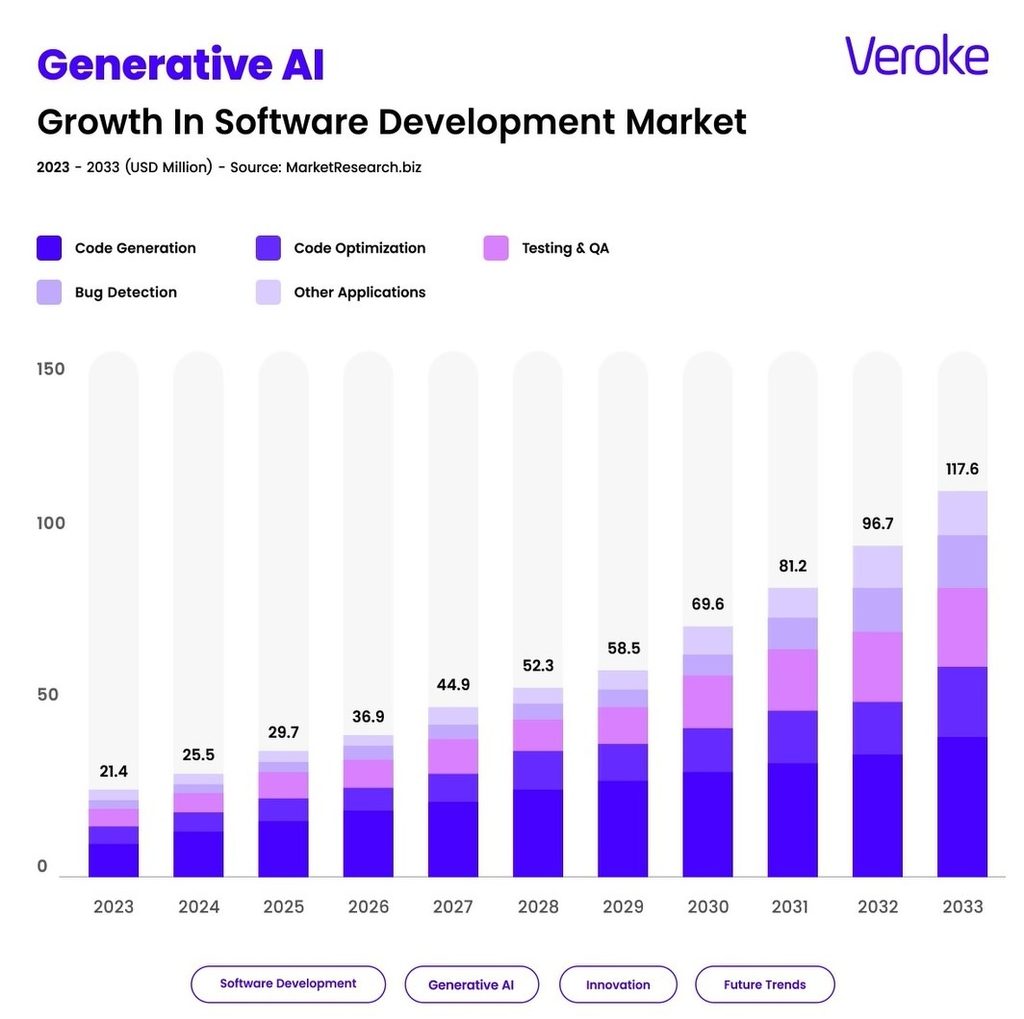
- Market Size: The global AI in software development market is projected to reach $15.7 billion by 2033, up from $674.3 million in 2024, growing at a 42.3% compound annual growth rate.
- High Adoption Rates: Around 84% of developers use or plan to use AI tools in their development process, with 51% using them every single day.
- Top Tools: ChatGPT leads as the most widely used AI coding tool at 81.7%, followed by at 67.9% and at 47.4%.
Productivity and Workflow Impact
- Speed Boost: AI coding assistants can increase individual developer productivity by up to 94%, reducing initial development time by roughly 30% to 55%.
- Core Tasks: The most common use cases include searching for answers (54.1%), generating code or synthetic data (35.8%), learning new concepts (33.1%), and documenting code (30.8%).
- Code Quality: Research indicates that AI-assisted code improves readability by 3.62%, reliability by 2.94%, and pass rates on peer reviews by 5%.
Future Outlook and Employment Trends
- Job Resilience: Despite fears of displacement, the Bureau of Labor Statistics projects a healthy 15% employment growth for software developers through 2034, backed by a 65.2% AI Resilience Score.
- Shift in Roles: Routine tasks like boilerplate generation, testing, and debugging are increasingly automated, shifting human roles from manual coders to system architects and orchestrators.
Further Exploration
- Explore comprehensive usage metrics on the Omniflow Blog.
- Review professional trends and daily workflow data in the Stack Overflow Developer Survey.
- Read enterprise adoption insights from McKinsey’s Global Survey.
The Future of Software Development in the AI Era
These facts show that AI is not simply another programming tool; it is changing the way software is designed, developed, tested, and maintained. As AI becomes more capable of handling repetitive coding tasks, developers can spend more time understanding user requirements, designing reliable systems, solving complex problems, and making important technical decisions.
The growing use of AI coding assistants also means that developers need to change the way they learn. Knowing programming syntax alone may no longer be enough. Developers should understand programming fundamentals, databases, APIs, cloud technologies, cybersecurity, system architecture, and AI integration. Most importantly, they should learn how to evaluate AI-generated code rather than blindly accepting it.
Agentic AI is another important development. Instead of simply generating a small piece of code from a prompt, modern AI agents can increasingly help developers plan tasks, modify multiple files, run tests, identify problems, and iterate on solutions. This can make development faster, but it also increases the importance of human supervision.
At the same time, AI-generated software introduces new challenges. Non-deterministic outputs, security vulnerabilities, incorrect assumptions, and maintenance problems require stronger testing and review processes. Therefore, faster code generation does not automatically mean better software.
The future is best understood as human expertise combined with AI capabilities. AI can provide speed, automation, and assistance, while developers provide context, judgment, creativity, security awareness, and responsibility. Developers who learn to work effectively with AI rather than compete against it will be better prepared for the changing software industry in 2026 and beyond.
Conclusion: The Future Belongs to AI-Ready Software Developers
Artificial intelligence is fundamentally changing software development in 2026. What once required hours of manual coding, debugging, testing, and documentation can now be accelerated with AI-powered tools. However, the rise of AI does not mean that software developers are becoming unnecessary. Instead, it is changing what developers need to know, how they work, and where they provide the most value.
AI Is a Powerful Assistant, Not a Complete Replacement
AI can generate code, suggest solutions, identify potential errors, create tests, explain technical concepts, and automate repetitive development tasks. These capabilities can significantly improve efficiency and allow developers to spend more time on challenging and creative work.
But AI-generated code still requires human supervision. AI can misunderstand requirements, produce incorrect logic, introduce security weaknesses, or generate solutions that work in one situation but fail in another. Therefore, developers must understand the code they use and be able to test, review, and improve AI-generated solutions.
What Developers Should Learn in 2026
The most important lesson is that developers should not focus only on learning how to write code. They should learn how to build reliable software with AI.
Strong programming fundamentals remain essential. Developers should understand algorithms, data structures, databases, APIs, debugging, system design, and cybersecurity. Alongside these foundations, they should learn AI concepts, AI-assisted coding, prompt engineering, AI APIs, automation, and agentic development workflows.
Human skills are equally important. Problem-solving, critical thinking, creativity, communication, decision-making, and understanding business requirements cannot simply be replaced by generating code from a prompt.
Human Expertise + AI Capability
The future of software engineering is likely to be a collaborative model in which humans and AI perform different but complementary roles. AI can handle repetitive and time-consuming activities, while humans remain responsible for architecture, requirements, security, quality, and strategic decisions.
This means the successful developer of the future may not necessarily be the person who writes the most lines of code. Instead, it will increasingly be the person who can clearly define a problem, choose the right technology, guide AI effectively, evaluate its output, and transform an idea into secure and maintainable software.
The Biggest Opportunity for Developers
Rather than viewing AI as a threat, developers should view it as a major opportunity to increase their capabilities. A developer who knows programming fundamentals and can effectively use AI tools can potentially work faster, explore more solutions, learn new technologies more efficiently, and focus on higher-value engineering decisions.
At the same time, developers should avoid becoming completely dependent on AI. If a developer cannot understand, debug, or evaluate the code produced by an AI system, increased automation can actually create new problems instead of solving them.
Final Thoughts
AI is not ending software development; it is redefining software development. The industry is moving from a model centered primarily on manual coding toward one involving AI-assisted and increasingly agent-driven engineering.
In 2026 and beyond, developers should focus on becoming AI-augmented engineers rather than simply traditional coders. Learn the fundamentals, understand AI, use coding assistants intelligently, strengthen cybersecurity and testing skills, and never stop developing human problem-solving abilities.
The winning combination is not human versus AI. It is human intelligence working with artificial intelligence. Developers who learn how to combine both effectively will be better prepared to create faster, safer, smarter, and more innovative software in the years ahead.