Teachers’ Role in the Age of AI and Technology 2026
Introduction
Artificial intelligence and digital technology are transforming education at an extraordinary speed. Classrooms that once depended primarily on textbooks, blackboards, printed worksheets, and traditional lectures can now use interactive software, online learning platforms, digital classrooms, educational applications, cloud services, and artificial intelligence tools. Technology
Students can search for information within seconds, practice skills using personalized software, watch educational videos from around the world, and use AI assistants to explain difficult concepts. Teachers can also use technology to prepare lessons, create learning activities, organize information, analyze student performance, and communicate with parents and students.
These developments have created an important question: What will happen to teachers in the age of AI?bTechnology
Some people believe that artificial intelligence could eventually replace teachers because AI can provide explanations and answer questions quickly. However, education involves much more than delivering information. Teachers provide mentorship, motivation, emotional support, classroom leadership, critical thinking, social development, and human judgment. Technology
The future of education is therefore unlikely to be a competition between teachers and AI. A more realistic future is one where teachers and technology work together. AI can handle some repetitive tasks and provide additional learning resources, while teachers focus on helping students understand, question, create, communicate, and grow. Technology
Understanding AI in Education
Artificial intelligence refers to computer systems capable of performing tasks that normally require certain forms of human intelligence. These tasks can include understanding language, identifying patterns, generating content, making predictions, and assisting with problem-solving.
In education, AI can be used in many different ways. Technology
It can help generate practice questions, provide explanations, translate educational materials, organize information, analyze learning patterns, and support personalized instruction.
For example, a student struggling with a mathematics concept might ask an AI system for another explanation. The system could provide a simpler example or explain the concept in another way. Technology
However, AI is not always accurate. It can produce incorrect or misleading information. Therefore, students need teachers to help them understand how to evaluate AI-generated answers.
This is one reason the role of teachers remains extremely important.
Teachers as Guides in the Digital Age
One of the most important roles of teachers is changing from simply delivering information to guiding students through information.
The internet contains an enormous amount of knowledge. AI makes access to that information even faster.
But more information does not automatically mean better education.
Students need to know how to determine whether information is accurate, relevant, biased, outdated, or misleading.
Teachers can teach students to ask important questions:
- Who created this information?
- What evidence supports the claim?
- Is the source reliable?
- Can the information be confirmed elsewhere?
- Is the AI-generated answer potentially incorrect?
- What information is missing?
These skills are becoming essential in an environment where anyone can encounter AI-generated text, manipulated images, misleading videos, and inaccurate online claims.
Teachers therefore become guides who help students navigate the digital information environment.
Teachers and Critical Thinking
Critical thinking may become one of the most important educational skills in the AI era.
AI can generate an answer in seconds, but students should not automatically assume that the answer is correct.
Teachers can design activities where students compare AI responses with textbooks, research papers, experiments, and other reliable sources.
For example, a teacher could ask students to examine an AI-generated explanation of a scientific topic and identify errors or missing information.
This approach teaches students an important lesson: AI can assist thinking, but it should not replace thinking.
Students should learn to question, analyze, compare, and reach conclusions independently.
Personalized Learning With AI
Every student learns differently.
Some students understand concepts quickly, while others need more explanation and practice. Some prefer visual examples, while others learn better through reading, discussion, or hands-on activities.
AI can help teachers provide more personalized learning resources.
A teacher could use technology to create different versions of an exercise based on student ability.
For example, one group of students might receive basic mathematics questions while another group receives more challenging problems.
AI can help create these materials faster, allowing teachers to spend more time deciding how students should use them.
However, teachers should remain involved because learning difficulties are not always visible in data.
A student may be struggling because of confusion, lack of confidence, family circumstances, language difficulties, or other factors that an automated system cannot fully understand.
AI as a Teaching Assistant
AI can function as a digital assistant for teachers.
Teachers spend many hours preparing educational materials. AI can help generate initial drafts of:
- Lesson plans
- Practice questions
- Quizzes
- Discussion topics
- Study guides
- Classroom activities
- Vocabulary exercises
- Writing prompts
- Summaries
This can reduce repetitive preparation work.
However, AI-generated material should always be reviewed.
A teacher understands the students, curriculum, classroom environment, and learning objectives better than a general-purpose AI system.
The teacher should therefore remain responsible for the final educational material.
Reducing Administrative Work
Teaching involves many tasks beyond classroom instruction.
Teachers may spend time organizing assignments, preparing reports, communicating with parents, creating schedules, recording grades, and managing other administrative responsibilities.
Technology can automate or simplify some of these tasks.
Reducing administrative work can give teachers more time for meaningful interaction with students.
This is one of the most practical benefits of AI in education.
Instead of spending hours creating a basic worksheet from scratch, a teacher might use AI to create an initial version and then spend more time improving it and planning how students will use it.
Teachers and Emotional Support
One area where teachers remain particularly important is emotional and social support.
Students are human beings, not simply collections of grades and data.
A student may feel nervous before an examination, frustrated by a difficult subject, isolated from classmates, or uncertain about the future.
A teacher can listen, encourage, and provide appropriate support.
AI can generate words of encouragement, but a teacher can understand the classroom environment and build genuine relationships with students.
Human connection remains one of the most important elements of education.
Teachers as Mentors
Teachers can also act as mentors.
They can help students identify their strengths, explore interests, develop study habits, and think about future careers.
This becomes particularly important as technology changes the workplace.
Students may enter careers that are significantly different from today’s jobs.
Teachers can help students understand that learning is not simply about memorizing information. It is also about developing adaptable skills.
These include:
- Communication
- Creativity
- Collaboration
- Problem-solving
- Leadership
- Critical thinking
- Digital literacy
- Adaptability
AI can support these skills, but teachers help students develop them through real experiences.

Teaching Students How to Use AI
As AI becomes more common, students need AI literacy.
AI literacy means understanding what AI can do, what it cannot do, and how to use it responsibly.
Teachers can explain that AI should be used as a tool rather than a shortcut for avoiding learning.
For example, students might use AI to:
- Brainstorm ideas
- Ask for explanations
- Practice questions
- Improve understanding
- Find different ways to approach a problem
Students should still develop their own reasoning and be able to explain what they have learned.
Academic Integrity in the AI Era
AI creates new challenges for academic honesty.
Students can potentially use AI to generate essays, answer homework questions, or complete assignments.
This means schools need to think carefully about how they assess learning.
Instead of relying only on take-home written assignments, teachers can include:
- Classroom discussions
- Presentations
- Practical projects
- Oral explanations
- Research projects
- Personal reflections
- Group activities
- Draft-and-revision assignments
The goal should be to determine whether the student understands the subject.
AI detection systems may sometimes be useful, but teachers should not rely entirely on automated detection because such systems can make mistakes.
The stronger solution is often better assessment design.
Teachers and Digital Literacy
Teachers have an important role in developing digital literacy.
Students should learn how to use technology safely and responsibly.
Digital literacy includes understanding:
- Online privacy
- Password security
- Phishing
- Misinformation
- Copyright
- Digital footprints
- Responsible social media use
- AI-generated content
- Online communication
These skills are important not only at school but also in future employment and everyday life.
Cybersecurity Education
As schools become increasingly digital, cybersecurity education is becoming more important.
Students may use online learning platforms, cloud storage, email, school accounts, and other digital services.
Teachers can introduce basic cybersecurity principles such as creating strong passwords, enabling multi-factor authentication when available, avoiding suspicious links, and protecting personal information.
Teachers do not need to become cybersecurity specialists. Basic awareness can still make a significant difference.
Teachers and Online Learning
Technology has expanded learning beyond the physical classroom.
Students can participate in online courses, virtual classrooms, educational communities, and digital learning platforms.
Teachers can combine traditional classroom teaching with online resources.
This blended approach can provide flexibility.
For example, a teacher might introduce a concept in class and provide additional digital exercises for students to complete later.
The classroom remains important, but learning no longer has to stop when students leave the school building.
AI and Language Learning
Language education is another area where AI can provide useful support.
AI tools can help students practice vocabulary, grammar, pronunciation, writing, and conversation.
A student learning English could receive additional practice questions or ask for explanations of unfamiliar words.
Teachers can use these tools to provide additional practice outside normal classroom hours.
However, human communication remains essential because language is not only about grammar. Students also need cultural understanding, conversation skills, confidence, and the ability to communicate naturally with other people.
AI and STEM Education
Science, technology, engineering, and mathematics education can also benefit from AI.
AI can help generate practice problems, explain mathematical concepts, simulate certain scenarios, and provide alternative explanations.
Teachers can use these resources to support classroom learning.
However, students should not simply copy AI-generated answers.
They should understand the process used to reach a solution.
Teachers can therefore use AI to encourage deeper learning rather than passive answer collection.
AI in Special Education
Technology may also provide valuable support for students with different learning needs.
Digital tools can provide alternative formats, additional practice, speech-based interaction, visual explanations, and personalized learning resources.
AI may help teachers adapt materials for individual students.
However, technology should be viewed as a support rather than a replacement for trained educators and appropriate professional services.
Teachers need to understand individual students and ensure that technology is used appropriately.
Teachers and Creativity
There is sometimes concern that AI could reduce creativity because students may ask machines to generate ideas for them.
Teachers can counter this by using AI in creative ways.
For example, students could generate an AI response and then improve it, challenge it, redesign it, or create a better alternative.
This changes AI from an answer machine into a starting point for creative thinking.
Teachers can ask students:
“Can you make this better?”
“What is missing?”
“Do you agree with this answer?”
“Can you create your own solution?”
These questions encourage active learning.
Teacher Training Is Essential
Teachers cannot effectively integrate AI into education without appropriate training.
Schools should provide practical training on:
- AI fundamentals
- Educational AI tools
- Privacy
- Cybersecurity
- Academic integrity
- AI-generated misinformation
- Lesson planning
- Assessment design
- Responsible technology use
Teachers do not need to become AI engineers.
They need enough understanding to make informed decisions about when AI is useful and when traditional teaching methods are better.
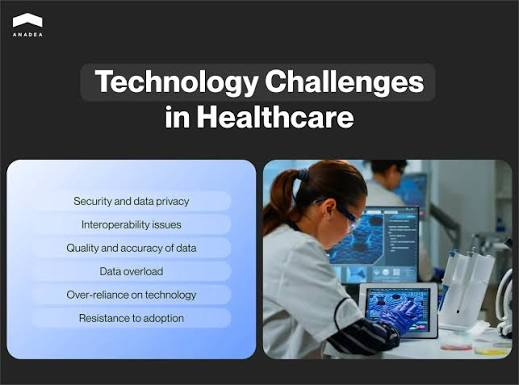
Challenges of AI in Education
Despite its potential, AI introduces serious challenges.
Privacy
Student data must be handled carefully.
Schools should understand what information educational platforms collect and how that information is stored and used.
Accuracy
AI systems can make mistakes.
Teachers should verify important information before using it in educational materials.
Digital Inequality
Not every student has the same access to computers, smartphones, reliable internet, or paid AI services.
Schools should avoid creating systems that disadvantage students who have fewer technological resources.
Overdependence
Students may become dependent on AI for simple tasks.
If students ask AI to solve every problem, they may miss opportunities to develop independent thinking.
Teacher Workload
Technology is supposed to reduce workload, but poorly implemented technology can sometimes create additional administrative responsibilities.
Schools should therefore evaluate whether new tools genuinely help teachers.
Teachers Will Not Simply Disappear
The idea that AI will completely replace teachers ignores the complexity of education.
A teacher does not simply provide information.
A teacher:
- Builds relationships
- Encourages students
- Manages classroom discussions
- Identifies learning difficulties
- Provides feedback
- Develops classroom culture
- Helps students set goals
- Encourages curiosity
- Teaches social skills
- Supports critical thinking
These responsibilities require human judgment and relationships.
AI can assist with parts of teaching, but education is fundamentally a human activity.
The Future Classroom
The classroom of the future may combine traditional teaching with advanced technology.
Students might use AI assistants for personalized practice while teachers lead discussions and projects.
Digital platforms could provide real-time information about learning progress.
Teachers could use this information to identify students who need additional help.
Students could collaborate on cloud-based projects while using AI tools for research and brainstorming.
At the same time, schools may continue to emphasize books, practical activities, face-to-face communication, sports, arts, teamwork, and community.
Technology should expand education rather than eliminate the human experience.
How Teachers Can Adapt
Teachers can prepare for the AI era through several practical steps.
First, they can learn the basic capabilities and limitations of modern AI tools.
Second, they can experiment with AI in lesson planning and low-risk activities.
Third, they can teach students how to verify information.
Fourth, they can establish clear classroom rules about appropriate AI use.
Fifth, they can redesign assessments to focus on understanding and practical application.
Finally, teachers should continue developing skills that technology cannot easily replace, including empathy, communication, leadership, creativity, and mentorship.
The Ideal Relationship Between Teachers and AI
The most effective model is not teachers competing against AI.
It is teachers using AI as an assistant.
AI can handle certain repetitive tasks.
Teachers can handle the human responsibilities.
AI can suggest a lesson plan.
The teacher decides whether it is appropriate.
AI can generate practice questions.
The teacher chooses which questions students actually need.
AI can summarize information.
The teacher teaches students how to evaluate that information.
AI can identify patterns in student performance.
The teacher investigates why students may be struggling.
This division of responsibilities can make education more efficient while preserving human leadership.
Conclusion
Artificial intelligence is changing education, but it does not make teachers less important. Instead, it is creating opportunities for teachers to focus more on guidance, critical thinking, creativity, mentorship, personalized support, and meaningful relationships with students.
AI can help teachers prepare lessons, create educational resources, reduce administrative work, analyze learning patterns, and provide additional practice opportunities. Students can also use AI to explore subjects, receive explanations, practice skills, and develop digital abilities.
However, AI has limitations. It can make mistakes, produce misleading information, create privacy concerns, and encourage overdependence if used without proper guidance.
This is why teachers remain essential.
The teacher of the future will not simply be someone who delivers information from a textbook. Instead, the teacher will increasingly become a mentor, guide, critical-thinking coach, digital-literacy educator, and human connection at the center of technology-supported learning.
The most successful schools will not ask whether AI should replace teachers. They will ask how teachers can use AI responsibly to create better learning experiences.
Technology can provide speed, information, and automation. Teachers provide purpose, judgment, empathy, and human understanding.
Together, teachers and AI can create an education system that is more personalized, flexible, creative, and prepared for the future.