Will AI Reduce the Significance of Web Development in the Near Future?
is changing web development faster than almost any previous technology.
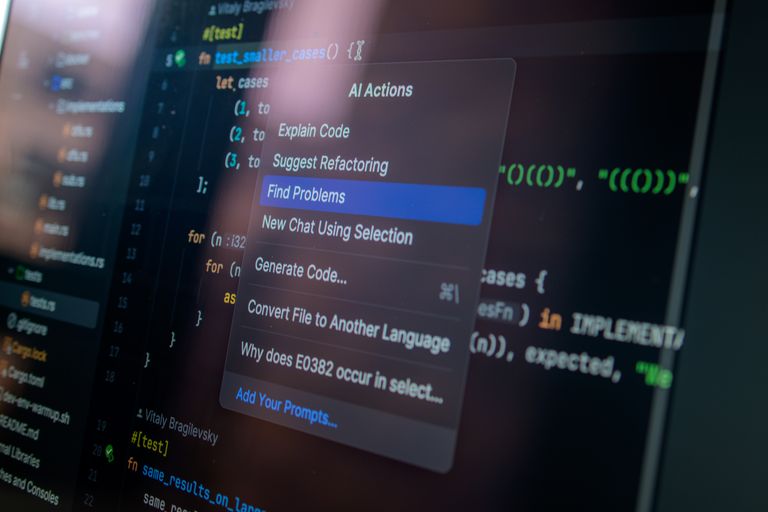
Today, AI can generate HTML and CSS, create JavaScript, build interfaces, explain code, find bugs, write tests and even produce functioning web applications from natural-language instructions. In 2026, AI coding agents are moving beyond simple autocomplete toward systems that can plan and execute larger parts of software-development workflows.
This naturally raises an important question:
Will AI eventually make web development less important—or even make web developers unnecessary?
The realistic answer is more complicated.
AI will almost certainly reduce the amount of routine coding required to build many websites and applications. However, that does not mean web development itself will become insignificant.
In fact, the evidence available in 2026 suggests something different is happening: AI is changing what web developers do rather than simply eliminating web development.
AI Is Already Changing How Websites Are Built
The transformation is not theoretical.
Stack Overflow’s 2025 Developer Survey found that 84% of respondents were using or planning to use AI tools in their development process, while 51% of professional developers reported using AI tools daily.
AI coding systems can now help developers with tasks such as:
- Generating HTML
- Creating CSS layouts
- Writing JavaScript
- Producing React components
- Creating database queries
- Explaining unfamiliar code
- Finding bugs
- Generating tests
- Writing documentation
- Refactoring code
- Building prototypes
This means a developer can often move from an idea to a working prototype much faster than before.
Recent research evaluating agentic development tools found that these systems are already capable of generating complete applications for common patterns such as CRUD functionality and authentication. However, the same research found substantially more errors when the applications required less-common distributed architectures.
That distinction is crucial.
AI is becoming very good at generating familiar patterns.
It is much less reliable when a project requires unusual architecture, complex constraints or deep understanding of a particular business.
1. Routine Web Development Will Become Less Valuable
This is probably the strongest argument that AI will reduce the significance of some web-development work.
Imagine a client wants a simple website containing:
- A homepage
- About page
- Contact form
- Blog
- Basic navigation
- Responsive design
AI can already generate much of this type of code.
A developer who previously spent several days writing relatively straightforward code may increasingly be able to create a first version in a fraction of that time.
This means the market value of purely repetitive coding could decline.
The same principle applies to simple website customization.
If a business owner can describe:
“Create a responsive landing page for my business with a pricing section, testimonials and contact form.”
and an AI system can produce a usable first version, there is less reason to pay someone simply to type the underlying code manually.
Therefore, yes:
AI is likely to reduce demand for some low-complexity web-development tasks.
But that is not the same as eliminating web development.
2. Building a Website Is Not the Same as Building a Good Digital Product
Generating code is only one part of web development.
A professional website or web application also needs:
- Clear requirements
- Information architecture
- User experience
- Accessibility
- Performance
- Security
- Database design
- Authentication
- API integration
- Error handling
- Testing
- Maintenance
- Analytics
- Scalability
AI can assist with many of these areas, but assistance is not the same as responsibility.
For example, an AI system might generate authentication code that appears to work.
But a professional developer needs to ask:
Is the authentication actually secure?
What happens if users enter unexpected information?
What permissions does each user have?
Can private data accidentally become accessible?
What happens if an external API fails?
What happens when the application has 100 users instead of 10?
These questions require engineering judgment.
3. AI-Generated Code Still Requires Human Verification
One of the strongest reasons web developers will remain important is that AI-generated code can be wrong.
Stack Overflow’s survey found that 46% of developers distrust the accuracy of AI-tool output, compared with 33% who trust it. The survey also found that 66% identified AI solutions that are “almost right, but not quite” as their biggest frustration.
That creates an interesting paradox.
AI can produce code faster.
But faster code generation can also produce more code that needs checking.
A developer therefore becomes a reviewer and validator of machine-generated software.
This changes the skill requirement.
The valuable developer is not necessarily the person who can type code fastest.
It is increasingly the person who can recognize:
Good code → questionable code → dangerous code
and understand why.
4. Complex Projects Are Different
Simple websites are relatively easy for AI.
Complex software is another matter.
Consider an application connecting:
- Multiple databases
- Payment systems
- Customer accounts
- External APIs
- Internal business systems
- Real-time communication
- Analytics
- Security controls
- Different user permissions
The difficulty is no longer simply writing individual functions.
The challenge is designing the entire system correctly.
Recent research on agentic web-app development found that AI systems performed well on established application patterns but produced significantly more errors on less-common distributed architectures.
This suggests that AI’s impact will be uneven.
Simple development → increasingly automated
Complex engineering → still heavily dependent on human expertise
That distinction could remain important for many years.
5. Web Development Will Shift Toward “AI-Assisted Development”
The likely future is not:
Human developer OR AI
but:
Human developer + AI
Think about what happened with calculators.
Calculators reduced the need to perform certain calculations manually.
They did not make mathematics irrelevant.
Similarly, AI can reduce the amount of code developers manually write without eliminating the need to understand software.
The developer’s workflow may increasingly look like this:
Step 1: Define the problem
The developer determines what the customer actually needs.
Step 2: Design the architecture
The developer decides how the system should work.
Step 3: Ask AI to implement components
AI produces initial code.
Step 4: Review
The developer examines the output.
Step 5: Test
The system is tested against real requirements.
Step 6: Correct
Problems are identified and fixed.
Step 7: Deploy and monitor
The application is released and continuously monitored.
This is already becoming the direction of software development.
Forrester’s 2026 research describes a transition from AI assistants that merely help developers write code toward more agentic software development, where AI participates in broader parts of the development lifecycle.

6. The Developer’s Most Important Skill May Become Problem-Solving
If AI can write code, what happens to coding knowledge?
It becomes more important in a different way.
A developer who understands programming can examine AI-generated code and determine whether it makes sense.
Someone without technical knowledge may see:
“The website works.”
and assume everything is correct.
An experienced developer asks:
- Is the architecture appropriate?
- Is the code maintainable?
- Is it secure?
- Is it scalable?
- Does it handle edge cases?
- Is the database designed correctly?
- Does it meet accessibility requirements?
- What happens when something fails?
This is why AI may actually increase the value of deep technical understanding even while reducing the value of repetitive implementation.
7. Web Developers Will Need More Than Coding Skills
The future web developer is likely to need a broader skill set.
Important skills include:
AI literacy
Developers need to understand how to use AI coding systems effectively and how to recognize their limitations.
Software architecture
Understanding how different components work together becomes more important as AI generates individual pieces of code.
Cybersecurity
AI-generated software still needs to be secure.
UX and accessibility
A website is not successful merely because its code works.
Testing
Developers must verify that AI-generated systems behave correctly.
Communication
Understanding what customers actually want remains a human responsibility.
Business understanding
The best technical solution is not always the best business solution.
These skills make web development broader rather than simply obsolete.
8. AI Could Actually Increase the Number of Websites and Applications
There is another side of the argument that is often overlooked.
If building software becomes cheaper and faster, people may build more software, not less.
Consider what happens when the cost of producing something decreases.
Demand can increase.
If AI allows a small company to build a custom internal application for a fraction of the previous cost, that company may decide to build the application when previously it would have used spreadsheets.
If entrepreneurs can prototype products quickly, more startups may experiment with digital products.
If small businesses can afford customized web applications, demand for digital services could expand.
Therefore:
AI may reduce the amount of human effort required per website while increasing the total amount of software being created.
That is one reason it is too early to conclude that web development will disappear.
9. The U.S. Employment Data Does Not Show Web Development Disappearing
There is also an important real-world indicator.
The U.S. Bureau of Labor Statistics currently projects employment of web developers and digital designers to grow 7% from 2024 to 2034, compared with 3% growth for all occupations. It projects about 14,500 openings per year on average across web developers and digital designers.
This does not prove that AI cannot change the profession.
Employment forecasts can change.
But it does demonstrate an important fact:
As of the current official U.S. projection, web development is not expected to disappear during the coming decade.
The more reasonable interpretation is that the occupation will evolve.
10. The Biggest Risk May Be for Entry-Level Developers
This is one area where AI could have a particularly significant impact.
Beginner developers often perform tasks such as:
- Basic components
- Simple pages
- Routine bug fixes
- Basic database operations
- Simple API integrations
- Repetitive code
These are exactly the kinds of tasks AI can increasingly assist with.
That creates a difficult question:
If AI performs many beginner tasks, how do beginners gain experience?
This could become one of the biggest workforce challenges created by AI-assisted development.
However, it also creates an opportunity.
Future junior developers may need to learn differently.
Instead of spending all their time manually writing simple code, they may learn by:
building → testing → reviewing → debugging → understanding
AI can become a tutor and development assistant, while the learner still develops genuine technical understanding.
11. Web Development Could Become More Accessible
There is also a positive side.
Historically, building a sophisticated website required significant technical knowledge.
AI lowers the barrier to creating software.
A designer can experiment with code.
A marketer can build a prototype.
A small business owner can create an internal tool.
A student can turn an idea into a working application.
This democratization could create enormous innovation.
But there is an important difference between creating something that works and creating software that can be trusted.
Recent research argues that AI may broaden access to code production while shifting the most valuable expertise toward evaluating, integrating, maintaining and governing software.
That is probably one of the most accurate descriptions of where the profession is heading.
12. Website Design Will Also Change
AI is not affecting only programming.
It is changing design too.
AI can generate:
- Layout concepts
- Images
- Icons
- Color suggestions
- Content
- UI components
- Prototypes
As a result, creating a basic visual design will become easier.
But excellent design involves understanding users.
A successful website needs to answer questions such as:
Who is the user?
What does the user need?
What action should the user take?
What information should appear first?
How can the experience be made accessible?
AI can provide suggestions, but human designers and developers still need to evaluate whether those suggestions make sense.
13. Security Could Become an Even Bigger Reason to Hire Developers
As AI makes software production faster, security becomes more important.
Generating thousands of lines of code quickly is not necessarily an advantage if vulnerabilities are introduced at the same time.
AI-generated software can contain mistakes, insecure dependencies or inappropriate implementation choices.
This means businesses need professionals who understand secure development.
The future could therefore involve a paradox:
AI makes software easier to create, while making professional software governance more important.
Companies will still need people responsible for ensuring that applications are safe, reliable and compliant with their requirements.
14. What Will Happen to Freelance Web Developers?
Freelancers are likely to feel the change strongly.
Clients may increasingly use AI to create very basic websites themselves.
This could reduce demand for freelancers who sell only:
“I will create a basic five-page website.”
But freelancers who provide broader value may remain highly competitive.
For example:
Weak positioning:
“I build websites.”
Stronger positioning:
“I build fast, secure websites that help your business generate leads.”
The second offer focuses on an outcome rather than code.
This distinction will become increasingly important.
Freelancers can differentiate themselves through:
- SEO
- Performance optimization
- UX
- Conversion optimization
- Security
- E-commerce
- API integrations
- Custom applications
- Maintenance
- Analytics
- Business understanding
AI may become their tool rather than their competitor.
15. What Should Someone Learning Web Development Do in 2026?
The answer is do not abandon web development because of AI.
But do not learn it exactly as people learned it a decade ago.
A modern learning path should combine fundamentals with AI-assisted development.
Learn:
Front-end fundamentals
HTML, CSS and JavaScript remain important because they explain how the web works.
A modern framework
Learn at least one major framework or ecosystem.
Back-end fundamentals
Understand APIs, databases, authentication and server-side concepts.
Git and version control
Learn how professional software is managed.
Web security
Understand common vulnerabilities and secure development practices.
Accessibility
Learn how to create websites usable by people with different abilities.
Performance
Understand loading speed, rendering and efficient resource usage.
AI-assisted development
Learn how to use AI coding tools while verifying everything they produce.
Problem-solving
Most importantly, learn how to break complicated problems into smaller ones.
The goal should not be:
“I can type code without AI.”
Nor should it be:
“AI can build everything for me.”
The strongest position is:
“I understand software well enough to use AI to build better software faster.”
So, Will AI Reduce the Significance of Web Development?
Yes—but only in a specific sense.
AI is likely to reduce the importance of manual, repetitive and low-complexity coding.
It may become much less valuable to spend hours manually producing code that an AI system can generate accurately in minutes.
But that does not mean the web itself becomes less important.
Businesses will continue to need:
- Websites
- Web applications
- E-commerce platforms
- Customer portals
- Internal business systems
- APIs
- Digital services
- Secure online experiences
And somebody still needs to design, integrate, test, secure, maintain and improve those systems.
The role of the developer is therefore changing.
The Future: From Code Writer to Technology Problem Solver
The most likely future is not the disappearance of web developers.
It is the transformation of the profession.
The traditional developer might have spent much of the day writing code manually.
The AI-assisted developer may spend more time:
Understanding → Designing → Directing AI → Reviewing → Testing → Securing → Deploying → Improving
This is a major change.
And it means the most valuable developer of the future may not be the person who writes the most code.
It may be the person who can understand a complex problem, design an effective solution, use AI intelligently, identify AI mistakes and take responsibility for the final product.
Final Verdict
AI will almost certainly make some web-development tasks cheaper, faster and easier.
Simple websites that once required professional coding may increasingly be created by non-developers using AI.
Routine programming work will face the greatest pressure.
But the evidence does not support the idea that web development as a whole is about to become insignificant.
AI coding adoption is already widespread, yet developers still report substantial concerns about accuracy and complex tasks. U.S. labor projections continue to show growth for web developers and digital designers. Research on agentic development also suggests that AI can generate many conventional application patterns while still struggling with more complex architectures.
The most realistic conclusion is therefore:
AI will not kill web development. It will raise the level at which web development is performed.
The basic code may become easier to produce.
The difficult part—understanding users, designing systems, making correct decisions, ensuring security and building reliable products—will remain valuable.
For someone entering web development in 2026, the smartest strategy is not to compete with AI at writing code.
Learn to work with AI, understand the technology underneath it, and become the person responsible for turning an idea into a reliable digital product.
That is likely to be far more valuable than simply being a fast code writer.